The answer depends less on the project’s built-up area than on its central heating load, boiler resistance, fuel arrangement and operating schedule. By comparing burner configuration, sizing data, site conditions and total installation effort, you can decide whether dual-block equipment earns its extra complexity over a monoblock package.
Key takeaways
- Choose dual-block equipment when back-pressure or airflow demands exceed packaged burner limits.
- Size the burner from heat load, chamber pressure, excess air and turndown—not a kW label alone.
- Demand fuel-train drawings, safety interlocks, airflow data and commissioning records before handover.
- Compare installed cost, controls, access, maintenance and lifecycle fuel use in the tender.
What a dual block burner changes in a real estate heating plant
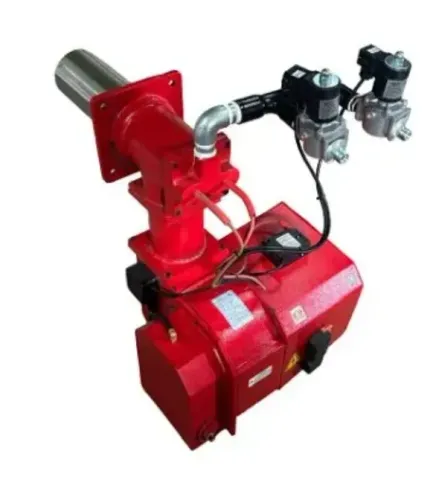
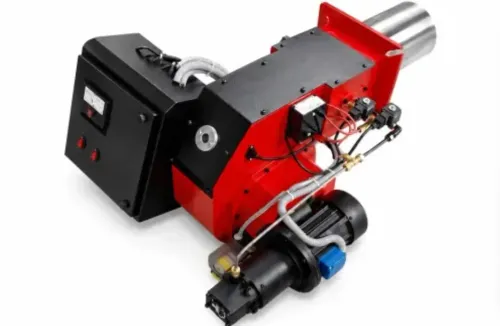
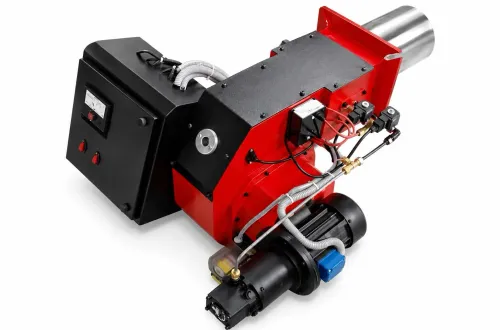
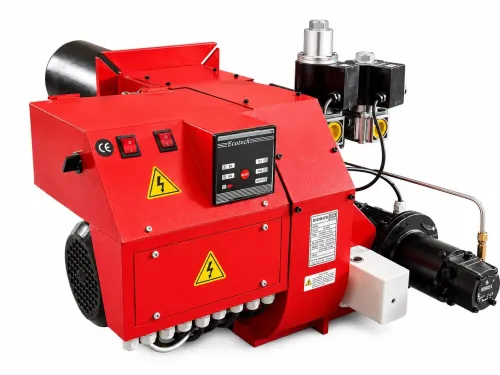
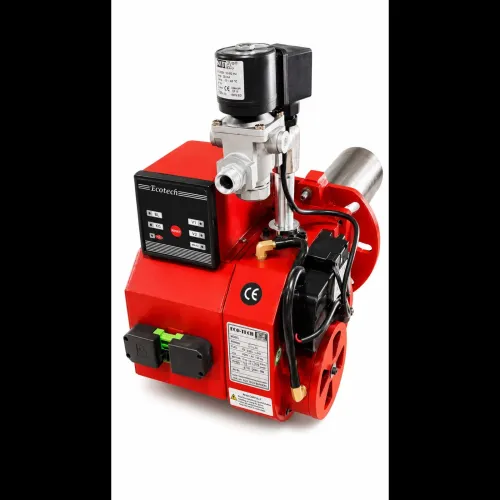
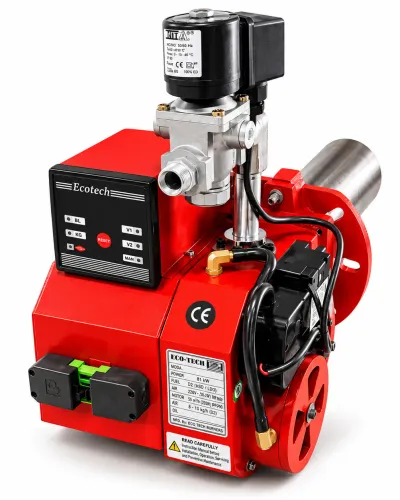
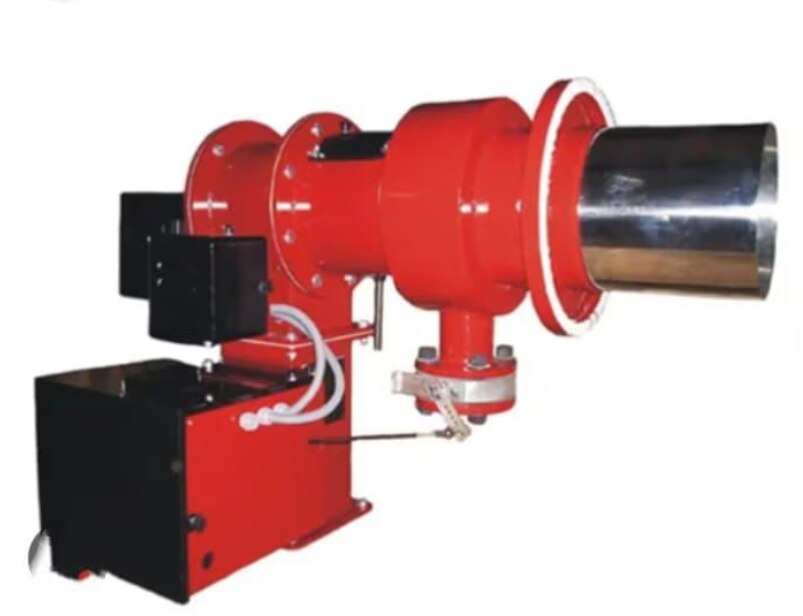
A dual-block burner separates the combustion head from the combustion-air fan. A monoblock integrates the fan and burner assembly on one packaged unit. The separate arrangement helps when a boiler or furnace has high combustion-chamber back-pressure, needs greater air volume, or requires a custom air path.
It does not prove higher efficiency or indicate dual-fuel operation.
| Feature | Dual-block burner | Monoblock burner |
|---|---|---|
| Fan arrangement | Separately mounted fan and combustion head | Integrated fan and burner assembly |
| Air path | Custom ducting and fan placement | Packaged, fixed arrangement |
| Typical reason to choose | High resistance, large air volume or service access | Compact installation and simpler commissioning |
| Fuel implication | Gas-only, oil-only or dual-fuel | Gas-only, oil-only or dual-fuel |
For a dual block burner for real estate in Surat, match the arrangement to the plant rather than the property label. Suitable applications include:
- Central hot-water boilers for a development or district heating network
- Domestic-hot-water plants serving hotels, hospitals or residential towers
- Steam boilers supplying commercial kitchens or laundries
- Thermic-fluid heaters and associated drying systems
- Construction-site heating equipment with demanding air routing
Ordinary room heating and small domestic-hot-water loads usually suit an integrated packaged boiler. Dual block combustion equipment describes the fan-and-burner arrangement, not the fuel, project size or guaranteed efficiency. A dual-block unit can operate on gas alone; dual-fuel capability requires separate fuel circuits, controls and safety interlocks.
How to size the burner instead of choosing from a kW range
Size an industrial burner for real estate projects from the coincident useful heating load, not from building area or a catalogue range. Calculate the load when boilers or furnaces operate together, then include required water supply and return temperatures, heat-up time, design outdoor conditions, standby losses and the chosen reserve.
| Selection basis | What to calculate | Result |
|---|---|---|
| Useful heat load | Simultaneous demand at design conditions | Required delivered heat |
| Equipment efficiency | Useful load divided by boiler or furnace efficiency | Burner fuel input |
| Catalogue range | Example: 120 to 10,500 kW | Screening only, not sizing |
The relationship is: burner input in kW equals useful heat required in kW divided by equipment efficiency. A 1,000 kW useful load at 90% efficiency requires about 1,111 kW of fuel input before any project-specific margin is added.
Specify maximum input, minimum stable firing rate and turndown ratio together. A burner selected only because its catalogue starts at 120 kW or ends at 10,500 kW can short-cycle, lose stable low-fire operation and suffer excessive start-stop wear.
Your tender should state:
- Fuel type and available minimum and maximum pressure
- Combustion-chamber back-pressure
- Excess-air requirement and emissions limits
- Required heat-up time
- Control sequence, including purge, ignition and modulation
- Minimum stable input, maximum input and turndown method
For LPG, size the vaporizer from simultaneous connected loads, start-up demand, liquid withdrawal limits, control range and standby reserve—not the burner nameplate alone. A load sheet and operating envelope make competing burners comparable.
Where dual-block benefits justify the extra installation work
A dual-block burner earns its extra installation work in a high-capacity central plant with demanding back-pressure, long operating hours or strict availability requirements. Separate fan placement improves service access, allows independent fan selection or replacement, and supports a purpose-designed air route for a high-resistance chamber.
It can also move fan noise away from occupied areas, but only when the project includes acoustic treatment and a suitable outside-air inlet location. Without those provisions, relocating the fan can shift noise into another room or create air-intake problems.
Include these costs and performance items in the comparison:
- Larger plant-room footprint
- Separate fan and burner controls
- Combustion-air ducting, supports and alignment
- Additional electrical cabling and field components
- Longer commissioning and balancing work
- Fan power at operating pressure, not just burner fuel input
- Acoustic treatment, inlet silencers and measured sound level
- Spares, maintenance access and standby arrangements
A dual-block burner is not automatically more efficient than a monoblock. Compare seasonal fuel use alongside fan electricity, excess-air control, turndown and operating hours; an oversized or poorly selected fan can erase expected savings.
Choose a monoblock for a small plant room, simple low-capacity boiler, distributed intermittent load or plug-and-play requirement. The same choice fits a site without a separate air path. For burner system selection in Surat, use the dual block burner benefits only when the plant’s operating demands repay the added ducting, controls and commissioning effort.
What the fuel train, Surat site conditions and commissioning must prove
The burner body is only one part of the installation: the fuel train and safeguards determine whether it starts, runs and shuts down safely. For burner system selection in Surat, compare minimum and maximum gas supply pressure, regulator and meter pressure drop, and simultaneous peak demand before accepting the quoted model.
Specify the complete gas train:
- Manual isolation valve, filter and pressure regulator
- Minimum and maximum pressure switches
- Automatic safety shut-off valves and valve proving where required
- Flame supervision, pre-purge, controlled ignition and post-purge
| Configuration | What it means | What to verify |
|---|---|---|
| Gas-only dual-block | Separate fan and burner using one fuel | Gas pressure range and complete train |
| Dual-fuel dual-block | Separate gas and oil circuits | Changeover logic, interlocks and oil atomization equipment |
Dual block combustion equipment does not imply dual-fuel capability. Confirm this distinction in the datasheet and control narrative.
For LPG, size the vaporizer against simultaneous connected loads, start-up demand, liquid-withdrawal limits, control range and standby reserve. Nameplate burner input alone can leave pressure collapsing during a cold start.
Include Surat’s humidity, dust, monsoon exposure and salt-laden air in fan filtration, electrical-enclosure ratings, outdoor protection and corrosion specifications.
Require commissioning tests for excess oxygen, carbon monoxide, applicable NOx, smoke, flame-failure response, fuel pressure, sound and minimum stable firing. EN 676 and EN 267 offer useful gas- and oil-burner reference points, but local boiler, electrical, emissions and safety requirements still apply.
How to make the commercial decision and write a comparable tender
Compare the complete installed system, not the burner nameplate. A dual block burner for real estate in Surat earns consideration when the central plant has high or variable load, high furnace resistance, a demanding air route, planned dual-fuel operation or a strong availability requirement.
| Option | Cost and practical effect | When it applies |
|---|---|---|
| Dual-block | Adds separate fan, ducting, acoustic treatment, alignment, control-panel work, fuel-train components, chimney changes, electrical load and commissioning; provides independent fan access and easier standby planning | High-capacity or high-resistance central plants |
| Monoblock | Usually reduces footprint, ducting, installation time and packaged-control integration; fan access is less independent | Compact plants, rapid installation and simple packaged systems |
Price spares, maintenance access, fan replacement and standby arrangements over the operating life. A separate fan is not automatically efficient; poor selection can increase electrical consumption. Treat the industrial burner for real estate projects as a system whose load sheet and site tests matter more than a catalogue range.
Require the tender to state:
- Maximum and minimum firing rates, turndown method, fuel-pressure range and combustion-chamber back-pressure
- Guaranteed emissions, sound level, electrical consumption, purge times and flame-failure response
- Control interface, spare-parts list and a step-by-step commissioning procedure
ECOTECH BURNERS MFG CO can help convert these requirements into a burner and air-supply specification, but request calculated load sheets and site-test commitments. Choose dual-block for a demanding central plant, not as the default for every development.
Related product
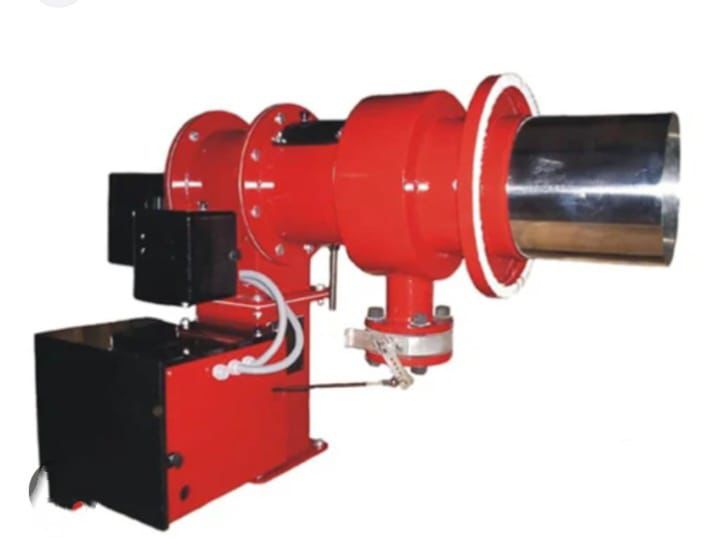 | Dual block Burners Dual Block Burner (120kw to 10500kw )Available in versions for different types of gas. A compact burner, easy to install. View product → |
Frequently asked questions
What does a dual-block burner change in a real estate heating plant?
It separates the combustion head from the combustion-air fan, allowing a custom air path and more flexibility where the boiler has high back-pressure or needs greater airflow.
How should you size a burner for a real estate project?
Start with the required heat load, boiler or furnace back-pressure, fuel properties, combustion-air requirement and turndown. Do not select equipment from a kW range alone.
When are dual-block burner benefits worth the extra installation work?
They are worth considering when the plant needs higher airflow, a customised duct route, better access to the fan or performance beyond a packaged monoblock arrangement.
What must commissioning prove at a Surat project site?
Commissioning must verify fuel-train safety, airflow, flame stability, combustion readings, control interlocks, burner sequencing and reliable operation under the design load.
How can you compare dual-block burner tenders fairly?
Request comparable details for burner output, turndown, fuel consumption, fan power, back-pressure, controls, fuel-train scope, installation, commissioning, warranties and maintenance access.
Keywords