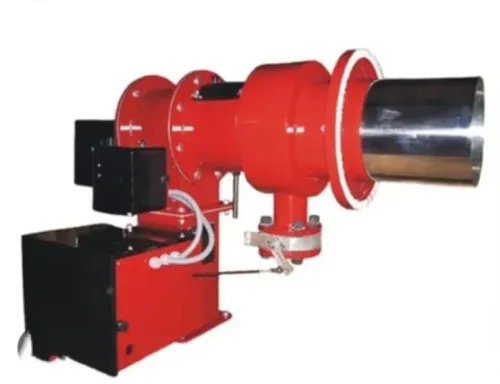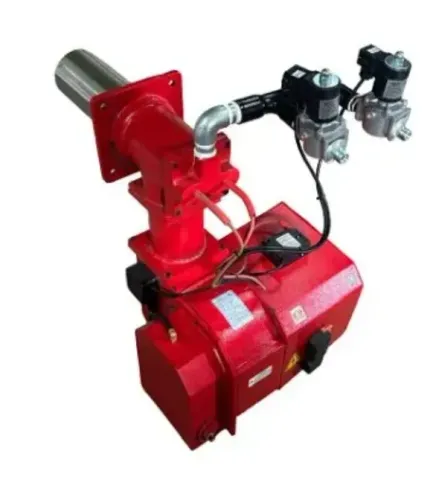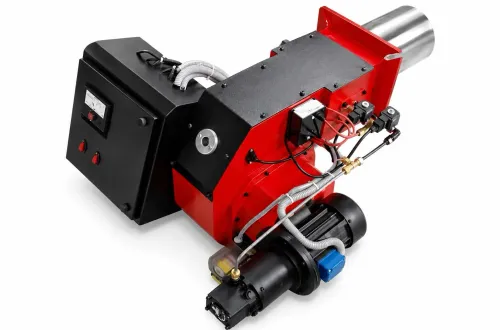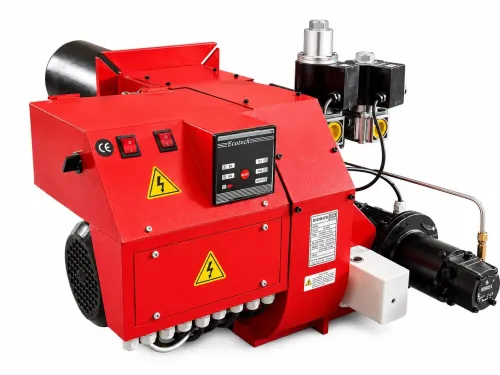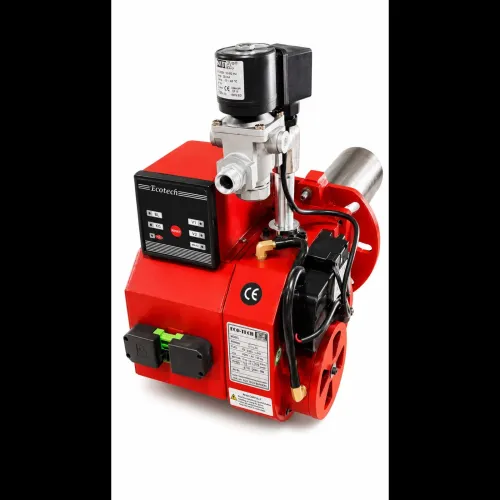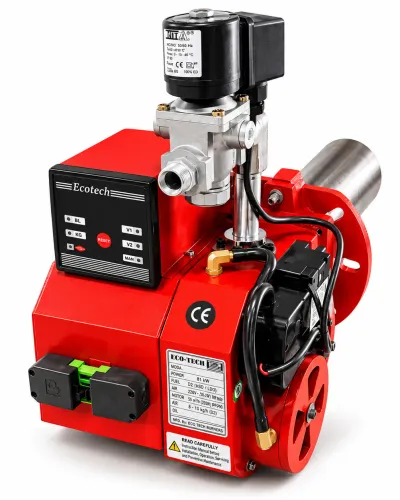
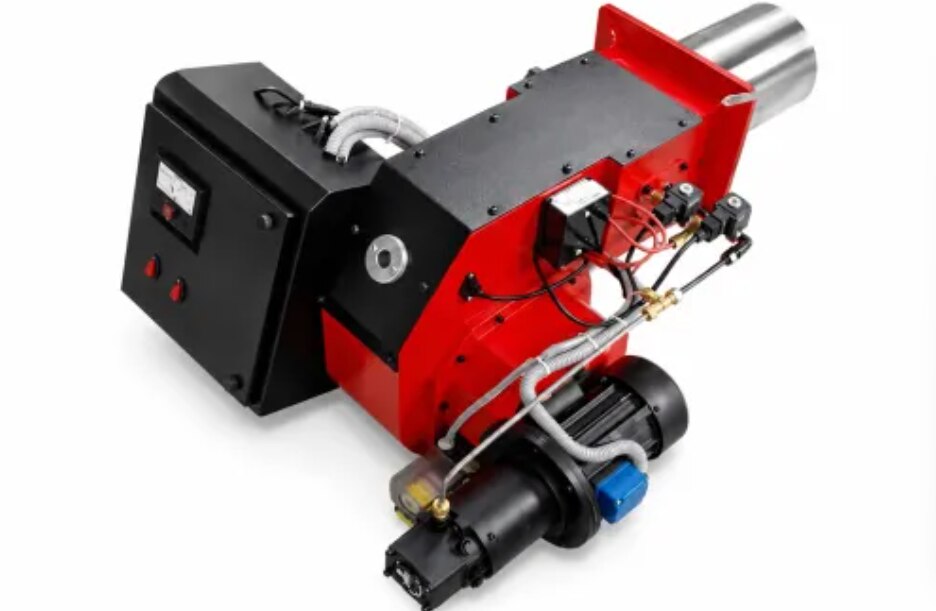
An oil burner is the controlled combustion assembly that turns liquid fuel into heat for a boiler; it is not the boiler, hot-water system, or steam network itself. By the end, you will know how the burner works, how to match it to campus demand, which fuel and safety details matter, and when another heating system makes more sense.
Key takeaways
- Match burner output to boiler rating, fuel viscosity, and operating load.
- Use heated fuel oil lines when viscosity prevents stable atomization.
- Specify turndown, controls, safety interlocks, emissions, and service access.
- Schedule combustion checks before heating demand rises on campus.
What an Oil Burner Actually Does Inside a Boiler Room
A boiler oil burner is the combustion-and-control assembly that turns liquid fuel into flame. It atomizes diesel through a nozzle; furnace oil requires heating so its viscosity falls enough for stable spraying. The burner mixes prepared fuel with combustion air, ignites it, and directs the flame into the boiler furnace.
The boiler then transfers that heat into water or steam rather than delivering hot air directly. Common boiler oil burner uses in education facilities include hot water for hostels and kitchens and steam for laundries or laboratories.
The boiler oil burner basics are a controlled sequence:
- A heat demand starts the combustion-air fan.
- The fan completes a pre-purge, clearing unburned vapour from the furnace.
- An ignition transformer or pilot creates a spark or flame.
- The fuel valve opens after the programmed purge.
- A flame sensor proves combustion; failed ignition or flame loss shuts the fuel valve.
- The burner modulates or stops when the demand ends.
| Burner | Boiler |
|---|---|
| Combustion assembly that meters fuel, air, and flame | Pressure vessel that contains water or steam |
| Provides heat input in kW | Transfers heat through its heating surfaces |
| Uses flame safeguards and fuel controls | Uses water-level, pressure, feedwater, and safety-valve controls |
Match burner input to required boiler output divided by expected efficiency. An oversized burner with a high minimum firing rate will cycle repeatedly, wasting purge heat and increasing wear. A new burner cannot repair undersized heat-transfer area, poor feedwater treatment, or inadequate steam distribution.
How Fuel Type and Boiler Rating Determine Burner Size
Choose the fuel before choosing nozzle size. For boiler oil burner basics, match the atomization method to fuel viscosity, filtration, and preheating equipment. A boiler oil burner for education facilities in Surat must suit the actual fuel delivery system, not just the boiler’s advertised rating.
| Atomization method | Fuel system | When it fits |
|---|---|---|
| Pressure-jet nozzle | Filtered light diesel oil, pump, and fuel-pressure control; usually no fuel heater | Clean, low-viscosity fuel and steady loads |
| Rotary-cup atomizer | Heated tank and lines, viscosity control, strainers, and suitable pump | Furnace oil or other heavier fuel requiring reliable atomization |
| Air- or steam-assisted atomization | Fuel pump plus compressed air or steam supply and controls | Difficult fuels, restricted turndown, or a specification requiring assisted atomization |
Size the burner from required fuel input, not maximum burner output. Required input equals useful boiler output divided by expected efficiency; an 800 kW boiler operating at 85% efficiency needs about 941 kW of firing input. Use the simultaneous kitchen, laundry, hostel, laboratory, sterilization, or process load and its recovery time—not floor area alone.
Ask the supplier to state:
- Guaranteed turndown ratio and minimum stable firing rate
- Minimum boiler load at which flame remains stable
- Starts per hour at representative low and peak loads
- Smoke and carbon-monoxide performance at low fire
- Fuel viscosity range, nozzle pressure, filtration, preheating temperature, and storage requirements
An oversized burner that cannot turn down will cycle repeatedly, wasting purge heat and increasing wear.
Where a Boiler Oil Burner Fits on a Surat Campus
A boiler on a Surat campus serves indirect thermal loads, not usually room heating. An oil burner for education facilities can produce hot water or steam for hostels, kitchens, laundries, laboratories, sterilizers, workshops, and sports-facility showers.
That is the practical meaning of industrial boiler heating in Surat: fuel heats a fluid, and the fluid reaches the service.
Estimate the burner from the largest period when several services operate together, then add recovery demand:
- List each load in kilowatts, litres per hour of hot water, or kilograms per hour of steam.
- Apply each service’s operating schedule and add only coincident loads, such as breakfast cooking, showers, laundry, and laboratory hot water.
- Include morning start-up and recovery time, then compare the result with the boiler’s useful output and minimum stable firing rate.
Do not size from campus floor area. Weak turndown causes short cycling after kitchens or showers close, so request starts per hour at representative loads.
| Fuel or burner choice | Best campus fit | Choose it when |
|---|---|---|
| Light-oil burner | Intermittent hot water and steam | Fuel storage is practical and gas supply is unavailable |
| Gas burner | Regular, centrally metered demand | A reliable natural-gas or LPG supply and lower handling effort matter |
| Dual-fuel burner | Critical services | You need oil backup during gas interruptions |
| Electric boiler | Small, clean-point loads | Electrical capacity supports the peak demand and zero on-site combustion is required |
How to Control Fuel Use, Emissions, and Low-Demand Operation
At low campus demand, efficiency depends on stable low-fire operation, correct air supply, clean fuel delivery, and functioning safety interlocks. The boiler oil burner basics include a call for heat, fan start, pre-purge, ignition, fuel-valve opening, flame proving, and controlled shutdown. A failed ignition or lost flame must stop fuel admission.
| Control approach | Low-demand behavior | What to verify |
|---|---|---|
| On-off | Reaches full fire, then stops; frequent cycling wastes heat and stresses components | Starts per hour, purge losses, and minimum boiler load |
| Two-stage | Uses a lower firing rate before switching to full fire | Stable low-fire combustion and permitted smoke and carbon-monoxide levels |
| Modulating | Matches fuel and air input to changing hot-water or steam demand | Guaranteed turndown ratio, minimum stable firing rate, and actuator response |
For industrial boiler heating in Surat, size control settings around simultaneous kitchen, laundry, hostel, laboratory, sterilization, and process loads. Warm weather reduces space-heating demand; it does not remove morning recovery or peak-occupancy requirements.
- Inspect the nozzle, strainer, filter, pump pressure, diffuser plate, air register, and flame detector; fouling or wear causes smoke and unstable flames.
- Test combustion at low and high fire, recording oxygen, carbon monoxide, smoke, stack temperature, and draft.
- Confirm low-water, high-pressure, fan-failure, fuel-pressure, and access-door interlocks before operation.
- Keep burner servicing, refractory and gasket checks, fuel records, and commissioning results; verify GPCB emission conditions separately from boiler pressure-vessel inspection.
What to Put in a Surat Boiler-Burner Specification
Request a written schedule, not a brochure, before selecting a boiler oil burner for education facilities in surat. It must identify the boiler model, heat input, useful output, fuel, operating hours, peak recovery demand, and the person responsible for approving the installation.
1. Fuel: name light diesel oil, furnace oil, or another specified grade; state viscosity, filtration, pump pressure, preheating temperature, tank capacity, transfer-pump arrangement, and fuel-line materials. Ask for the guaranteed turndown ratio and minimum stable firing rate.
2. Safety: specify combustion-air volume, room-pressure conditions, flue route, fuel-leak drainage, tank separation from ignition sources, emergency shut-off, flame-failure lockout, pre-purge and post-purge timings, trial-for-ignition limit, flame-detector response, and manual-reset faults. Require access for nozzle, sensor, and filter maintenance.
3. Compliance: identify the applicable Gujarat Pollution Control Board consent and emission conditions, stack requirements, fuel-storage permissions, and inspections under India’s boiler regulatory framework. Treat these as separate approvals.
4. Commissioning: require a signed report recording oil pressure, air settings, smoke, carbon monoxide, flame signal, safety trips, low-fire operation, and starts per hour at representative loads.
5. Service: request spare-parts availability, response times in Surat, maintenance intervals, operator training, warranty exclusions, and annual combustion-testing arrangements.
Ask ECOTECH BURNERS MFG CO to place each value in the tender schedule rather than leaving it to site interpretation. That discipline makes an oil burner for education facilities easier to compare and safer to operate.
Related product
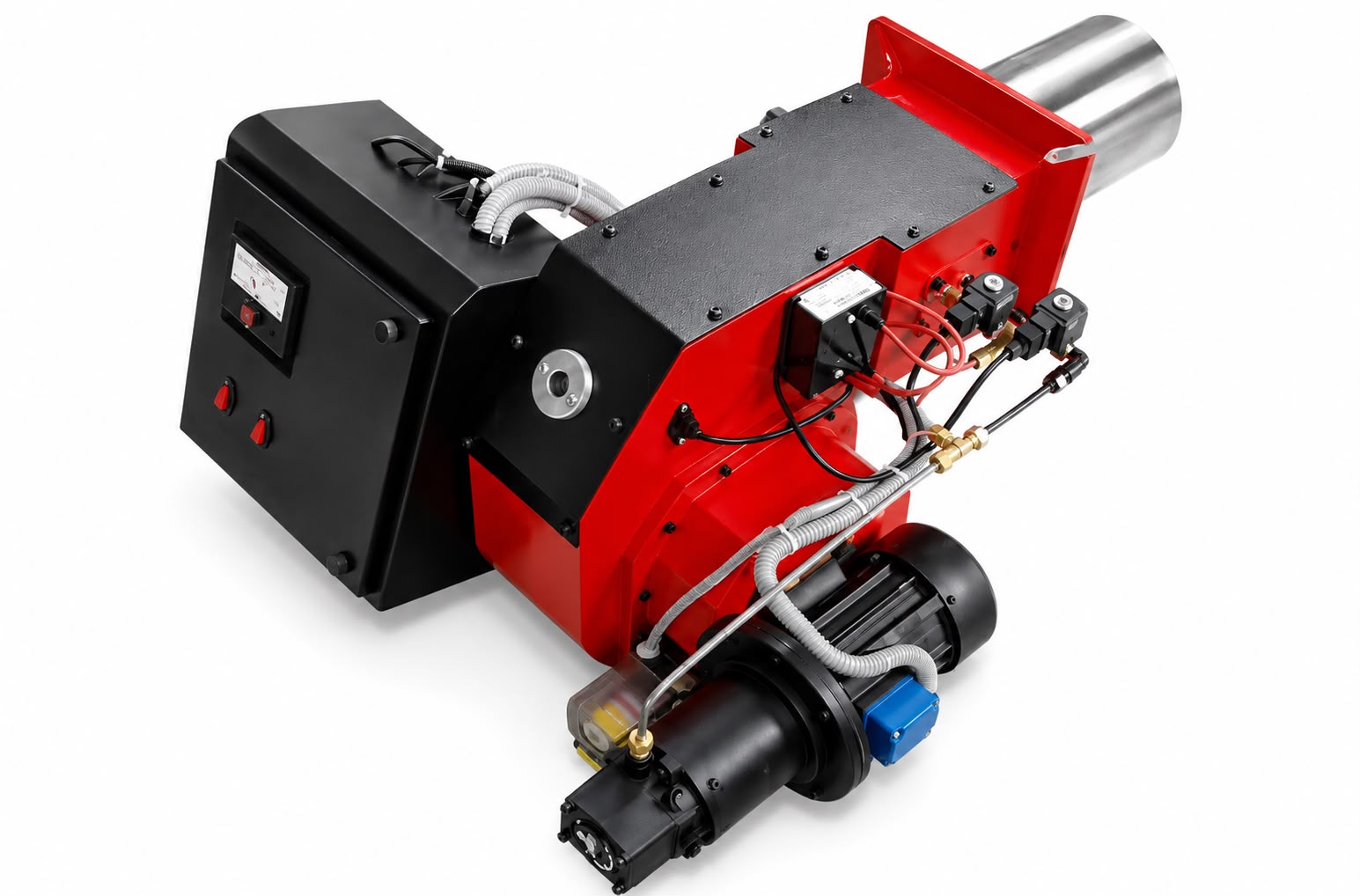 | Oil Burners Industrial Oil Burners High-Performance Oil Burners for Industrial Heating Applications We offer reliable and efficient Industrial Oil Burners... View product → |
Frequently asked questions
What does an oil burner do inside a boiler room?
It atomizes liquid fuel, mixes it with combustion air, ignites the mixture, and directs the flame into the boiler furnace.
How do fuel type and boiler rating determine burner size?
Select burner capacity from the boiler’s required heat input, then confirm compatibility with diesel or heated furnace oil and the available fuel pressure.
Where can a boiler oil burner fit on a Surat campus?
It can serve hot-water or steam systems supporting hostels, kitchens, laboratories, laundries, workshops, and other buildings with central heating demand.
How can you control fuel use and emissions during low demand?
Use suitable modulation or staged firing, tune the air-fuel ratio, maintain nozzles and filters, and verify combustion during low- and high-fire operation.
What belongs in a boiler-burner specification?
State fuel grade, heat input, boiler rating, turndown, electrical supply, controls, safety interlocks, emissions limits, installation conditions, testing, and service requirements.
Keywords