Choosing an oil burner by maximum kW alone can leave an industrial bakery with unstable temperatures, excess fuel use, smoke, or a burner that cannot match the oven’s heat losses. You will be able to estimate the required heat input, define fuel and control requirements, compare burner designs, and request the documents needed to assess a supplier’s proposal.
Key takeaways
- Calculate burner input from hourly heat demand, not batch capacity.
- Include product heating, moisture evaporation, heat-up, wall, door and exhaust losses.
- Match fuel, oven design, flame arrangement and air supply before sizing.
- Request test results, drawings, safety controls and maintenance documents before ordering.
Calculate the Oven’s Heat Demand Before Choosing Burner Capacity
Calculate burner input from hourly heat demand, not oven batch capacity: product heating and moisture evaporation, heat-up energy, wall losses, door leakage, and fresh-air or exhaust losses. Divide the total energy by the required heating or baking time, then add a controlled margin. Avoid substantial oversizing; repeated on/off cycling increases wear and temperature variation.
Use this calculation sheet:
- Product load: kilograms per cycle, inlet temperature, target temperature, moisture to evaporate, and cycle time.
- Oven load: chamber dimensions, insulation condition, heat-up time, baking temperature, door openings, and exhaust flow.
- Burner result: minimum holding demand, normal running demand, peak heat-up demand, and required margin.
For example, heating 120 kg of dough by 180°C at an assumed specific heat of 2.5 kJ/kg·K requires 54,000 kJ, or 15 kW over one hour, before evaporation and oven losses. Confirm the final figure with an oven designer.
| Demand point | Burner specification to match | Sizing consequence |
|---|---|---|
| Minimum holding | Stable minimum firing rate | Prevents cycling near setpoint |
| Normal baking | Rated continuous heat input | Maintains production temperature |
| Heat-up peak | Maximum firing rate and fan capacity | Achieves the required start-up time |
Bakery oven oil burner specifications must show both maximum and minimum firing rates, fuel flow, and control range. A bakery oven oil burner for education in Surat should therefore compare the calculated range with actual burner data, rather than selecting the largest available model.
Specify the Fuel, Oven Design and Flame Arrangement Together
Choosing an oil burner for bakery oven service starts with the actual liquid fuel, not the burner name. Identify diesel, LDO, light fuel oil or furnace oil, then record viscosity, density, sulfur content, filtration level and required preheat temperature at the burner inlet.
Heavy furnace oil needs heated storage, lines, filters and pump components; a diesel burner will not atomize it correctly without those provisions.
The heating arrangement changes the selection:
| Arrangement | Flame and gas path | What to specify |
|---|---|---|
| Direct-fired deck, tray, rotary rack or tunnel oven | Flame and combustion products enter the baking chamber | Product-contact assumptions, emissions, flame clearance and exhaust capacity |
| Indirect-fired oven with heat exchanger or recirculated air | Flame stays in a separate furnace; heated air reaches the product | Heat-exchanger area, allowable furnace pressure, air-flow resistance and flue arrangement |
| Dual-fuel oven | Oil and gas can produce different flame shapes and excess-air needs | Separate commissioning data, fuel interlocks and controls that prevent both fuels entering together |
Match flame length and diameter to the chamber, burner quarl, refractory clearance, trays, heat exchangers and exhaust draft. A flame touching a wall creates hot spots, soot and damaged refractory. Your bakery oven oil burner specifications must state maximum and minimum firing rates; maximum input alone cannot prove stable operation near setpoint.
Record the oven’s allowable chamber pressure and require confirmation that the burner holds a clean flame at the minimum heat demand.
Compare Firing Range, Air Supply and Safety Controls
A burner is suitable only when its minimum firing rate, combustion-air delivery and safety sequence match the oven’s lowest heat demand and site utilities. A maximum capacity alone proves little: poor turndown causes flame instability, cycling and uneven baking.
| Area | Specification to compare | Failure if missing |
|---|---|---|
| Firing range | Maximum and minimum heat input, nozzle size, fuel-pump pressure or flow, and turndown ratio | The burner cannot hold a stable low flame near setpoint, increasing temperature swings and fuel use |
| Air supply | Fan capacity at stated static pressure, motor power, damper range, combustion-air proving and noise level | Insufficient air creates smoke and carbon deposits; excess air wastes heat and disturbs the flame |
| Safety controls | Purge time, ignition transformer, flame scanner, fuel-pressure switches and normally closed safety shut-off valves | Flame failure can leave unburned oil in the furnace, causing a fire or delayed ignition |
For industrial bakery oven burner buying, request bakery oven burner specifications that also state electrical supply, burner dimensions and fuel connection sizes. Check that the fan can overcome the oven and chimney resistance, not merely its free-air rating.
The control sequence must prove airflow, complete the purge, establish ignition, confirm flame and close fuel valves immediately after flame failure. Verify the sequence against the applicable oven and burner safety standard. Compare pressure-jet and rotary-cup designs separately; their pump pressure, filtration, viscosity control and maintenance requirements differ.
Include nozzle replacement and fuel preheating in the operating-cost comparison.
Request the Engineering Documents Before Issuing a Purchase Order
Obtain the engineering package before issuing a purchase order. For industrial bakery oven burner buying, a quotation that names only the burner body can exclude the equipment needed to start, heat and control it. Request these documents:
- A burner datasheet stating heat-input range, turndown, nozzle, fuel-pump pressure, viscosity range, combustion-air fan capacity, static pressure, motor power, electrical load and connection sizes.
- A general-arrangement drawing showing burner dimensions, flame length, flame diameter, quarl and mounting pattern.
- A fuel and piping schematic covering the day tank, transfer pump, filters, return line, tracing or tank heater, gauges and safety shutoffs.
- A wiring diagram and control sequence showing purge, ignition, flame detection, flame-failure trip, interlocks and restart behaviour.
- Installation, commissioning and maintenance instructions, including recommended nozzles, filters and spare parts.
- A documented performance-test or acceptance procedure using the proposed fuel and representative oven chamber conditions.
| Site detail | Obtain or confirm before ordering |
|---|---|
| Fuel | Diesel, LDO or furnace oil; viscosity, density, sulfur content and preheat temperature |
| Utilities | Electrical voltage and phase, compressed or atomizing air pressure, and available combustion-air route |
| Exhaust | Chimney diameter, draft, exhaust capacity and allowable chamber pressure |
| Installation | Burner clearance, mounting location, fuel-line length, drainage and access for servicing |
For an oil burner for bakery oven, record each responsibility in the purchase order so heating, filtration, wiring and commissioning costs do not appear later as variations.
Evaluate Surat Suppliers by Tested Performance and Lifecycle Cost
A lower burner price is a poor decision if excess air, purge losses, frequent cycling or fuel preheating inflate every batch. For industrial bakery oven burner buying, compare the installed cost, measured performance and five-year maintenance burden—not the quotation alone.
| Supplier evidence | Supplier A | Supplier B | Why it matters |
|---|---|---|---|
| Fuel operation | Proposed oil grade, viscosity, density, filtration and preheat temperature stated | “Suitable for oil” only | Unspecified fuel conditions hide heaters, filters and nozzle failures |
| Performance test | Witnessed test with your fuel and representative chamber | Catalogue data only | Confirms heat input, stability and flame shape under real conditions |
| Controls and safety | Ignition, flame scanner, shut-off valves, purge and restart recorded | Control list without test results | A failed flame must stop fuel, not fill the oven with oil vapour |
| Lifecycle support | Nozzle, pump, filter and scanner replacement intervals with local response time | Price-only offer | Downtime and spares can exceed the initial saving |
Ask each bakery burner supplier in Surat to document heat input, temperature stability, emissions, electrical load, noise and operation at specified fuel pressure and viscosity. Reject results from a test that does not represent your direct- or indirect-fired oven.
For bakery oven oil burner for education in Surat, ECOTECH BURNERS MFG CO can be assessed by the same evidence: require written fuel assumptions, chamber geometry, draft limits and maintenance intervals rather than accepting capacity figures alone. A supplier who will not provide those records has not reduced your operating risk.
Related products
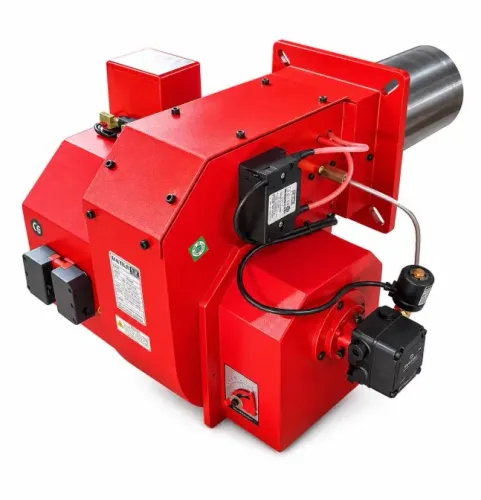
 | Oil Burners Oil burners (20kw to 10500 kw )Available in versions for different types of oil burners A compact burner, easy to install. View product → |
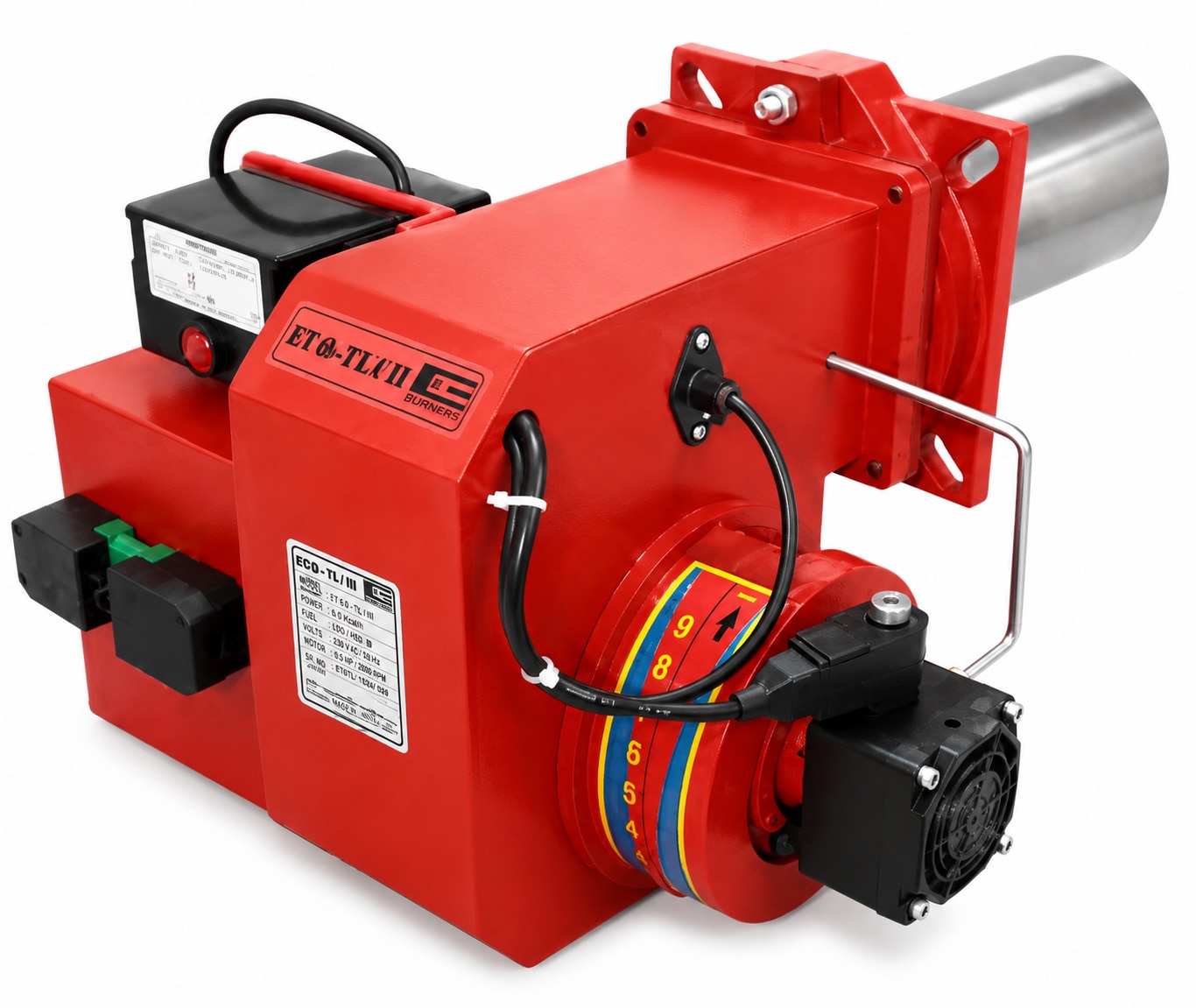 | Oil Burners Oil Burners Oil burners (20kw to 10500 kw )Available in versions for different types of oil burners A compact burner, easy to install. View product → |
Frequently asked questions
How do you calculate the required capacity for a bakery oven oil burner?
Add product heating, moisture evaporation, oven heat-up, wall losses, door leakage, and fresh-air or exhaust losses. Divide the total energy by the required heating or baking time, then add a controlled margin. Avoid substantial oversizing because frequent on-off cycling increases wear and temperature variation.
Which bakery oven oil burner specifications should buyers compare?
Compare fuel type, firing range, turndown, combustion-air supply, flame shape, flame length, control method, ignition system, flame-failure protection, fuel pressure, electrical requirements, and compatible oven temperature controls.
What engineering documents should you request before issuing a purchase order?
Request a burner datasheet, heat-duty calculation, dimensional drawing, fuel and air connection schedule, wiring diagram, sequence-of-operation document, safety interlock list, commissioning procedure, test record, maintenance schedule, and spare-parts list.
How should you evaluate a bakery burner supplier in Surat?
Compare tested performance at the required firing range, local commissioning support, spare-parts availability, service response, fuel efficiency, maintenance access, control integration, warranty terms, and total lifecycle cost rather than purchase price alone.
Keywords