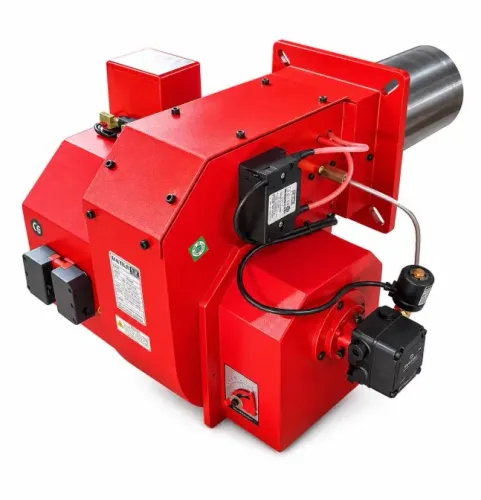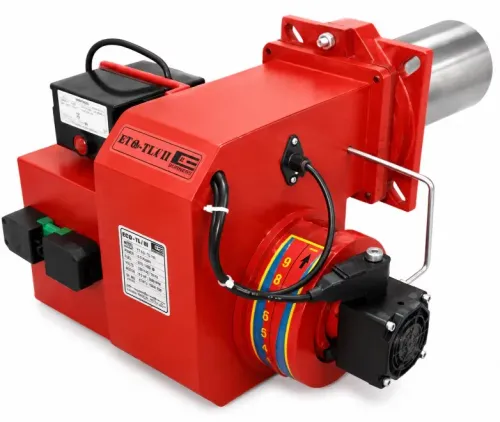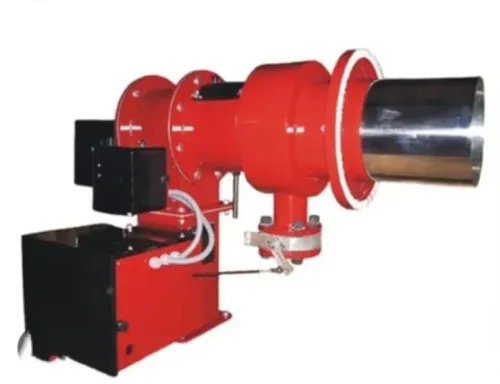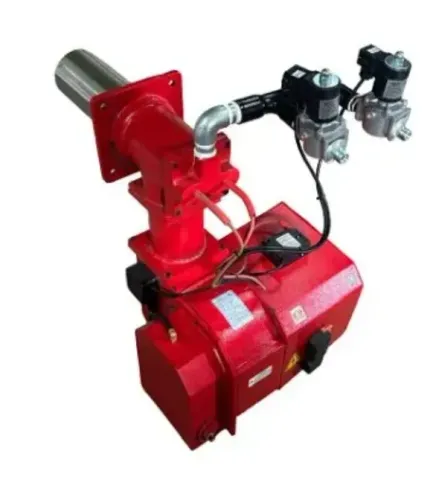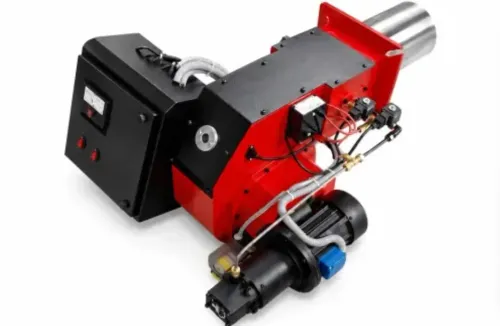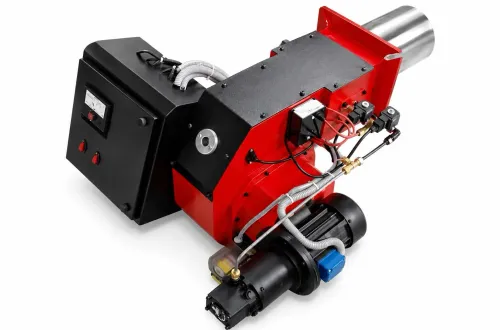
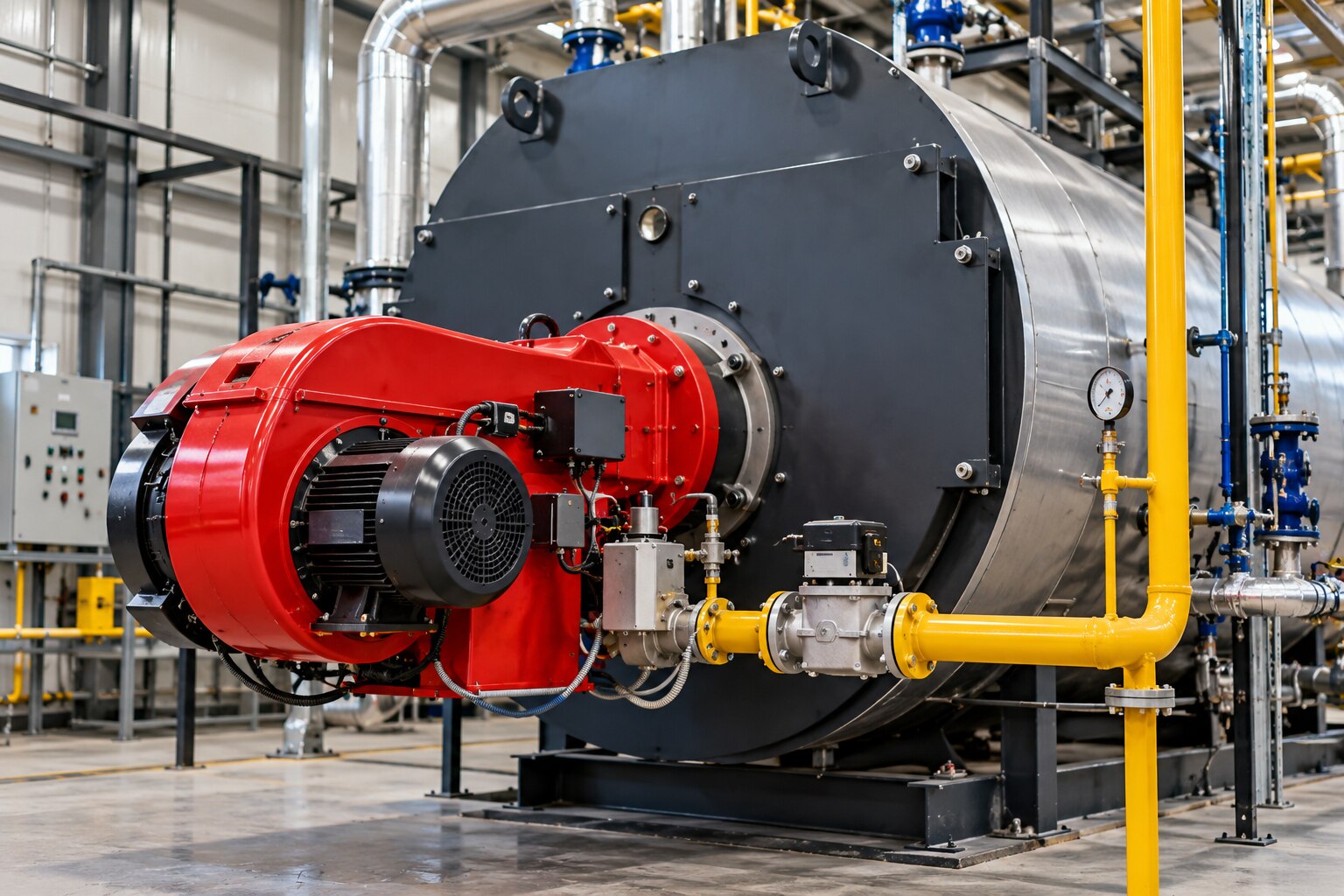
A burner’s maximum kW rating does not tell you whether it will supply a boiler’s peak steam demand, run efficiently at normal load or remain stable during low-fire operation. You will be able to calculate the required input, convert it into gas flow, check pressure and furnace limits, and compare supplier quotations on equivalent conditions.
Key takeaways
- Size the burner from useful boiler duty, not its maximum kW rating.
- Convert steam or hot-water demand into required gas input before comparing burners.
- Specify maximum and minimum fire to match the boiler’s actual load profile.
- Verify gas pressure, heating value, flow range and site conditions before ordering.
Start with Useful Boiler Output, Not the Burner’s Maximum kW
A boiler’s useful output is the heat delivered to steam or water, not the burner’s maximum rating. Burner input is reported in kW, kcal/h or million Btu/h; fuel consumption is reported in Nm³/h or kg/h. Boiler efficiency, blowdown, and specified radiation or distribution losses reduce the useful duty.
1. Define the required boiler output in the units used by the design brief: tonnes per hour or kg/h of steam, or hot-water flow and temperature rise. Do not substitute pump nameplate power or shell volume for thermal duty.
2. Calculate the base fuel input as:
Required burner input = boiler output ÷ expected efficiency
For 1,000 kW of useful duty at 85% efficiency, the burner must supply 1,176 kW before specified losses or operating allowance. Add an allowance tied to startup demand, peak process load, blowdown and documented losses; do not add an arbitrary oversized margin.
3. Make every quotation label its capacity figure. It must state whether the number means burner thermal input, steam-generation capacity or hot-water duty. A boiler gas burner capacity of 1,500 kW cannot be compared with 1,500 kg/h of steam.
4. Before comparing two figures, request the fuel type, LHV, efficiency basis, gas pressure, furnace back-pressure, operating allowance and units. A boiler burner manufacturer gas output in Surat quotation is auditable only when these conditions appear beside the rating.
Calculate Gas Input from Steam or Hot-Water Duty
1. Convert steam duty from mass flow to heat duty before selecting an industrial boiler gas burner. Use Qfuel = steam mass flow × (steam enthalpy − feedwater enthalpy) ÷ boiler efficiency. Add the documented allowance for blowdown, radiation, distribution or other operating losses; do not add an arbitrary margin.
2. For 2,000 kg/h of steam, with steam enthalpy of 2,780 kJ/kg, feedwater enthalpy of 420 kJ/kg and 85% efficiency:
Qfuel = 2,000 × (2,780 − 420) ÷ 0.85
This gives approximately 1,536 kW of burner heat input before specified allowances. Confirm the enthalpy values at the actual pressure and temperature. Returning hot condensate raises feedwater enthalpy and reduces the burner input required, while cold make-up water does the opposite. An economizer also raises feedwater enthalpy, so ignoring it can oversize the burner.
3. For a hot-water boiler, use Qfuel = water mass flow × specific heat × temperature rise ÷ boiler efficiency. Use the design flow and ΔT; a pump nameplate shows connected equipment, not guaranteed process flow, and shell volume does not establish heating capacity.
In your boiler burner selection guide, label every result as burner input, steam-generation capacity or hot-water duty, then state efficiency and allowances. A tonnes-per-hour rating alone is incomplete.
Choose Maximum and Minimum Fire for the Real Load Profile
Select maximum and minimum fire from the load profile, not from the boiler nameplate alone. Record these four points before comparing boiler burner capacity:
| Load point | What to record | Selection consequence |
|---|---|---|
| Startup | Heat-up demand and duration | Confirm reliable ignition and warm-up |
| Normal production | Sustained heat demand | Keep operation above minimum stable input |
| Short peak | Highest simultaneous demand | Set maximum input to cover the peak |
| Minimum operation | Lowest required firing load | Prevent unstable flame and repeated cycling |
A burner sized only for the peak can spend normal operation below its minimum stable firing rate. The controls then force purge-and-restart cycles, increasing thermal stress, fuel use and flame-safeguard wear. A lower minimum rate, staged firing or burner-management controls can suit a wide load range better than a larger burner.
Require the quotation to state these numerical values:
- Maximum input and minimum stable input in kW, kcal/h or million Btu/h
- Verified turndown ratio
- Furnace back-pressure and combustion-air flow at minimum and maximum fire
- Required gas pressure at the burner train at both firing limits
The boiler gas burner capacity must also match flame length, flame diameter, furnace dimensions, refractory throat, burner tile and tube spacing. A boiler burner selection guide that gives only one maximum number cannot show whether the flame will impinge on tubes or remain stable against furnace resistance.
Match Gas Flow, Heating Value, Pressure and Surat Site Conditions
A kW rating gives thermal input, not gas volume or guaranteed site performance. Calculate demand as gas flow in Nm³/h = burner input in kW ÷ gas LHV in kWh/Nm³.
State the reference conditions: standard cubic metres per hour (Nm³/h) and actual cubic metres per hour (m³/h) are not interchangeable because temperature and pressure change gas volume.
For any boiler burner manufacturer gas output in Surat purchase, request these fuel and site figures:
- Gas composition or Wobbe Index, LHV or HHV, supply temperature, pressure range and pressure variation
- Natural gas, LPG or biogas identification; do not treat them as interchangeable
- Gas pressure measured at the burner train after the regulator, filter, valves and pipe losses, not at the nominal site connection
- Furnace back-pressure and combustion-air temperature
| Fuel or condition | Check | Failure if ignored |
|---|---|---|
| Natural gas or biogas | Wobbe Index, composition and LHV | Incorrect injector sizing, air demand or flame stability |
| LPG | Vaporizer capacity in kg/h against maximum simultaneous demand, startup demand, lowest ambient and changeover redundancy | Pressure collapse during sustained high firing |
| Surat site | Fan output at project temperature, humidity, elevation and furnace back-pressure | Lower air mass flow and insufficient pressure margin |
Surat’s low elevation reduces altitude correction, but hot-air density and pressure-loss checks remain necessary. A tank’s LPG inventory is not its vaporization capacity; verify outlet pressure and backup vaporizer or changeover capacity.
Make the Manufacturer Prove Capacity Before You Place the Order
A catalogue maximum is not proof of usable boiler capacity. Ask every boiler burner manufacturer in Surat for figures tied to gas pressure, furnace back-pressure and test conditions, so competing quotations describe the same operating envelope.
1. Require a capacity curve showing burner input against gas pressure and furnace back-pressure. Record minimum and maximum gas consumption, verified turndown ratio, combustion-air flow, electrical load and guaranteed emissions, each with its test conditions.
2. For dual-fuel equipment, demand separate gas and oil ratings, consumption figures, air curves, atomization pressure or flow data, combustion-head settings and fuel-changeover interlocks. A gas rating does not establish safe oil operation; simultaneous fuel admission must be prevented.
3. Write commissioning tests into the purchase order at low fire, intermediate points and high fire. Measure CO, O₂ or CO₂, stack temperature, flame signal and furnace pressure at each point. High-fire combustion settings do not prove safe operation across the modulation range.
4. Compare quotations against boiler geometry, gas-train pressure, fuel specification and the actual load profile. Evaluate ECOTECH BURNERS MFG CO on whether it supplies these project-specific figures, rather than accepting one catalogue maximum.
Use this documentation as your boiler burner selection guide: reject any offer that omits the minimum stable input, pressure limits or measurement conditions. Without those boundaries, a lower quoted price can conceal cycling, unstable flame or inadequate peak output.
Related products
 | Gas Burners Gas burner (20 kw to 10500 )Available in versions for different types of gas. A compact burner, easy to install. Designed for easy maintenance. View product → |
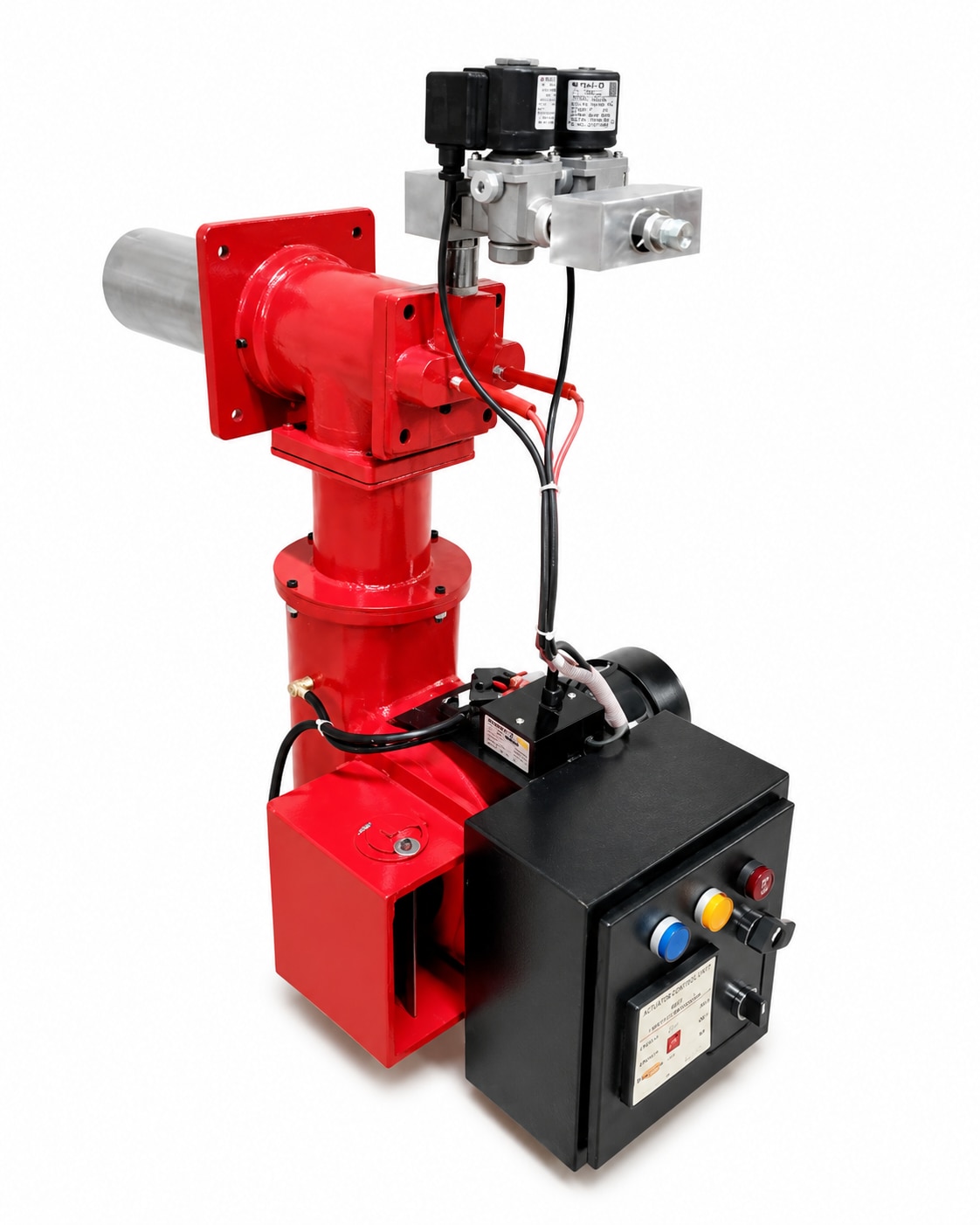 | Customized Burners Costumized Burner (120kw to 10500kw )Available in versions for different types of gas. A compact burner, easy to install. View product → |
Frequently asked questions
How do you calculate the gas input required for a boiler burner?
Start with the useful steam or hot-water duty, then account for boiler efficiency, blowdown, and specified radiation or distribution losses. Convert the resulting heat input into the burner’s required kW, kcal/h, or million Btu/h rating.
Should boiler burner capacity match the boiler’s maximum output?
Size the burner from the boiler’s useful output and required efficiency, not from the burner’s maximum rating alone. Oversizing can create short cycling, unstable operation, and poor control at low loads.
Why does a boiler need a specified minimum firing rate?
The minimum fire must suit the boiler’s lowest real operating load. A burner that cannot turn down far enough can cycle frequently, wasting fuel and increasing thermal stress.
Which gas and site details must you give a burner manufacturer in Surat?
Provide gas type, heating value, required flow in Nm³/h or kg/h, available pressure, altitude, ambient conditions, and the boiler’s operating load range. These details determine the fuel train, burner head, controls, and achievable output.
What capacity evidence should you request before ordering a boiler gas burner?
Ask for a written capacity schedule showing input, useful output, efficiency, maximum and minimum fire, gas pressure, flow, turndown, emissions basis, and operating conditions. Request test or commissioning procedures that show how those figures will be verified.
Related product
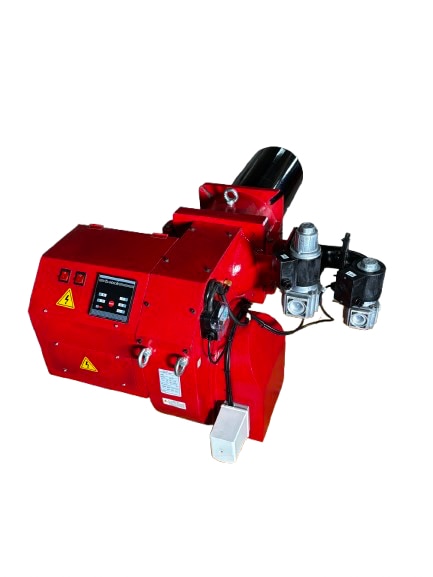 | Gas Burners Gas burner (20 kw to 10500 )Available in versions for different types of gas. A compact burner, easy to install. Designed for easy maintenance. View product → |
Keywords