Selecting a fryer burner requires more than matching a catalogue kilowatt rating to the fryer nameplate. You will be able to estimate heat duty, compare fuel and burner arrangements, specify the safety train, check retrofit compatibility, and judge whether a Surat-based supplier can support commissioning and long-term operation.
Key takeaways
- Calculate heat duty from oil volume, throughput and recovery time.
- Match burner output to fryer design, fuel pressure and available controls.
- Check tubes, flame path, insulation and safety interlocks before commissioning.
- Ask suppliers for a complete burner train, not only the burner body.
How a Namkin Fryer Burner Delivers Heat to the Oil
Heat moves from the burner through a heated metal surface into the frying oil. In a direct-fired fryer, the flame travels beneath or around the vessel, transferring energy through the fryer base and walls. In an indirect-fired design, hot gases pass through submerged heating tubes, and the tube surfaces transfer heat to the oil.
Oil circulation then spreads that heat by convection, but poor circulation leaves hotter zones near the tubes or vessel base. Flame impingement can create local hot spots, darken oil, and produce a controller reading that is cooler than the hottest oil.
Heat-transfer area, refractory condition, insulation, flue design, exhaust losses, and combustion-chamber backpressure determine how much burner input becomes useful heat.
Before selecting a namkin fryer burner in surat, provide the manufacturer with:
- Oil volume and fryer dimensions
- Product load per batch and hourly throughput
- Incoming product temperature and moisture content
- Target oil temperature, usually within the approximate 150–190°C namkin frying range
- Recovery time required after each product charge
- Direct-fired or indirect-fired construction, including tube or heat-transfer-surface details
- Insulation condition, ambient temperature, and estimated flue losses
- Available fuel, supply pressure, and required minimum and maximum firing rates
Do not size from the burner’s nominal kW or kg/h rating alone. The same input can deliver different oil-heating performance in two fryers.
Specify the firing range and turndown ratio as well: inadequate turndown causes frequent cycling and temperature swings, while a burner sized only for an empty fryer may recover too slowly after heavy loading.
Sizing Heat Duty for Oil Volume, Throughput and Recovery
Required burner capacity is the heat needed to restore oil temperature after loading, heat incoming product, evaporate moisture and cover fryer losses within the target recovery time—not the oil volume alone. A large oil charge stores more energy and recovers slowly; a small fryer running frequent, heavy batches can demand higher input.
Give the namkin frying burner manufacturer these sizing inputs:
- Oil volume and normal operating level
- Batch mass, product moisture and batches per hour
- Product entry temperature and target oil temperature, commonly 150–190°C depending on snack, coating, colour and residence time
- Maximum acceptable recovery time after each charge
- Fryer length, width, heating-surface area and heated-zone arrangement
- Insulation condition, ambient temperature, exhaust temperature and flue losses
Calculate duty from the temperature rise and recovery interval, then add the energy for product heating, moisture evaporation and continuous losses. A burner that holds an empty fryer at setpoint can still recover too slowly after a full batch.
Fryer construction changes how much burner input reaches the oil. Direct-fired vessels, submerged tubes and indirect heat exchangers have different transfer areas, refractory condition and backpressure; poor insulation or excessive exhaust flow increases fuel demand. Specify useful heat at the oil, not only nominal kW or kg/h.
Two fryers with identical oil capacity therefore can require different burner sizes.
Temperature Control, Fuel Choice and the Complete Burner Train
Set the oil controller to the product’s proven frying temperature, usually within 150–190°C, rather than to the burner’s maximum output. Place a calibrated sensor in the oil circulation zone, use PID control with high-fire and low-fire stages, and specify minimum and maximum firing rates.
A low minimum rate limits cycling, temperature swings and accelerated oil degradation.
| Fuel | Operating implications | Specify before selection |
|---|---|---|
| Diesel | Requires tank space, filtration and a pump; delivery is familiar where gas supply is absent, but soot, odour and cleaning demand closer attention. | Tank capacity, oil pressure, nozzle size and return arrangement |
| LPG | Stored in cylinders or a bulk tank; clean combustion and rapid response depend on stable vaporisation and regulator capacity. | Storage type, vaporiser capacity, inlet pressure and changeover method |
| Natural gas | Pipeline supply avoids on-site storage and supports clean operation, but available pressure and connection capacity control the usable firing rate. | Meter capacity, inlet pressure, regulator and emergency isolation |
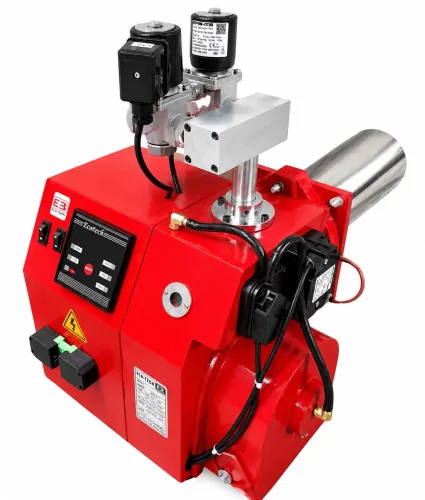
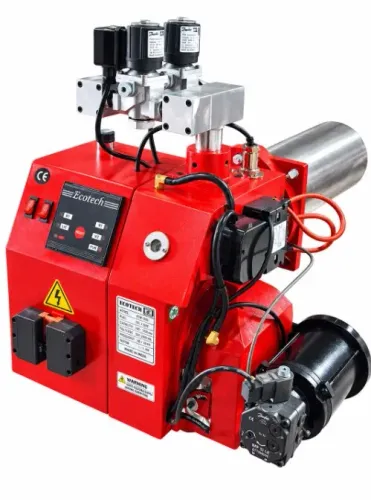
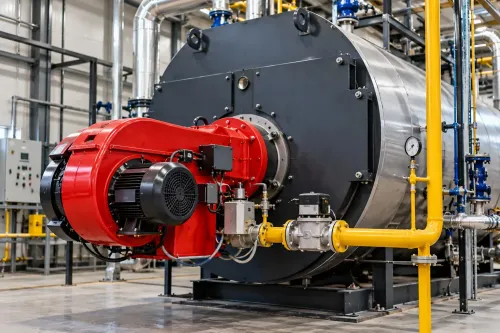
Specify the complete train, not merely a burner body. A gas train needs a manual isolation valve, filter, regulator, pressure switches, two automatic safety shutoff valves, a meter, ignition system and flame safeguard. An oil train needs a tank, pump, filter, pressure control, nozzle assembly and flame safeguard.
For a dual-fuel package, require separate fuel admission and isolation, fuel-specific metering, purge and changeover logic, and combustion tests on each fuel. Confirm whether changeover is permitted while firing; “dual-fuel” alone proves nothing.
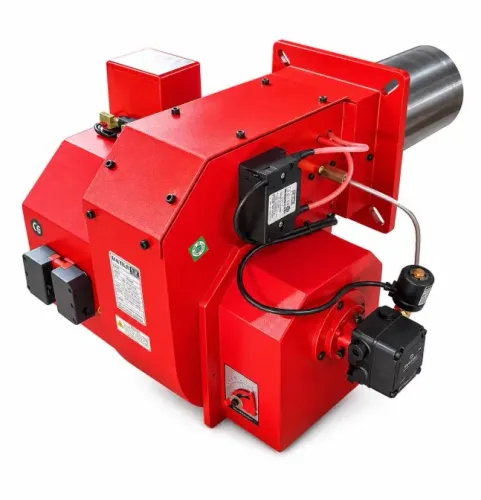
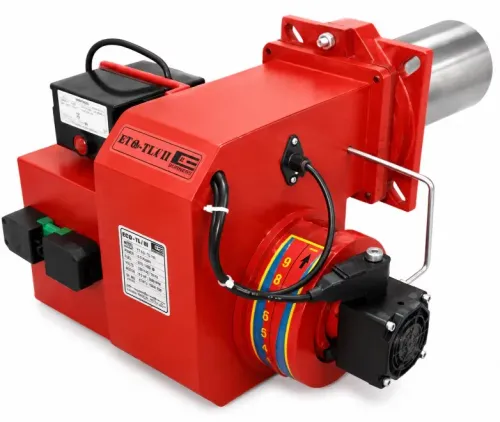
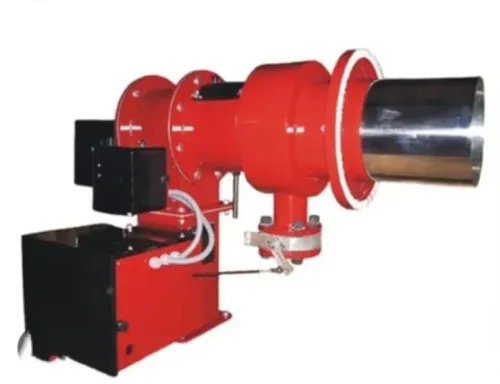
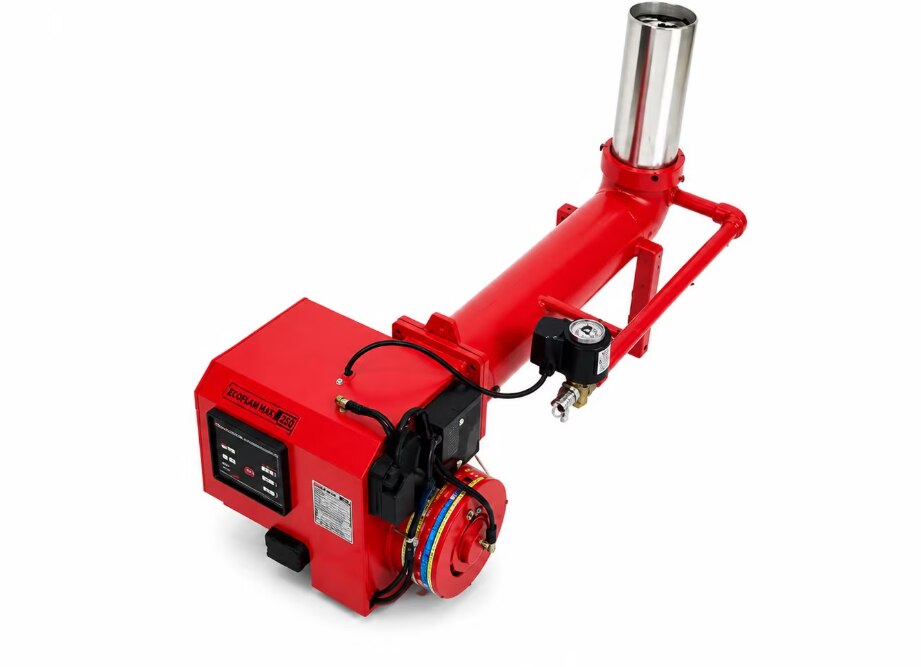
A customized namkin fryer burner should document flame length, mounting geometry, heat-transfer-tube arrangement, quarl dimensions, control logic and electrical supply—not just a changed flange or nozzle.
Checking Compatibility and Commissioning an Existing Fryer
Confirm the fryer can accept the proposed burner before buying it. Check mounting dimensions, flame length, burner-tile or quarl clearance, heat-transfer-tube arrangement, combustion-chamber volume, exhaust path, available electrical supply, fuel pressure, and the fryer’s minimum and maximum heat input.
A flange that fits does not prove that the flame will stay clear of oil, tubes, and refractory.
- Measure the existing gas or liquid-fuel connection, inlet pressure, exhaust draft, chamber pressure, and available control-panel voltage. Match the gas train to actual flow and pressure, including manual isolation, filtration, regulation, automatic safety shutoff valves, pressure switches, and leakage-test points.
- Obtain the burner datasheet, operating envelope, fuel-consumption curve, turndown ratio, connection drawing, fuel-train schematic, electrical I/O list, spares list, commissioning procedure, and performance-test form. Ask whether the namkin fryer burner manufacturer or industrial fryer burner supplier owns combustion calculations, controls integration, site commissioning, and warranty responsibility.
- Start at low fire and adjust fuel and combustion air until the flame is stable, the fryer reaches the commanded temperature without cycling, and draft remains within the specified range. Record fuel flow, firing rate, flame signal, chamber pressure, flue-gas oxygen, and carbon monoxide.
- Raise the burner gradually to high fire, repeat every measurement, and verify recovery without flame impingement or hot spots. Test flame failure, low-gas or low-oil pressure, high-pressure, airflow, exhaust, and emergency-stop trips.
A clean-looking flame does not prove safe combustion. Blocked air inlets, fouled burner parts, poor draft, or fuel-pressure changes can raise carbon monoxide without an obvious colour change. Insist on signed low- and high-fire results before production.
Choosing a Surat Manufacturer or Supplier for the Whole System
A catalogue seller can quote burner capacity; a manufacturer must explain how that capacity works on your fryer. For the search phrase namkin fryer burner manufacturer for builds topical authority in surat, the practical test is not the label but ownership of the combustion calculation, controls integration, commissioning report and warranty.
Ask each candidate for:
- A burner datasheet showing operating envelope, turndown range, fuel-consumption curve and connection dimensions.
- A fuel-train schematic, electrical I/O list, recommended spares and commissioning procedure.
- A site plan marking the LPG cylinder bank or bulk tank, vaporizer, regulators, pipe route, ventilation, electrical classification and service clearances.
- A written statement naming who accepts responsibility for flame stability, temperature control, safety interlocks and the finished installation.
| Role | Evidence you should see | Risk if absent |
|---|---|---|
| Manufacturer | Fabrication details, combustion calculation and tested operating point | No clear owner for performance or warranty |
| Distributor | Brand datasheet and supply invoice, but no design responsibility | Standard package may not suit backpressure or heat-transfer geometry |
| System integrator | Burner, fryer, controls and fuel infrastructure drawings | Coordination can fail unless interfaces are documented |
For a namkin fryer burner in Surat, require a site visit before ordering. The supplier must verify fuel pressure at the burner, pipe-run pressure drop, vaporizer capacity, exhaust routing and access for maintenance, then identify coordination with local fire and pressure-vessel requirements.
ECOTECH BURNERS MFG CO belongs in your comparison only after it documents these interfaces for your actual fryer, rather than relying on a catalogue maximum.
Related product
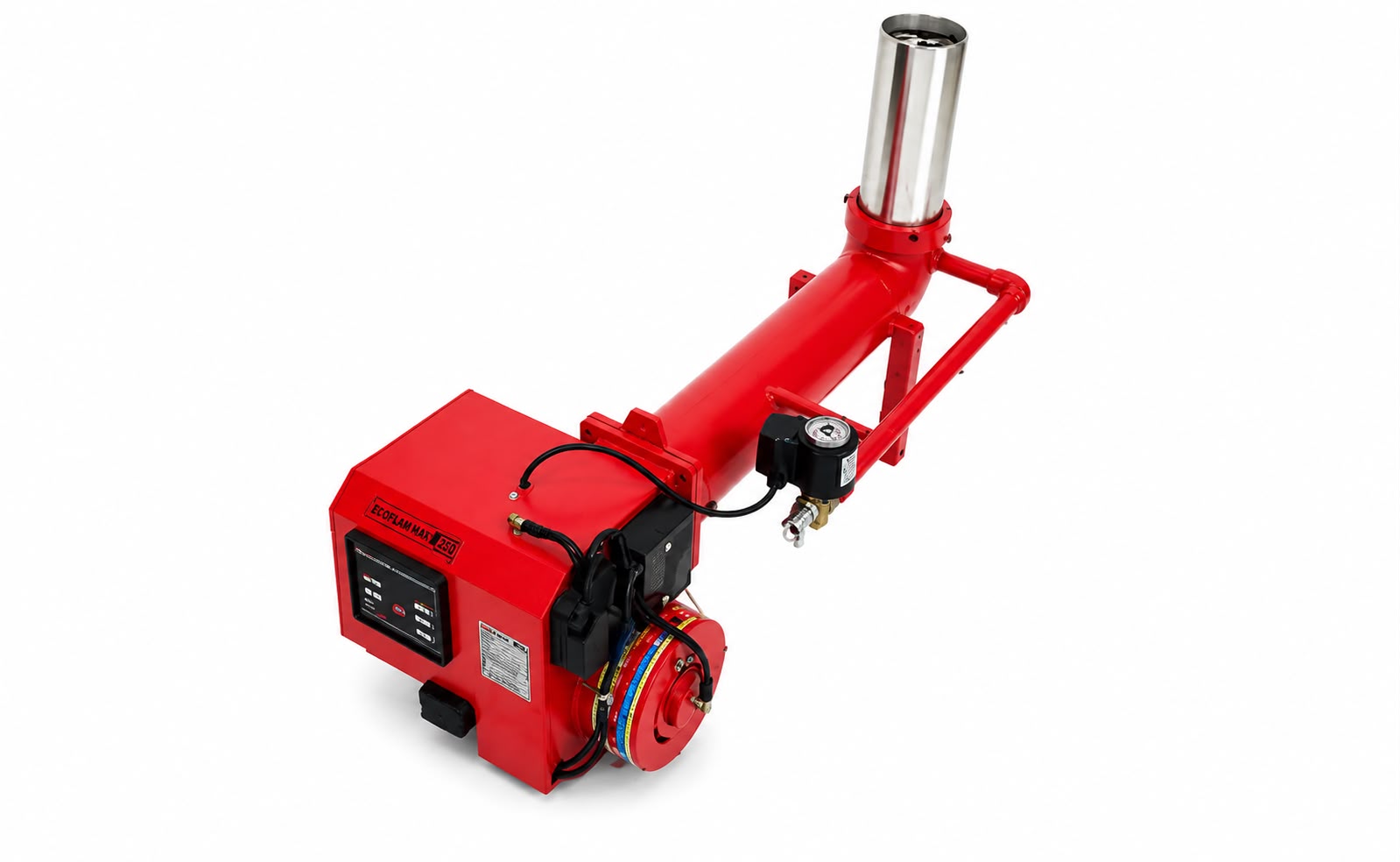 | Customized Burners Suitable for edible oil heating and namkeen frying systems Available in Diesel, LPG and Natural Gas configurations High-efficiency combustion Stable... View product → |
Frequently asked questions
How does a namkin fryer burner transfer heat to the oil?
A direct-fired burner transfers flame heat through the fryer base or walls. An indirect-fired burner sends hot gases through submerged heating tubes, whose surfaces heat the oil.
How do you size a burner for a namkin fryer?
Base the heat-duty calculation on oil volume, product throughput, the required frying temperature and recovery time after cold product enters the fryer. Then match the burner range to the fryer’s heat-transfer surface and fuel supply.
What belongs in a complete namkin fryer burner train?
The system includes the burner, fuel valves, regulator, filter, pressure switches, ignition and flame-monitoring equipment, controls, and safety shut-off devices. Specify these parts together so the burner operates within its rated fuel pressure and control range.
What should you check before commissioning an existing fryer?
Inspect the fryer vessel, heating tubes or flame path, burner mounting, seals, insulation, fuel piping, ventilation, electrical controls and safety interlocks. Test ignition, flame failure shut-off, operating temperature control and emergency stop functions before production.
Keywords