A Surat factory needs more than a burner nameplate: it needs a heat source that matches the process, fuel supply, safety system and production risk. By the end, you will be able to identify suitable applications, estimate a first-pass capacity, prepare a quotation brief and compare gas, oil, electric and standby arrangements.
Key takeaways
- Size the burner from process heat demand, fuel pressure and turndown—not furnace volume alone.
- Use automatic changeover only after proving stable flame, purge and fuel-train interlocks.
- Check LPG storage, vaporizer capacity and ventilation before specifying liquid-fuel backup.
- Compare quotations by guaranteed output, turndown, emissions, commissioning scope and spare parts.
Where dual-fuel burners fit in Surat manufacturing processes
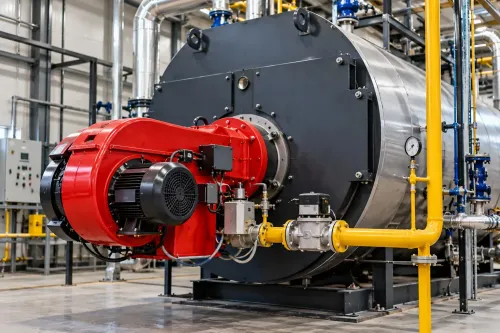
Textile dyeing and finishing, chemical processing, pharmaceutical heating, food production, foundries and metal heating benefit when a fuel interruption could spoil a batch or stop a continuous line. Boilers, thermic-fluid heaters, ovens, dryers and powder-coating ovens also suit dual-fuel operation when the plant needs a controlled backup to piped natural gas.
| Process | Equipment | Why dual fuel helps |
|---|---|---|
| Textile and chemical processing | Process heater, dryer or thermic-fluid heater | Protects batch temperature and production continuity |
| Food and pharmaceutical heating | Boiler, oven or hot-air dryer | Maintains controlled heat during gas interruptions |
| Foundry and metal heating | Furnace or reheat oven | Supports high-temperature production with stored backup fuel |
| Powder coating | Curing oven and hot-air system | Keeps coating temperature stable when primary fuel is unavailable |
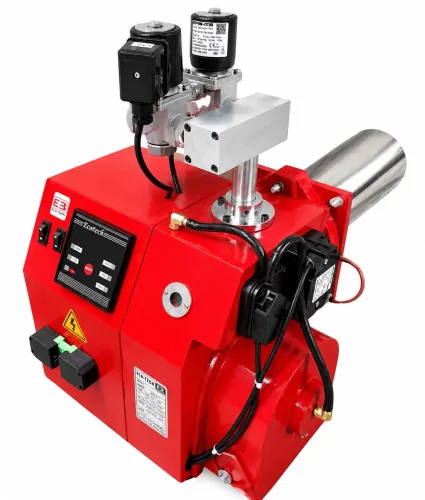
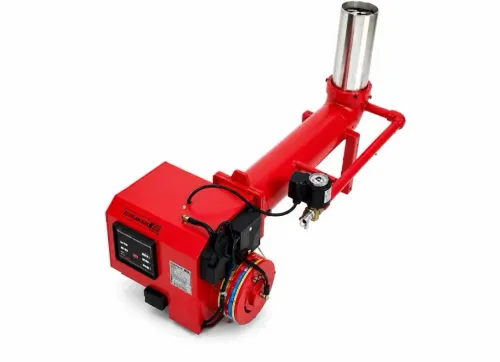
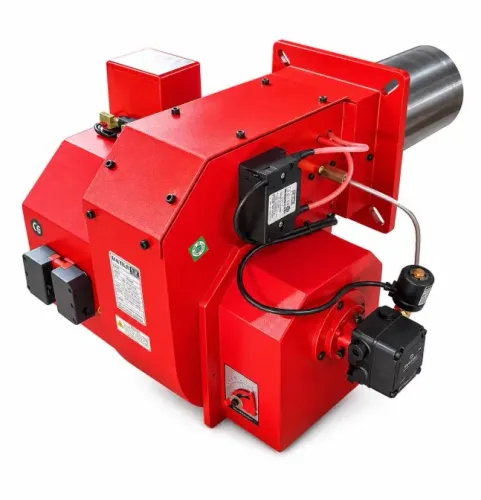
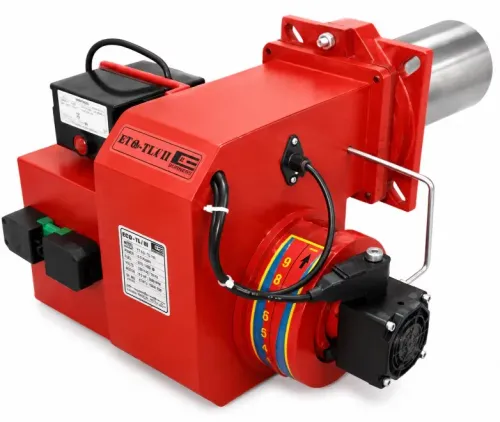
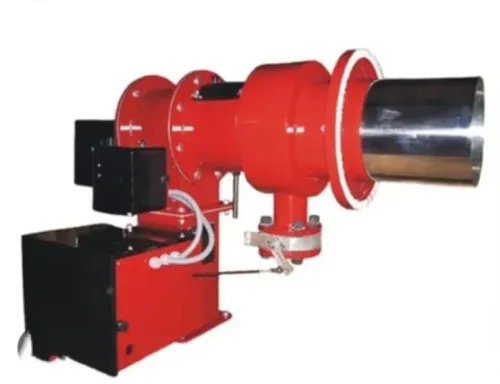
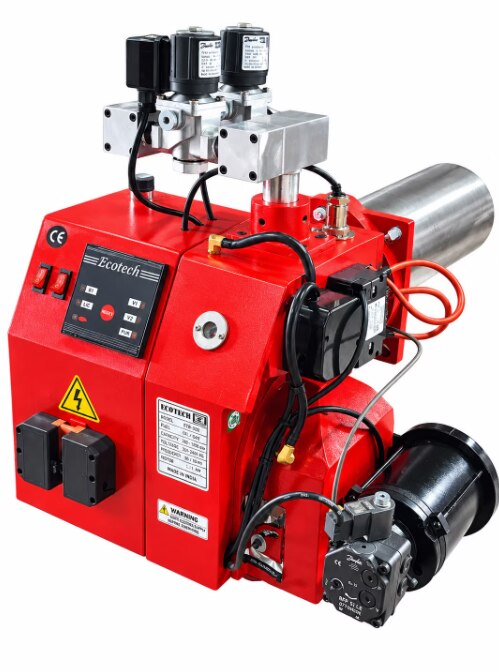
The burner connects to the plant through a gas or liquid-fuel train, combustion-air fan, ignition system, flame safeguard, control panel and exhaust path. A temperature controller sends the heat-demand signal; the burner modulates fuel and air while pressure switches, shutoff valves and flame monitoring prevent unsafe firing.
The standby fuel might be LPG or fuel oil, depending on storage space, delivery access, pump capacity and permitted emissions. Two fuels on site do not create a dual-fuel system: each fuel needs compatible metering, atomization or pressure regulation, ignition, flame supervision and safety interlocks.
Request separate maximum and minimum firing rates for gas and liquid-fuel modes because gas pressure, oil-pump capacity, furnace back-pressure and fan capacity can limit output.
When fuel flexibility improves plant resilience—and when it does not
A Surat factory switches from piped natural gas to LPG or fuel oil when a fuel interruption could spoil a textile batch, stop chemical heating, or leave a boiler and thermic-fluid heater without process heat.
This is the strongest case for industrial dual fuel burner applications in Surat: the standby fuel protects production, not merely the burner.
Fuel flexibility improves resilience when you have:
- A documented gas-pressure or supply-interruption risk, supported by a correctly sized stored-fuel system.
- Enough LPG or oil inventory to cover the expected outage, including delivery delays and minimum safe reserve.
- A combustion train, ignition system, flame safeguard and changeover controls designed for both fuels.
- Separate gas-mode and liquid-fuel capacity data, because fan capacity, atomizer performance, furnace pressure or emissions limits can reduce output on one fuel.
- A fuel-price advantage large enough to repay added tanks, pumps, maintenance and operator training when you switch for cost rather than continuity.
A dual-fuel system is the wrong investment when gas supply is dependable, the process can pause safely, and the plant has no compliant space for fuel storage. It also fails as a backup plan if oil has degraded, LPG supply is uncertain, or operators cannot test the standby mode under load.
A burner that merely has two fuel sources is not dual-fuel protection; without independent safety interlocks and a proven changeover sequence, the second fuel adds complexity without resilience.
How to calculate the right burner size for a factory
Size the burner from required process heat duty, not floor area or boiler shell size. Calculate fuel input as useful heat demand ÷ combustion-system efficiency, then add the warm-up load separately from the steady holding load. That is the basis for the dual fuel burner size for factory in Surat.
1. Quantify the duty in kW. For a process stream, use mass flow × specific heat × temperature rise, then add heat losses through walls, doors, exhaust and product moisture. State operating temperature, inlet and outlet temperatures, batch warm-up time and holding duty.
2. Convert the input duty into fuel flow. Divide gas input kW by the gas lower heating value for volumetric flow; obtain liquid-fuel flow from its lower heating value and density. Request separate maximum and minimum firing rates for gas and oil.
3. Check turndown against the process. An oversized burner on a batch dryer or thermic-fluid heater will cycle at low fire, causing unstable flames and poor temperature control. Specify the minimum stable load, not only the maximum kW.
4. Confirm equipment compatibility before ordering. Check combustion-chamber dimensions, furnace or boiler back-pressure, heat-release density, stack draft, combustion-air fan capacity, gas pressure, oil-pump and atomizer capacity, electrical supply and emissions limits. Ask for performance data at your actual pressures and for both fuels.
Run a witnessed commissioning test at high fire, low fire and changeover. Record heat output, flame stability, excess oxygen, temperature control and trip responses; a nominal rating is not proof that the existing heater can accept it.
Fuel trains, changeover controls and Surat site conditions
A reliable dual-fuel burner for a manufacturing plant in Surat needs separate gas and liquid-fuel trains, not merely two fuels stored on site. Gas, LPG and fuel oil require different pressure, heating-value, air, atomization and flame settings, so record a dedicated curve for each fuel and define the automatic or manual changeover sequence.
Before approval, verify:
- Gas inlet pressure, LPG or oil storage capacity, filtration, pump duty, oil viscosity control and atomizing-air or steam pressure.
- Isolation valves, pressure switches, purge sequence, ignition interlock, flame scanner, emergency stop and fuel shut-off response.
- Furnace back-pressure, combustion-air temperature, fan capacity, ventilation, electrical supply and hazardous-area classification.
- Tank bunding, leak detection, fire protection, oil-spill control and safe access for filling and maintenance.
- Exhaust capacity and consent limits for oxygen or carbon dioxide, CO, NOx, stack temperature and oil smoke or particulate emissions.
Surat’s humid, coastal environment makes enclosure sealing, cable protection, corrosion-resistant fittings and water removal from oil tanks important site checks. Poor tank drainage can send water into the pump and stop the standby flame.
Commission both fuels across the required firing range, including minimum rate and full load. Record gas pressure, oil pressure or viscosity, excess air, flame-scan settings and flue-gas results. Test the changeover and every flame-failure trip under load; an oil train that has not been test-fired is not dependable backup.
How to compare quotations, commission the system and maintain the backup
A quotation for a dual fuel burner for manufacturing plant in Surat is incomplete without process duty and operating limits. Ask ECOTECH BURNERS MFG CO to state heat input, minimum and maximum firing rates, furnace back-pressure, fuel composition and pressure, air temperature, turndown, electrical supply, emissions target, control-system interface and every excluded item.
| Quotation item | What to compare | Acceptance evidence |
|---|---|---|
| Burner and fuel trains | Gas and oil/LPG capacity, valves, regulators, pumps and filters | Nameplate data, leak test and stable firing |
| Controls and safety | Purge sequence, ignition, flame failure, pressure interlocks and changeover logic | Recorded trip tests and alarm checks |
| Installation and commissioning | Ducting, wiring, tuning, operator training and spares | Signed test sheets at low, medium and high fire |
Write acceptance tests into the purchase order. Commission cold first: verify wiring, valve direction, purge timing, emergency stop and flame-safeguard trips. Then prove ignition, minimum-fire stability, temperature control, fuel transfer and restart after a simulated supply interruption. Record exhaust emissions, fuel pressure, process temperature and firing rate.
Keep the standby fuel usable, not merely stored:
- Hold enough fuel for the agreed outage duration, with reserve based on actual burner consumption.
- Check tank level, LPG vaporizer capacity or oil temperature before each production run.
- Drain water from oil tanks, replace blocked filters and inspect hoses, valves and flexible connections.
- Run the backup burner or transfer sequence under load on a defined schedule; log pressure, flame signal and temperature response.
- Keep critical solenoids, ignition electrodes, nozzles, fuses and filters identified in the spares list.
These controls turn dual fuel burner applications for manufacturing in Surat from an equipment purchase into a tested continuity plan.
Related products
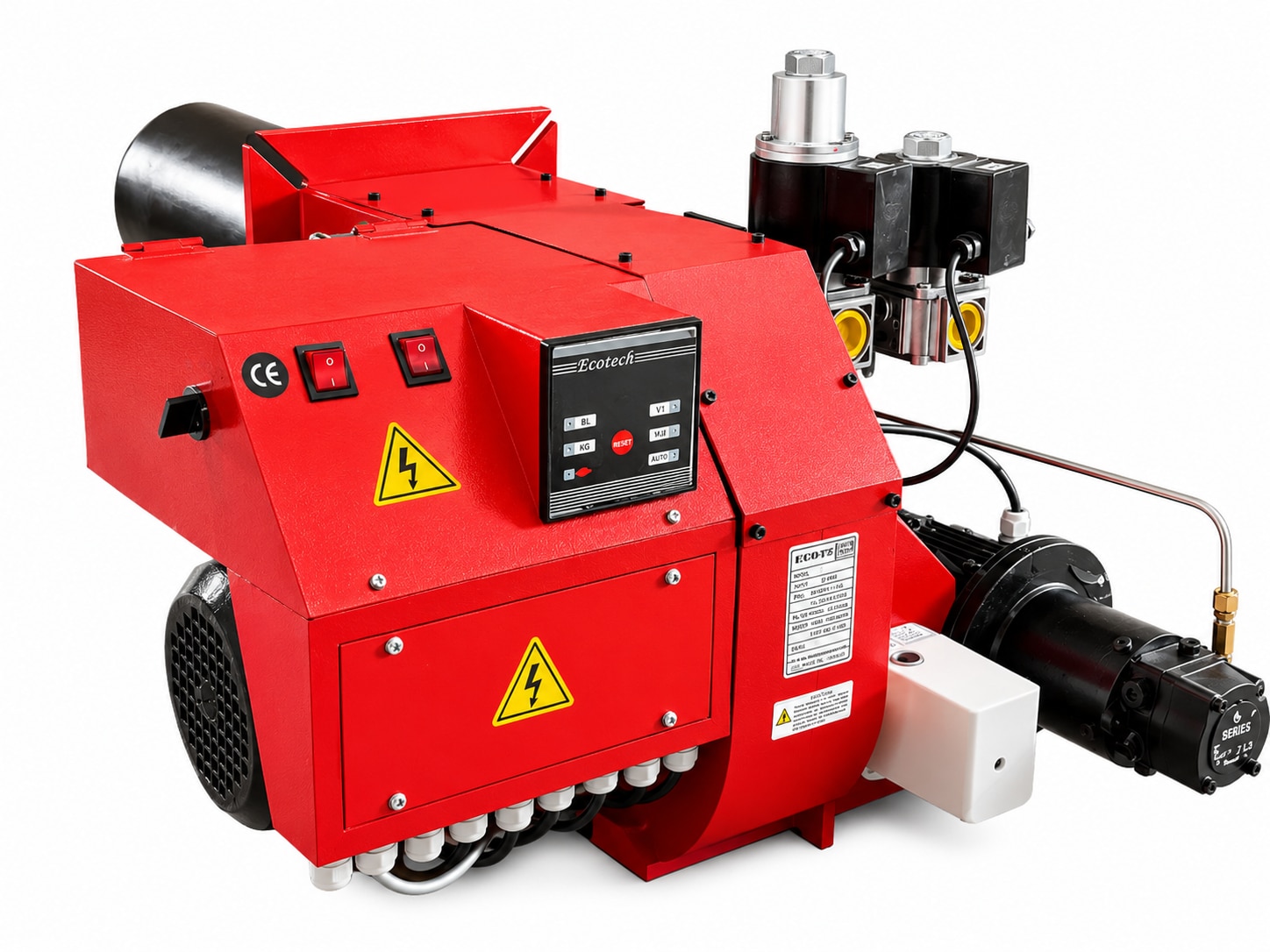 | Dual Fuel Burners Dual Fual Burner (120kw to 10500kw )Available in versions for different types of gas. A compact burner, easy to install. View product → |
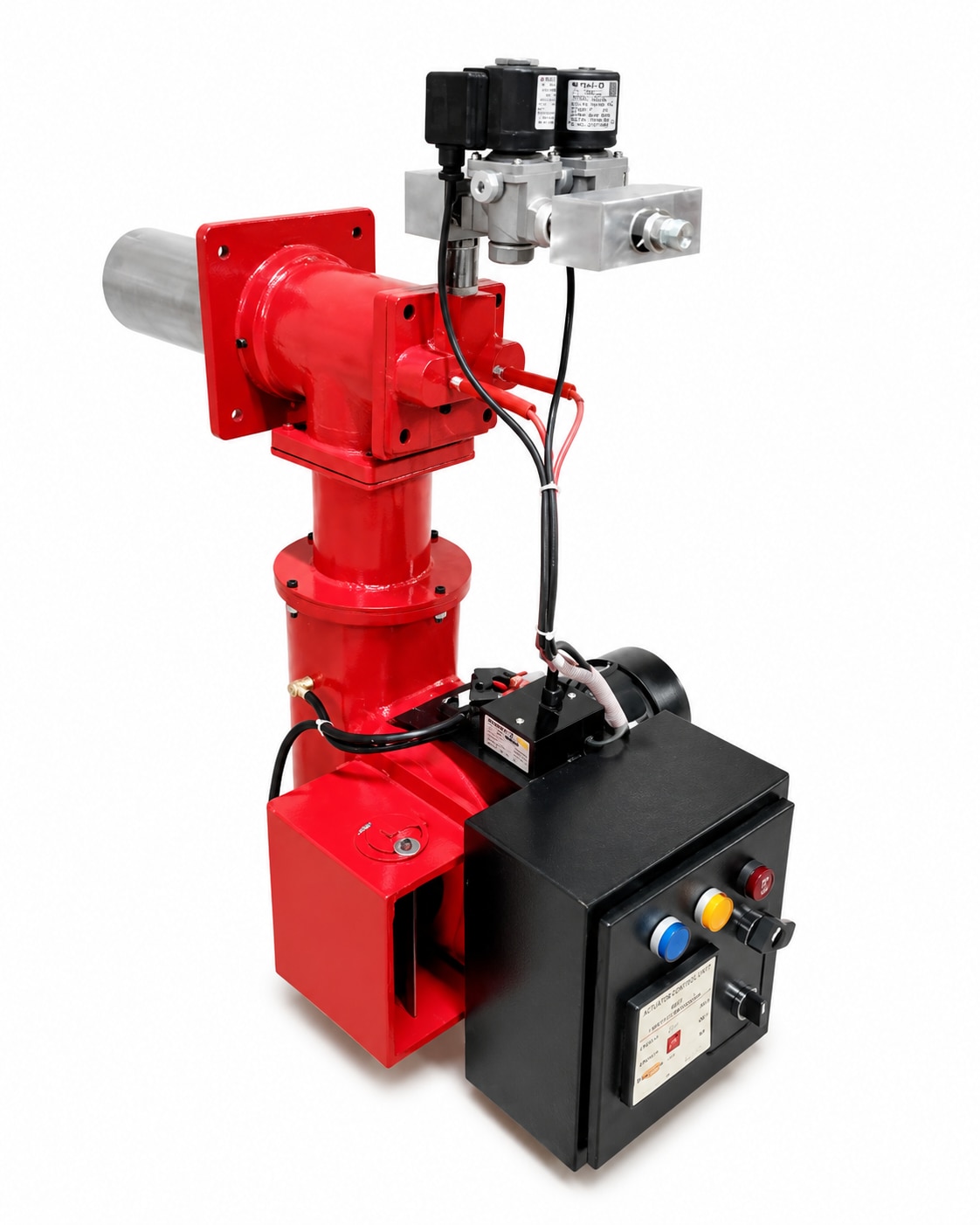 | Customized Burners Costumized Burner (120kw to 10500kw )Available in versions for different types of gas. A compact burner, easy to install. View product → |
Frequently asked questions
Where do dual-fuel burners fit in Surat manufacturing processes?
They suit boilers, thermic-fluid heaters, ovens, dryers and powder-coating ovens in textile, chemical, pharmaceutical, food, foundry and metal-heating plants where a fuel interruption threatens production.
When does fuel flexibility improve plant resilience?
It improves resilience when the backup fuel is stored, permitted, available at the required pressure and supported by a tested changeover sequence. It adds little resilience when storage, vaporization, fuel quality or operator training is inadequate.
How do you calculate the right dual-fuel burner size for a factory?
Start with the process heat load, then account for efficiency, startup demand, ambient conditions, fuel properties, required turndown and the available gas or liquid-fuel pressure. Confirm the result against the heater or boiler manufacturer's firing range.
What should you check in a dual-fuel burner quotation?
Compare guaranteed firing rate, turndown, fuel consumption, flame safeguards, purge sequence, fuel-train components, automatic changeover, emissions data, commissioning tests, documentation, warranty and spare-parts support.
Keywords