A burner that fits the fryer nameplate can still deliver uneven heating, slow batch recovery or unstable operation when its heat exchanger, fuel supply and control range do not match the process. You will be able to map the burner-to-fryer system, calculate the real duty, compare LPG with natural gas and diesel backup, and evaluate a Surat supplier against measurable installation and service requirements.
Key takeaways
- Keep the flame separated from edible oil in a combustion chamber or heating tube.
- Size the burner for oil volume, target temperature and batch recovery time.
- Compare LPG, natural gas, diesel and dual-fuel costs before selecting the system.
- Check service access, spare parts and commissioning support before choosing a Surat supplier.
How a Monoblock Burner Transfers Heat to a Namkeen Fryer
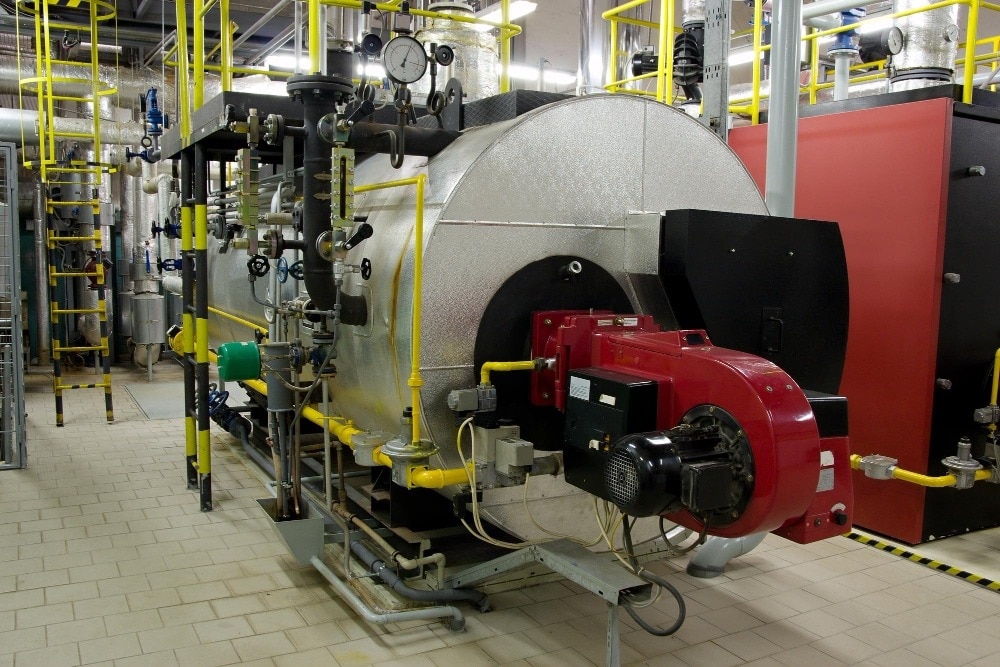
A gas burner for namkeen frying heats the oil indirectly: its flame stays inside a combustion chamber or heating tube, while the edible oil remains in a separate tank.
The tube wall or heat-transfer surface absorbs radiant and convective heat, then passes it into the oil without allowing flame or combustion gases to contact the food.
In a continuous fryer, the heated oil circulates around the product as the conveyor carries namkeen through the frying zone. In a batch fryer, the same principle applies inside the vessel: the burner heats the surrounding tube, jacket or thermal-fluid circuit, which then heats the oil.
The heat exchanger must suit the fryer’s chamber pressure, surface area and allowable tube temperature; a matching kW rating alone does not prevent scorched oil or uneven frying.
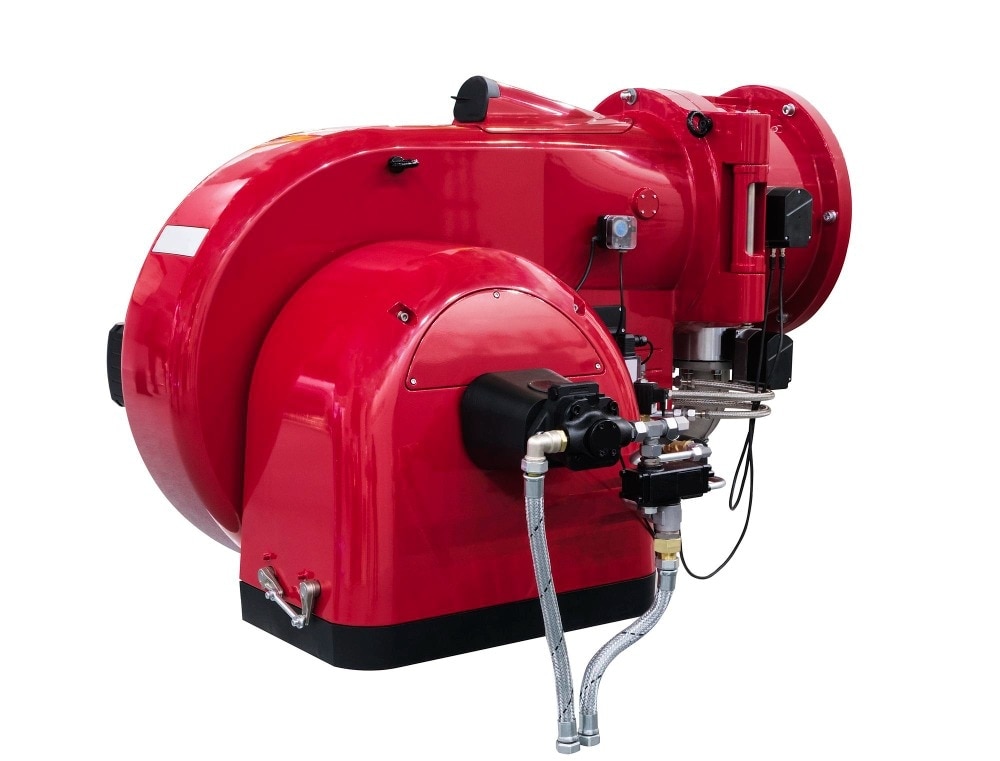
A monoblock burner combines the burner head and combustion-air fan in one assembly. Compared with a separate-blower arrangement, it needs fewer field-installed air ducts and simplifies mounting, alignment and initial commissioning.
For a Surat namkeen plant, specify:
- An air intake positioned away from fryer exhaust, with filtration against flour, spice dust and oil mist.
- Motor and control-panel protection suited to wash-down conditions.
- Cleaning access around the burner and heat-exchanger connection.
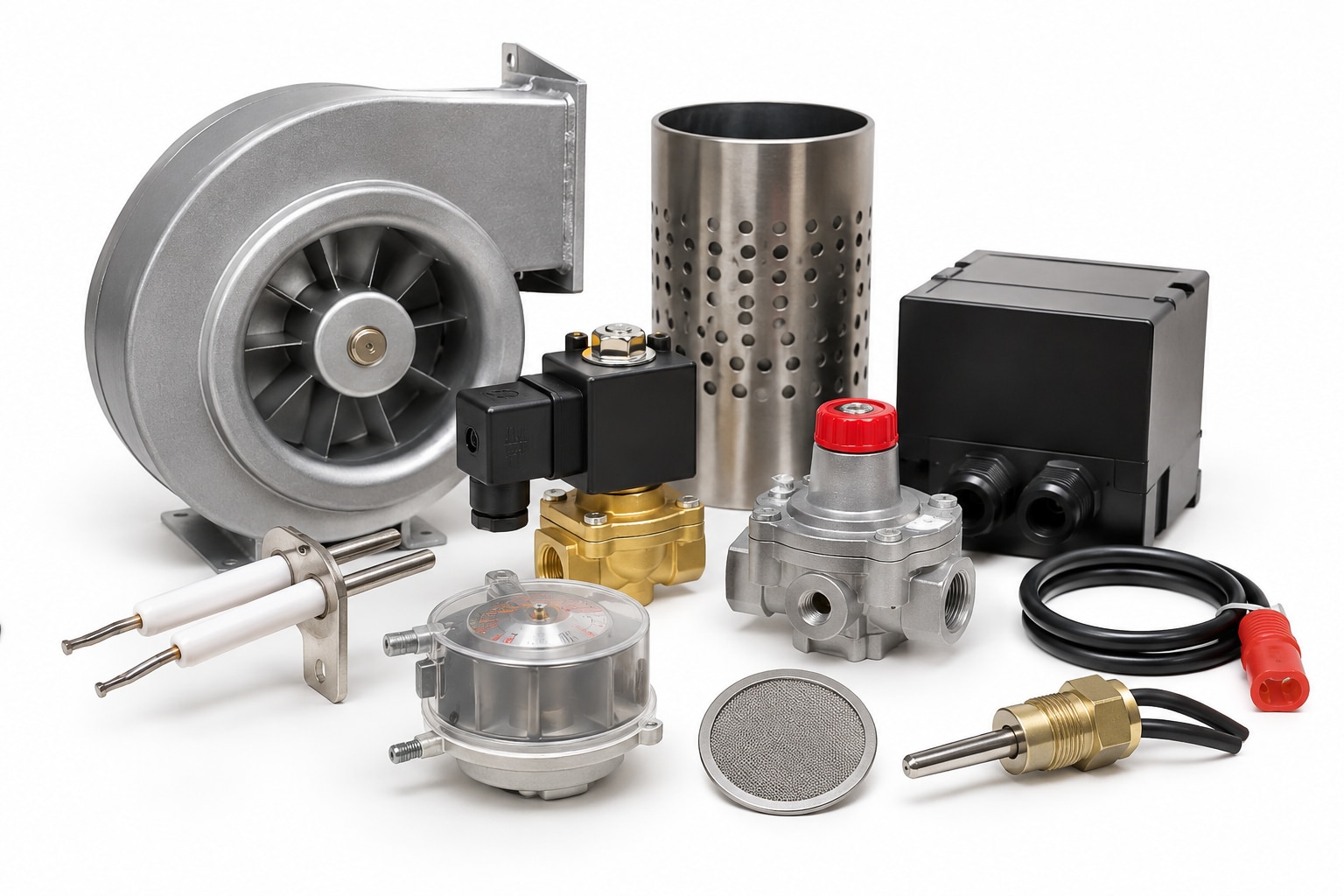
- A complete gas train with isolation, automatic shut-off, pressure switches, flame detection and combustion-air proving.
The compact layout saves space and replacement time, but fan noise, vibration and motor servicing remain concentrated at the burner mounting point.
How to Size the Burner for Oil Temperature and Batch Recovery
Size the burner from the fryer’s heat-duty calculation, not from oil volume alone. Use the oil charge, starting oil temperature, target frying temperature, batch mass, product moisture, required recovery time, vessel and heat-exchanger losses, flue losses, and insulation condition.
A larger burner does not guarantee faster production; it can create hot spots, oxidise the oil and overshoot the setpoint.
1. Record the heat-exchanger geometry, heating-surface area, chamber pressure, allowable tube or surface temperature, and fryer back-pressure. The burner must match how heat reaches the oil, not just provide a nominal kW rating.
2. Calculate warm-up duty and batch-recovery duty separately. Recovery duty must replace heat removed by the product and evaporating moisture within the specified interval, while also covering continuous losses.
3. Compare the calculated duty with the burner’s maximum and minimum firing rates. Request stable operation at the actual back-pressure, the turndown ratio, control response time and electrical load. On/off firing is more likely to swing oil temperature when the oil charge is small or loading is intermittent.
4. Confirm that the heat exchanger distributes heat across the fryer rather than concentrating flame-side intensity in one zone. Add temperature sensors at the control point and at the hottest oil location; verify both during commissioning with an empty fryer and loaded batches.
The monoblock gas burner benefits in Surat include compact installation and quicker local troubleshooting, but those advantages do not correct an undersized exchanger or poor control tuning. Record oil temperature, recovery time, flame signal and flue readings at each firing rate.
LPG, Natural Gas, Diesel and Dual-Fuel Choices for Surat Plants
For dependable operation, use natural gas as the primary fuel where pipeline pressure is stable, and specify diesel or LPG backup when interruption would stop production. A gas burner for namkeen frying must be matched to fuel type, inlet pressure and maximum flow; changing from natural gas to LPG is not a nozzle-only conversion.
| Option | Strength | Main risk or requirement |
|---|---|---|
| LPG | Works without a gas pipeline and suits cylinder banks or bulk tanks | An undersized vaporizer causes falling pressure, flame instability and nuisance trips |
| Natural gas | Clean, continuous supply with no on-site vaporization | Pipeline access, metering capacity and pressure stability control the usable heat input |
| Diesel | Independent of gas availability and useful for emergency operation | Requires a fuel tank, filtration, pump maintenance and burner cleaning |
| Dual-fuel | Preserves production during gas interruption or pressure loss | Needs correctly sized separate trains, interlocks, changeover logic and commissioning on both fuels |
For LPG, calculate vaporizer capacity from simultaneous burner load, tank or cylinder withdrawal conditions, ambient temperature and fuel composition. Obtain its outlet pressure, relief arrangement and maximum number of burners it can support. Do not assume a natural-gas rating transfers to LPG: regulators, metering orifices, combustion-air settings and commissioning checks all change.
Specify the fuel-pressure range, guaranteed heat input and turndown for each fuel. A dual-fuel arrangement costs more and needs more maintenance, but it is the strongest choice where Surat supply interruptions or unstable pressure would otherwise halt frying.
Where Monoblock Construction Saves Installation and Maintenance Time
A monoblock burner integrates the fan and burner head, so installation requires fewer air ducts, supports and field connections than a separate-blower arrangement. That cuts mounting and alignment work beside the fryer and leaves fewer surfaces where flour and oil dust can accumulate.
Cleaning access is simpler because the fan, impeller and burner head form one defined service assembly.
Commissioning still needs measurements, not a flame-appearance check. Record oxygen, carbon monoxide, flue temperature, gas pressure and draught or chamber pressure at low, intermediate and maximum firing under the fryer’s actual operating condition.
A local supplier can reduce waiting time for electrodes, flame sensors, gaskets, valves and fan motors; verify stock and response time because a Surat address alone proves technical capability.
| Area | Monoblock advantage | Trade-off |
|---|---|---|
| Installation | Compact package with fewer air connections and alignment tasks | Noise and vibration concentrate at the burner mounting point |
| Service | Accessible assembly and quicker replacement of common parts | A fan or motor fault stops combustion air and heating |
| Cleaning | Fewer ducts and joints to open, inspect and degrease | The impeller and air inlet still need regular cleaning |
| Procurement | Monoblock gas burner benefits in Surat include faster local commissioning logistics | Specify the gas train, safety controls, pressure range, turndown and spares; a low burner price can hide panel, vaporizer or site-modification costs |
How to Compare a Surat Burner Manufacturer Before You Buy
A local address is not proof of burner capability. Ask every monoblock burner supplier in Surat for written data tied to your fryer, including guaranteed heat input, fuel-pressure range, turndown, electrical load, sound level, emissions at stated loads and allowable fryer back-pressure.
Request these documents and commitments:
- Heat-duty calculation covering oil warm-up, moisture evaporation, vessel and heat-exchanger losses, flue losses and batch-recovery time.
- Gas-train drawing naming the manual isolation valve, regulator, automatic shut-off valves, minimum and maximum pressure switches, flame detector, ignition system, air-proving switch and valve-proving arrangement where required.
- Commissioning scope stating who will set combustion, verify flame failure trips, record flue-gas results and hand over operating settings.
- Service evidence showing Surat stock and response times for electrodes, flame sensors, gaskets, valves and fan motors.
- LPG documentation confirming vaporizer capacity at simultaneous peak load, tank or cylinder withdrawal conditions and the lowest design ambient temperature.
| Evidence | Ask for | Warning sign |
|---|---|---|
| Technical | Signed datasheet and heat-duty calculation | Capacity quoted from oil volume alone |
| Safety | Gas-train schematic and trip-test record | Burner described as the complete safety system |
| Commissioning | Named technician, test readings and acceptance sheet | “Installation support” without deliverables |
| Local service | Stock list, response target and escalation contact | Surat office but no parts inventory |
An industrial gas burner manufacturer in Surat should explain how the burner matches your heat exchanger, chamber pressure and surface-temperature limit. ECOTECH BURNERS belongs in the comparison only after it supplies the same evidence as competing manufacturers.
Related product
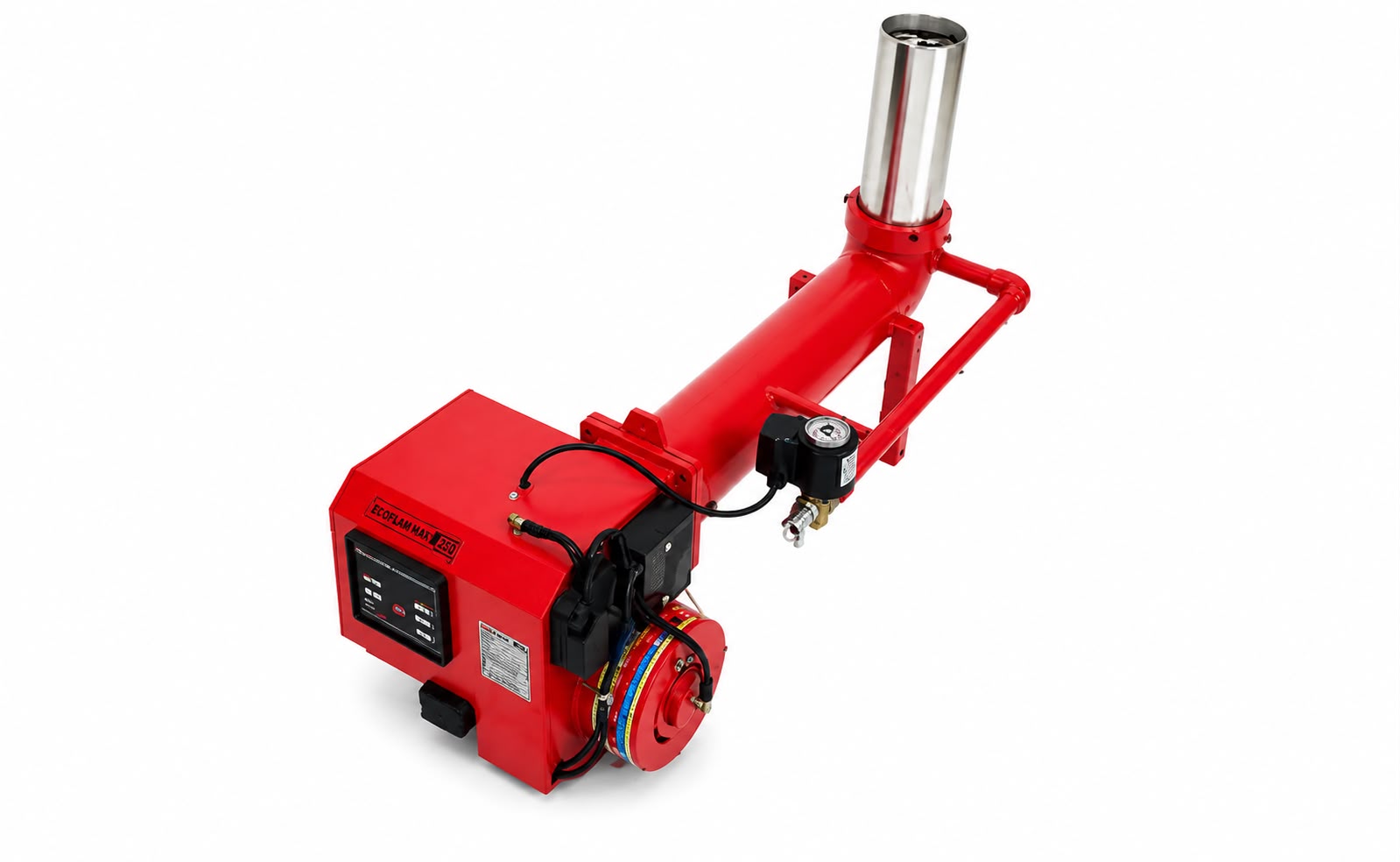 | Customized Burners Suitable for edible oil heating and namkeen frying systems Available in Diesel, LPG and Natural Gas configurations High-efficiency combustion Stable... View product → |
Frequently asked questions
How does a monoblock burner transfer heat to a namkeen fryer?
The burner fires into a combustion chamber or heating tube. Heat passes through the metal wall into the separate edible-oil tank, keeping the flame and oil apart.
How do you size a burner for oil temperature and batch recovery?
Use the oil volume, required operating temperature, heat losses, product load and desired recovery time. Confirm the calculation against the fryer design rather than selecting only by burner capacity.
Which fuel is suitable for a namkeen frying plant in Surat?
LPG, natural gas, diesel and dual-fuel systems each involve different fuel availability, storage, operating cost, emissions and backup requirements. Select the option that matches your site supply and production schedule.
What should you compare when choosing a monoblock burner manufacturer in Surat?
Compare combustion performance, burner control, fryer compatibility, installation scope, commissioning, spare-parts availability, response time and documented service support.
Keywords