Surat’s monsoon introduces moisture into the powder, workpieces, combustion air, burner hardware and electrical controls, so an oven that ran reliably in dry weather can develop ignition, temperature and coating defects. By the end, you will be able to inspect the system, calculate useful burner capacity, protect it from rain and condensation, and verify safe operation under actual wet-season conditions.
Key takeaways
- Dry metal, seams and threaded holes before curing to prevent steam-related coating defects.
- Inspect burner trains, ignition systems, seals and electrical enclosures before monsoon production.
- Size burner capacity from oven heat loss, product load, exhaust and warm-up requirements.
- Interlock flame failure, airflow, temperature limits and fuel pressure before enabling firing.
How Surat monsoon conditions disrupt powder coating and burner operation
Wet powder and wet metal can ruin a cure before the burner reaches its setpoint. High humidity can cause pinholes, craters, poor flow and adhesion loss; water trapped in seams, weld porosity, threaded holes or porous castings can flash into steam and create outgassing.
Keep powder sealed in its original packaging, dry workpieces thoroughly and follow the powder’s product data sheet rather than applying a universal humidity limit.
Surat’s monsoon creates these failure paths:
| Condition | Coating or burner effect | Production consequence |
|---|---|---|
| High humidity and rainwater ingress | Damp powder, wet workpieces and adhesion defects | Rework, rejected batches and extended drying |
| Condensation in gas trains, filters, panels or wiring | Pressure restriction, sensor faults or electrical trips | Delayed ignition, flame failure and stoppages |
| Restricted or undersized gas piping | Burner pressure falls during firing or simultaneous oven starts | Unstable flame and slow recovery |
| Humid combustion air | Fixed-volume fan delivers a different air mass at unchanged speed | Yellow flame, smoke or inconsistent heat input |
| Excessive exhaust airflow | Humid air enters through openings and heat loss rises | Uneven oven temperature and poor cure |
| Insufficient exhaust | Combustion products and evaporated contaminants accumulate | Unsafe operation and coating contamination |
| Marginal LPG vaporizer capacity | Pressure collapses during sustained vapor withdrawal | Burner cycling or shutdown despite liquid in the vessel |
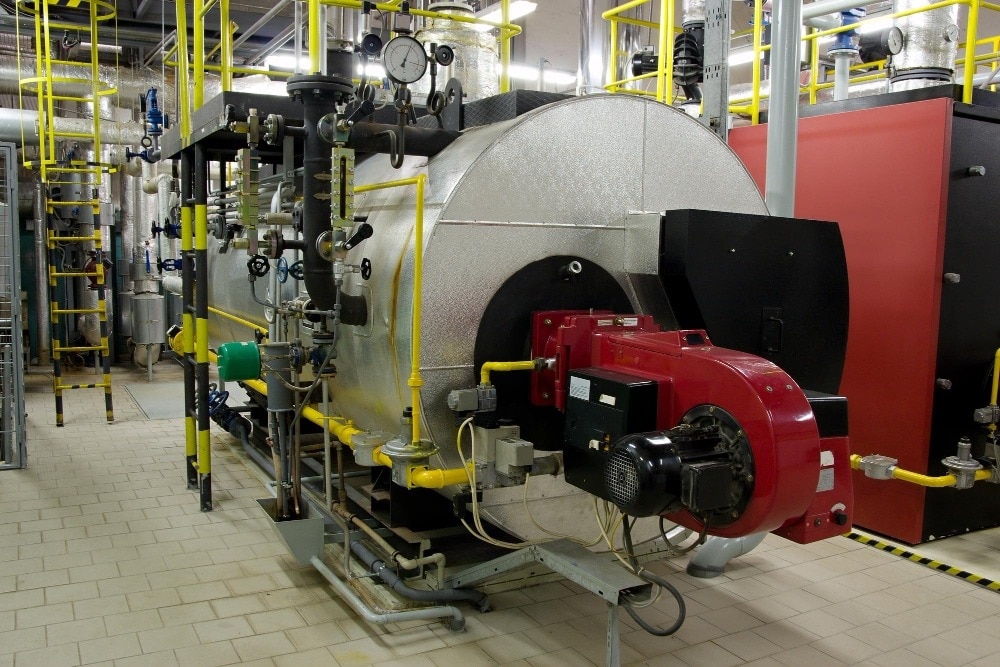
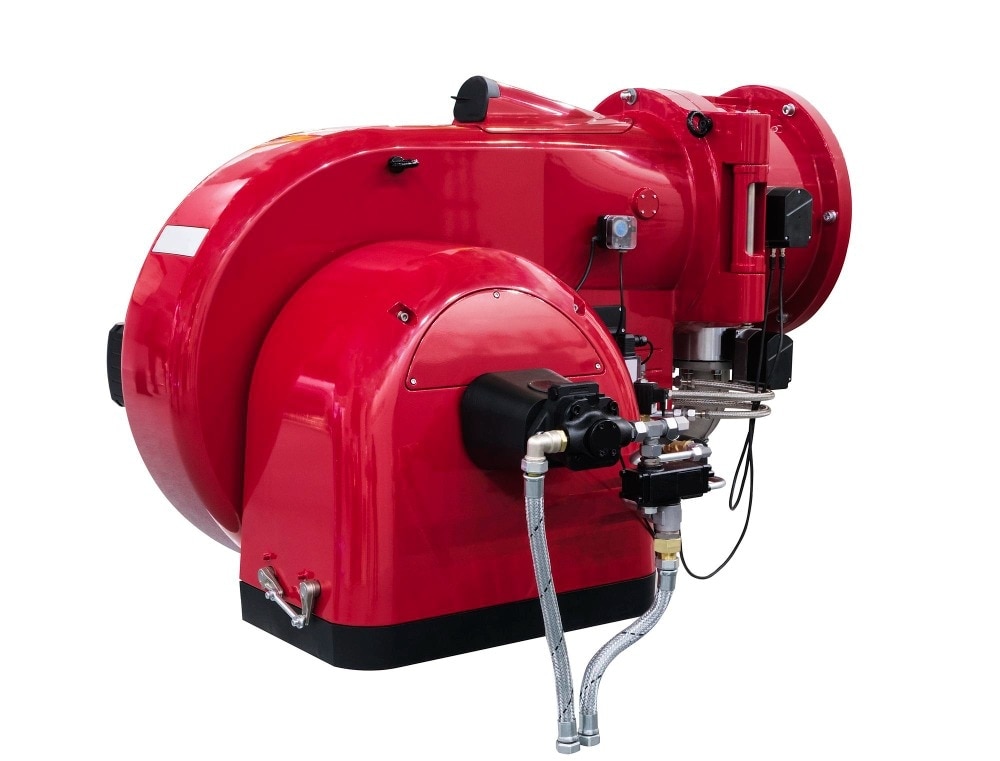
Check gas-train pressure at the powder coating oven burner while firing, not only at the upstream manifold. A powder coating oven burner for monsoon production in Surat also needs seasonal combustion readings, normal-production exhaust conditions and protected controls; it cannot remove moisture already inside powder or the workpiece.
The pre-monsoon inspection and humidity-protection checklist
Before the first rainy-season production run, inspect the oven, burner, gas train, exhaust path and controls while the plant is in normal operating configuration. Record burner pressure, flame quality, oven temperature uniformity and control-panel condition so monsoon changes have a baseline.
1. Check the gas pressure at the burner while firing, not only at the manifold. Inspect regulators, flexible connections, isolation valves and filters for condensate, blockage, corrosion or inadequate capacity during simultaneous oven starts.
2. Examine the burner, combustion chamber and insulation for water entry, rust, damaged seals and loose refractory. Keep combustion-air intakes covered from rain but never restrict their free area or enclose them so tightly that air supply falls.
3. Clean or replace blocked air filters and confirm that the fan, damper and ducting deliver the specified airflow. Recommission the industrial combustion system using measured oxygen and carbon-monoxide readings at seasonal operating conditions; do not add excess air to compensate for moisture.
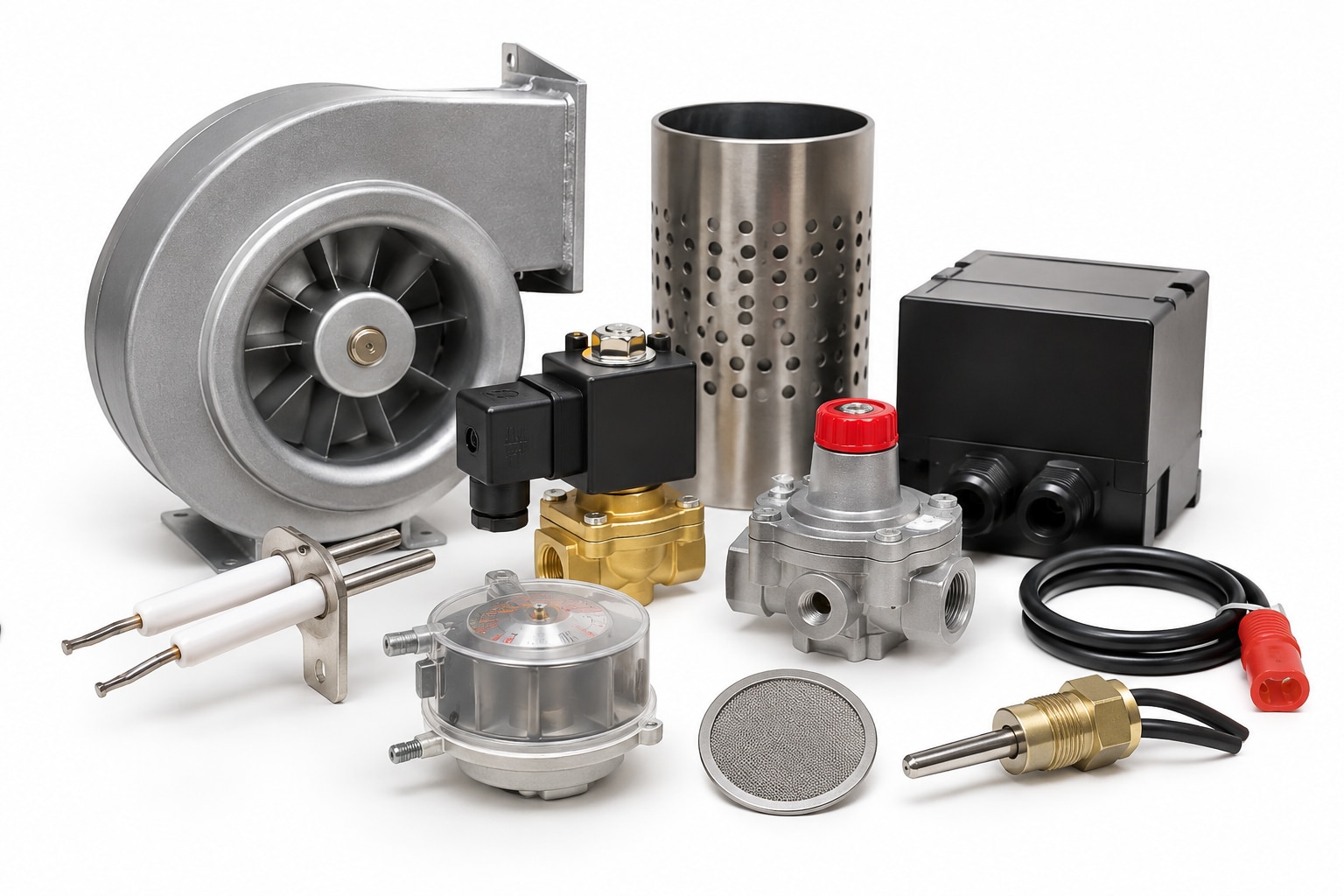
4. Drain low points in the gas train and inspect the pressure switches, flame detector, ignition cable and safety shut-off valves. Test delayed ignition, flame failure, lockout and alarm functions before releasing the oven for production.
5. Inspect the control panel, terminals, cable glands and sensors for condensation or water marks. Dry and seal approved entry points, then verify earthing and insulation integrity without creating an unsafe sealed enclosure.
6. Check exhaust ducting, doors and conveyor openings for leaks, blockage and rain ingress. Measure oven pressure and exhaust flow in normal production condition.
7. Keep powder in sealed original packaging; handle opened material to its product data sheet. Dry workpieces, seams, holes and porous castings before coating, and use an outgassing bake where the process requires it.
How to calculate burner capacity from the real oven heat load
Required burner capacity is the peak heat input, in kW, needed to warm the oven, heat the product and replace operating losses within the required time. Chamber volume alone can produce an oversized burner that short-cycles near setpoint.
- Calculate warm-up load: mass of steel, air and product × specific heat × temperature rise, divided by the planned warm-up time.
- Calculate production load: product mass flow × specific heat × temperature rise. Add evaporation energy if wet parts carry water into the oven; trapped moisture can also cause outgassing defects.
- Calculate fixed losses from the oven wall area and insulation, conveyor entry and exit, door openings, exhaust airflow and combustion-air replacement. Use measured exhaust temperature and airflow where available.
- Add the loads for the required operating condition. For recovery after loading or a door opening, divide the energy needed to restore oven temperature by the permitted recovery time and add that rate.
- Divide the total useful heat rate by the burner-system efficiency to obtain fuel input kW. Select a gas burner for industrial oven duty above this peak, within the approved gas-pressure range, while checking that low-fire output and turndown prevent cycling.
A properly selected industrial heating burner does not need extra excess air to compensate for a poor load calculation. Excess air increases flue losses and slows recovery; adjust combustion from measured oxygen and carbon-monoxide values within the manufacturer’s limits. For LPG, size the vaporizer for sustained vapor demand, not burner nameplate kW alone.
How the burner, controls and safety devices must work together
Temperature control should request heat, but the burner-management system must independently permit firing only after airflow and purge are proven, the high-limit circuit is reset, and the flame safeguard is ready. A temperature controller alone cannot protect an industrial combustion system from delayed ignition, flame failure or unsafe firing.
Test the powder coating oven burner as an integrated system, not as separate components:
- Prove the fan airflow switch, purge timer and damper position before every ignition attempt.
- Close the fuel valves and confirm lockout after simulated flame failure, low gas pressure, loss of airflow and high-limit trip.
- Measure gas-train pressure at the burner while firing, including simultaneous oven starts; compare it with the burner’s approved range.
- Check ignition, flame signal and low-fire stability at setpoint, then verify the controller avoids rapid on/off cycling.
- Record oxygen and carbon monoxide at the manufacturer’s test points; do not add excess air simply because humidity is high.
- Check exhaust flow and oven pressure with doors, conveyors and ducting in normal production condition.
Diagnose the fault shown by the sequence. A failed purge points to airflow, damper or switch problems; a flame signal that drops after ignition points to wet electrodes, poor grounding, unstable gas pressure or inadequate combustion air. A slow temperature recovery can indicate excessive exhaust or excess air rather than insufficient burner capacity.
Keep powder in sealed original packaging until use and follow its product data sheet for handling opened material. Condensation in the panel or gas train requires correction before reset, not repeated automatic starts.
Keeping combustion stable during wet-season production
Hold the burner at the approved firing range while the oven is operating, not only during a cold start. Measure gas pressure at the burner inlet during ignition, high fire and low fire; simultaneous oven starts, a restricted filter, undersized piping or regulator capacity can cause pressure dips and flame failure.
- Clean or replace wet air and gas filters, then confirm the regulator and pressure-switch settings against the burner manufacturer’s operating data.
- Check flame appearance, ignition timing and low-fire stability after the oven reaches setpoint. If the burner cycles sharply instead of holding low fire, correct the gas valve, control loop or staged-firing setup; temperature swings produce uneven cure.
- Measure exhaust flow and oven pressure with doors, conveyor openings and ducting in normal production condition.
- Reduce excessive extraction that draws humid Surat air through gaps, but never restrict exhaust below the level needed to remove combustion products and coating vapours.
- Record temperatures at several oven zones and across the product path. A stable display temperature does not prove uniform metal temperature.
Keep powder sealed in its original packaging and follow its product data sheet after opening. Dry seams, threaded holes, porous castings and trapped water before coating; the burner cannot cure outgassing defects.
For a powder coating oven burner for monsoon production in Surat, ask the commissioning record to show these readings under load. ECOTECH BURNERS can use the same evidence to verify whether an industrial heating burner is correctly matched, rather than masking an oversized gas burner for industrial oven with short cycling.
Related products
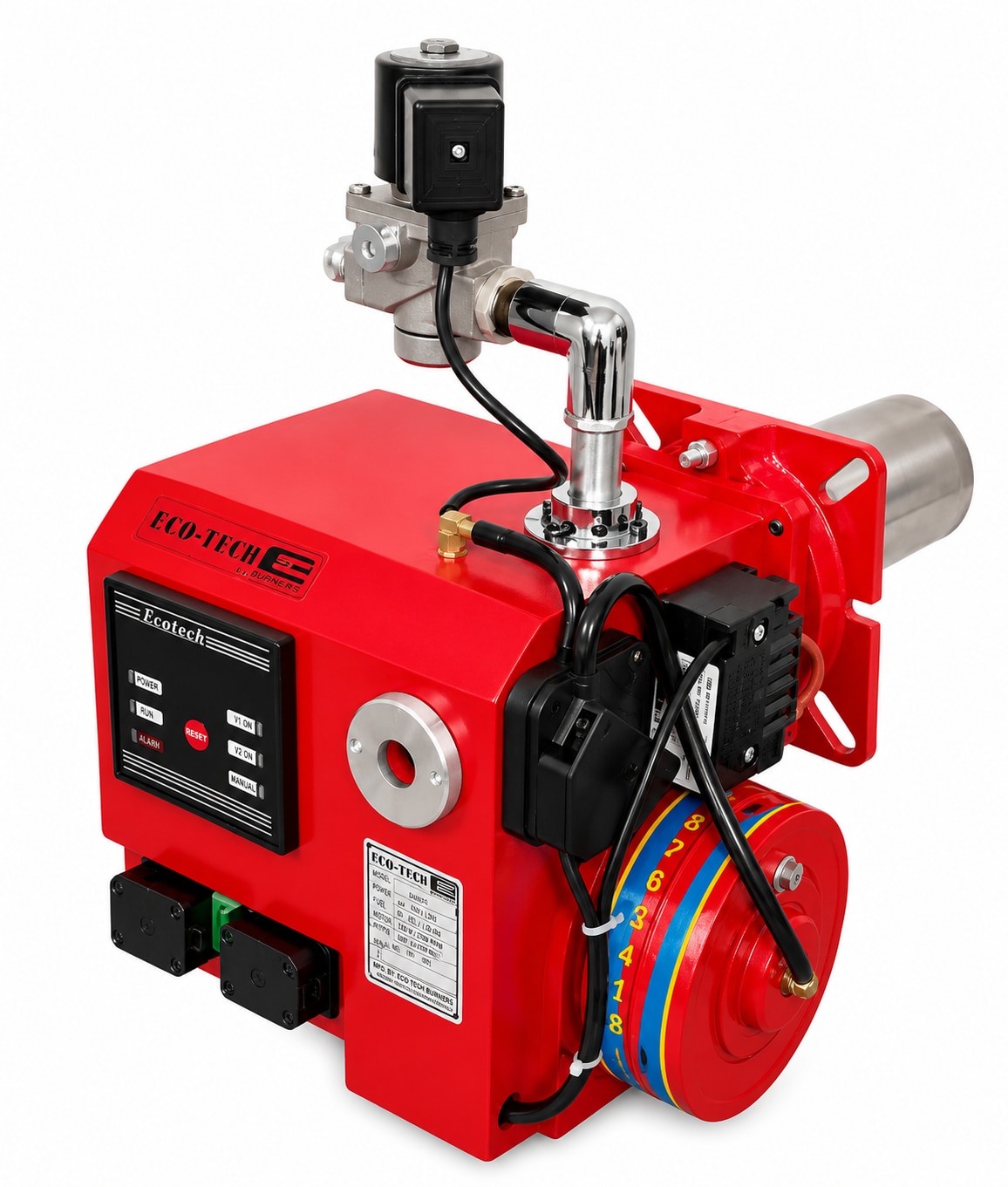 | Gas Burners Gas Burner Gas burner (20 kw to 10500 )Available in versions for different types of gas. A compact burner, easy to install. View product → |
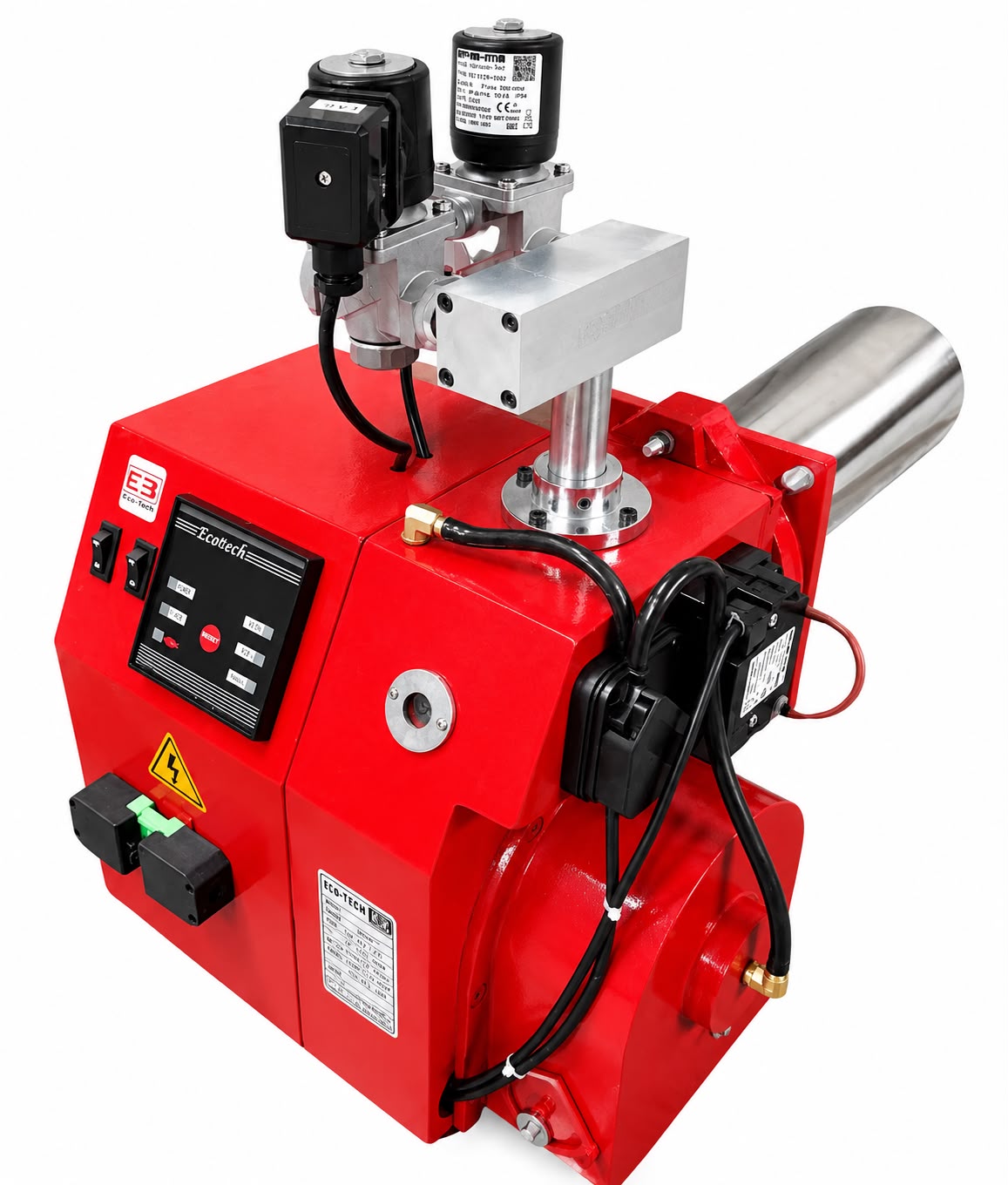 | Gas Burners Industrial Gas Burners High Performance | Energy Efficient | Reliable Combustion Solutions ECOTECH BURNERS specializes in the design, manufacturing,... View product → |
Frequently asked questions
How do Surat monsoon conditions disrupt powder coating and burner operation?
High humidity leaves powder and metal surfaces wet, causing pinholes, craters, poor flow and adhesion loss. Water trapped in seams, weld porosity, threaded holes and porous castings can turn to steam during curing and cause outgassing. Moisture can also affect burner ignition, electrical controls and combustion-air conditions.
What should you inspect before operating a powder coating oven during the monsoon?
Inspect the burner, gas or oil train, ignition electrode, flame scanner, fan, filters, dampers, seals and control-panel enclosure. Remove corrosion, drain moisture, check cable glands and verify fuel pressure, airflow, flame failure shutdown and high-temperature cutout before production.
How do you calculate powder coating oven burner capacity?
Add the heat required to warm the oven structure, product load and conveyor to operating temperature, then include heat lost through panels, openings, exhaust and infiltration. Check the result against the required warm-up time and select a burner that can modulate across the operating range without short cycling.
How should burner controls and safety devices work together?
The control sequence should prove airflow, establish ignition, confirm flame through the flame scanner and permit fuel only when every interlock is satisfied. Flame failure, low airflow, abnormal fuel pressure, open access doors and high oven temperature must shut the burner down safely.
Related product
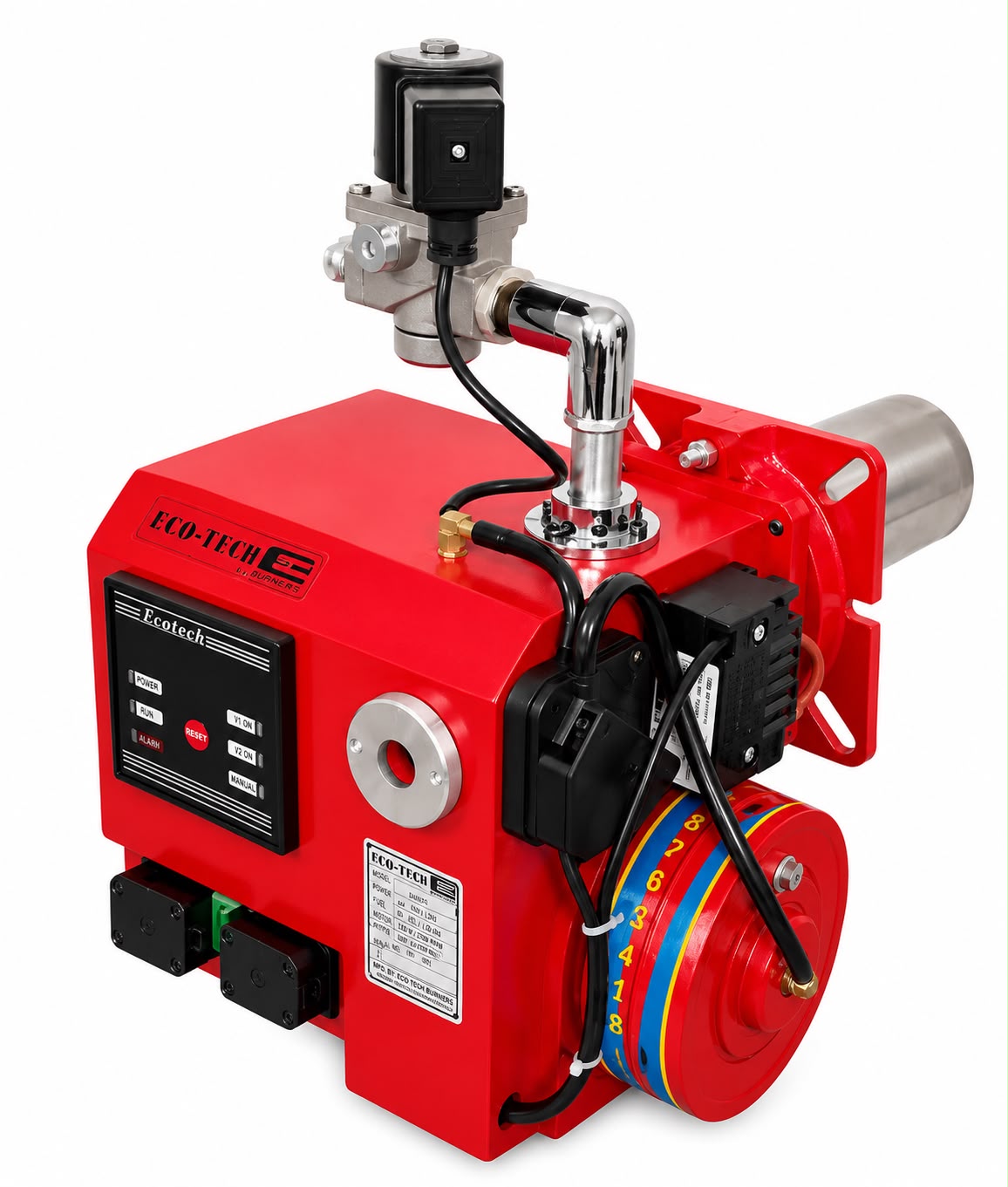 | Gas Burners Industrial Gas & Oil Burners Our Industrial Gas & Oil Burners are engineered for efficient, reliable and consistent combustion in a wide range of... View product → |
Keywords