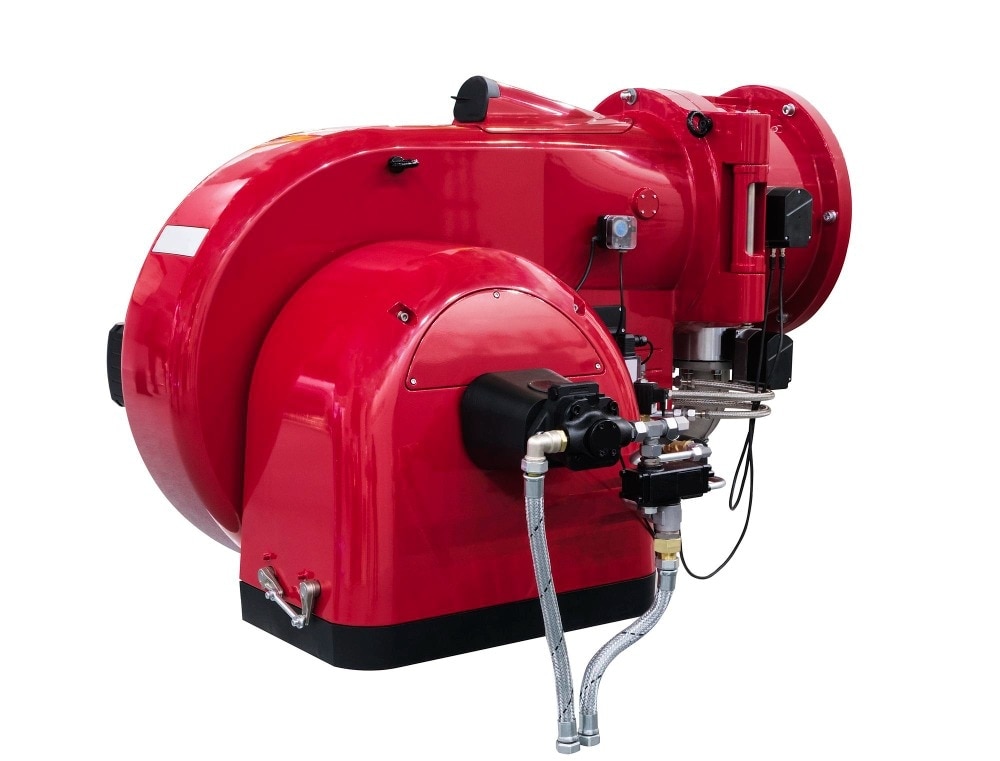
A powder-coating oven that trips, cycles repeatedly or misses cure temperature does not always have a failed burner. By comparing burner control types, checking gas and airflow conditions, and separating combustion faults from oven faults, you can identify the cause and specify a replacement that suits the actual line.
Key takeaways
- Choose direct firing for efficient heat transfer; choose indirect firing for cleaner process air.
- Size the replacement from measured heat loss, airflow and oven temperature rise.
- Check gas pressure, flame signal, airflow and interlocks before replacing the burner.
- Demand combustion calculations, test records, manuals and local maintenance support.
Which natural-gas burner control type suits your powder-coating oven?
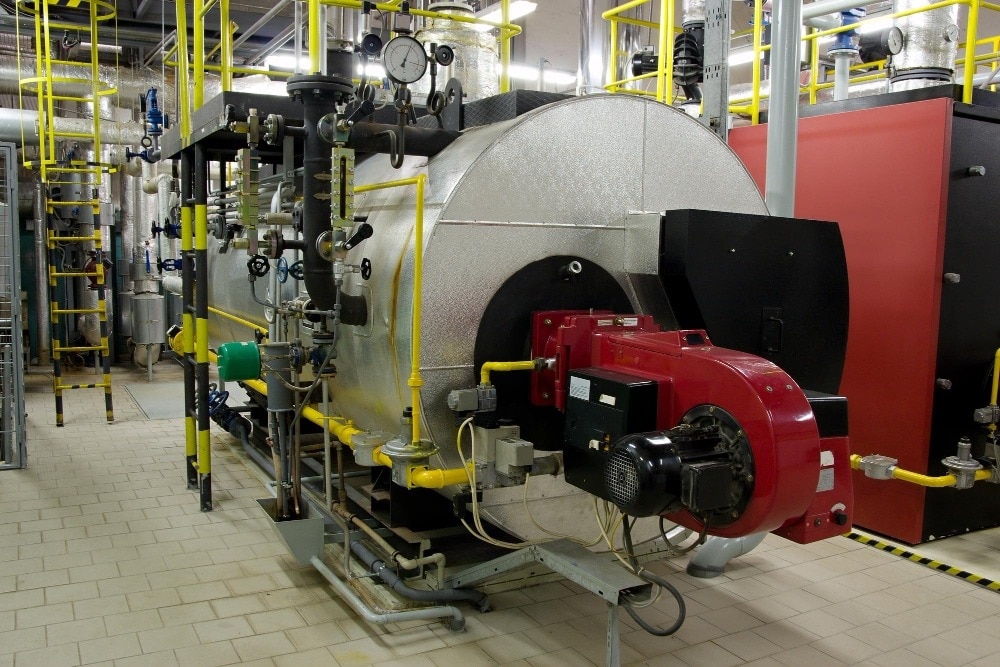
Start by separating direct-fired and indirect-fired ovens. Direct firing sends combustion products into the curing chamber, reducing equipment cost and improving heat transfer. Indirect firing uses a heat exchanger to keep flue gas out of the process air, lowering contamination risk when colour stability and clean air matter.
For a natural gas fired burner for powder coating oven comparison in Surat, compare usable turndown at the actual load, not the maximum kW rating.
| Option | Usable turndown | Temperature and gas effect | Coating effect |
|---|---|---|---|
| On-off | None; full input or off | Highest overshoot, gas waste and repeated cycling | Uneven cure, gloss variation |
| High-low | Two firing rates | Better than on-off, but limited stability | Reduced thermal swings |
| Two-stage | Staged low and high input | Smaller heat steps and steadier consumption | More consistent cure |
| Fully modulating | Continuously adjusted input | Widest control range and smallest heat input | Best stability when commissioned correctly |
An oversized on-off burner rapidly heats a light load, overshoots the setpoint, shuts down, then restarts after cooling. Staged or modulating control supplies a smaller, steadier heat input. That is the central natural gas fired burner for powder coating choice.
Judge curing by the part’s metal temperature and dwell time, not burner outlet temperature or oven-air setpoint. Heavy parts, cold fixtures and poor recirculation cause under-cure; excessive dwell or metal temperature causes yellowing, gloss change and poor recoatability. For clean finishes, also leak-test the indirect oven’s heat exchanger.
How do you size a replacement burner from the oven’s real heat load?
Start with the oven’s real duty, not its volume. Record length, width, height, insulation condition, target curing temperature, ambient temperature and required warm-up time. A natural gas fired burner for powder coating sized from volume alone can be badly oversized or too weak.
1. Calculate steady-state loss: wall and roof conduction, door and opening losses, infiltration, exhaust loss, and the heat carried away by unrecovered exhaust. Subtract heat recovery, then add the required temperature rise above ambient.
2. Calculate peak warm-up duty by adding the heat needed for the oven structure, conveyor mass, fixtures, parts and production throughput during the specified warm-up time. Add infiltration and exhaust again. The burner must cover this peak load; a burner adequate at steady state can still miss production start-up.
3. Convert the calculated duty to burner input in kW, then check usable turndown. Require minimum and maximum firing rates at the actual gas pressure, not only the headline maximum rating. Excess capacity creates cycling; insufficient capacity creates slow recovery.
4. Before a natural gas fired burner for powder coating oven comparison in Surat, collect supply pressure at the burner, minimum operating pressure, gas composition, available flow in standard cubic metres per hour, gas-train capacity and pressure drop, burner input, combustion-air temperature, furnace back pressure, altitude and simultaneous plant demand.
5. Have the supplier calculate filter, regulator, valve and pipe losses at maximum firing rate and minimum pressure. Repeat the calculation when converting from LPG or replacing another natural-gas burner; pressure settings, orifices, air adjustment, flame sensing and controls require recommissioning.
How can you tell a burner fault from an oven-system fault in Surat?
Separate powder coating oven burner problems in Surat from oven faults by matching each symptom with measured evidence, not by resetting the controller and watching the flame.
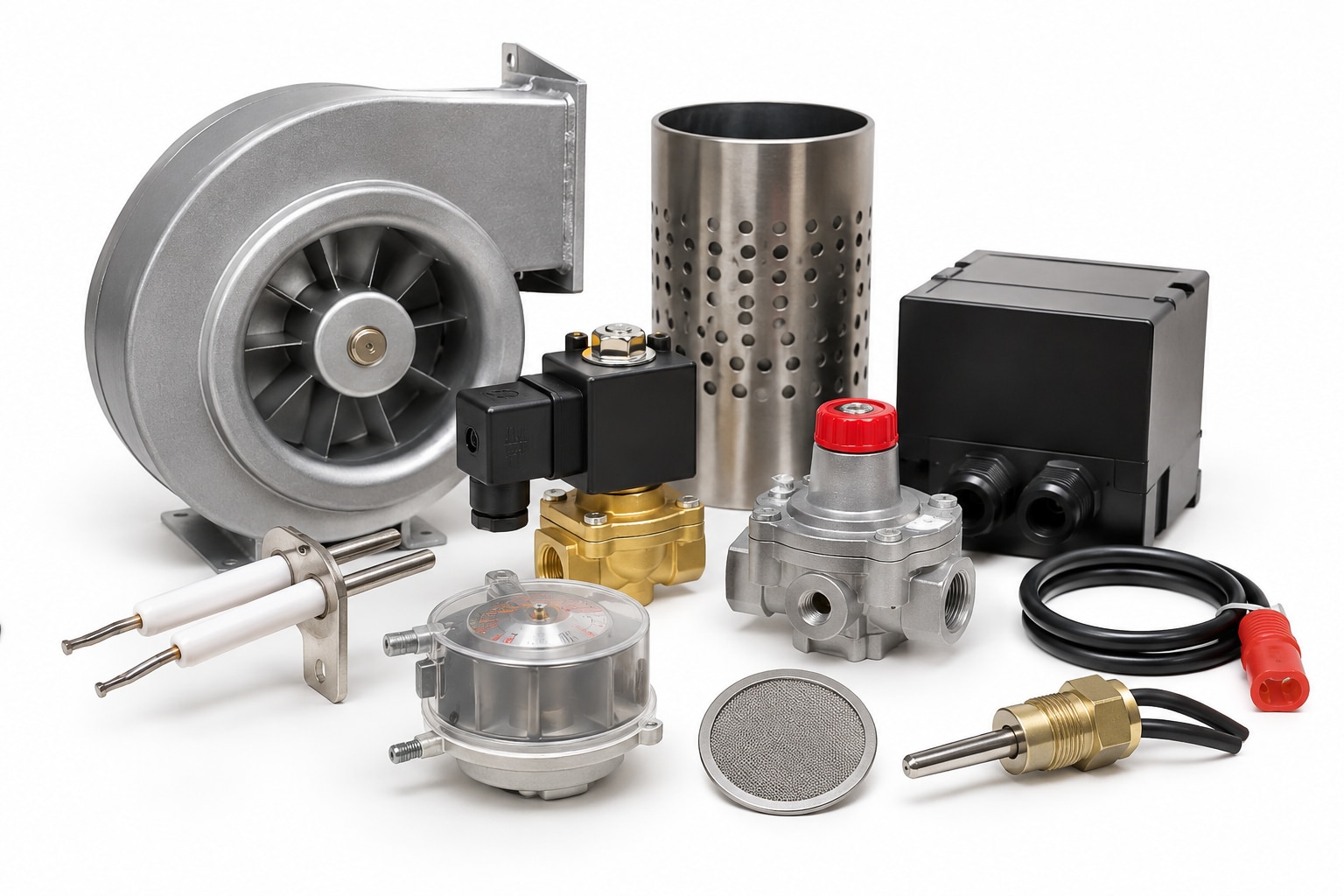
1. For ignition failure or delayed ignition, measure gas-train pressure throughout the start sequence. Check blocked filters, automatic shut-off valves, ignition-transformer output, electrode cleanliness and gap, burner grounding, completed purge, and air-proving-switch status.
2. For flame-sensor lockout, inspect UV or ionisation detector alignment, flame-signal strength, scanner lens condition, burner earth, and flame stability before resetting the control.
3. For low output or flame dropout, measure pressure at low and high fire. Inspect regulator capacity, valve-train pressure loss, fan delivery, air filters, impeller cleanliness, dampers, and combustion-air pressure.
4. For incorrect air-gas ratio, excessive air, or cycling, use calibrated oxygen and carbon-monoxide instruments at low, intermediate, and high fire. Flame colour is not combustion analysis.
5. Test the oven around the burner: recirculation-fan operation, exhaust balance, chamber pressure, duct blockage, temperature-probe accuracy, conveyor loading, door heat loss, and curing-zone airflow. Excessive exhaust or backpressure can imitate burner failure.
Record fault codes, gas pressure, air pressure, flame signal, exhaust condition, and the exact ignition result in the service report. This evidence supports safer industrial combustion system maintenance and prevents a faulty oven system from being blamed on a suitable burner.
Which safety and control checks belong in the burner comparison?
Request the burner package’s documents and witnessed functional-test results before accepting it; this is the fastest way to expose powder coating oven problems in Surat before production starts.
| Component or loop | What to compare | Acceptance evidence |
|---|---|---|
| Ignition transformer and detector | Spark energy, electrode gap, UV or ionisation signal | Reliable ignition and stable flame signal |
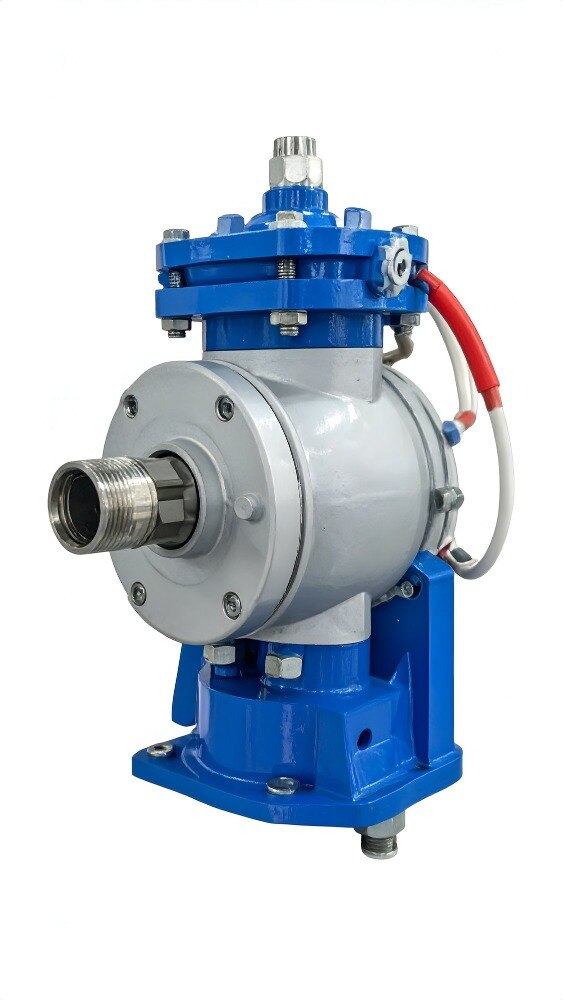
| Proportional valve and servo actuator | Travel, response, fail position and turndown | Measured low, intermediate and high fire |
| PID controller and temperature sensor | Range, accuracy, placement and tuning | Stable oven temperature without hunting |
| Gas train and switches | Valve capacity, pressure range, high- and low-pressure trips | Trip and automatic gas shut-off tests |
| Air proving and fans | Switch setpoint, fan delivery and permissive logic | No ignition without proven combustion air |
| Safety sequence | Pre-purge duration, ignition timing and flame-proving period | Recorded start, flame failure and lockout tests |
Ask for these records and conduct these tests:
- Wiring diagrams, sequence-of-operation logic, setpoints, commissioning records, leak-test results and the identified standard editions, such as IEC 60204-1 or NFPA 86 where the project specification adopts it.
- Test automatic shut-off valve closure, exhaust and recirculation interlocks, emergency stop, over-temperature cut-out and every electrical-panel permissive.
- For indirect-fired ovens, inspect the heat exchanger and leak-test it after thermal cycling; check refractory damage, burner impingement and high-temperature trips for combustion-product entry.
- Include these results in industrial combustion system maintenance records. Never bypass an air switch or repeatedly reset lockouts; that defeats the safety function.
What should you demand from an industrial gas burner supplier in Surat?
A supplier’s quotation is incomplete without the operating evidence behind it. Ask every industrial gas burner supplier in Surat for the documented minimum and maximum firing rates, turndown method, gas-pressure operating range, gas-train schematic, electrical load, emissions or combustion limits, control sequence, commissioning method and instruments used.
| Item | Demand in writing | Why it matters |
|---|---|---|
| Firing | Minimum/maximum input and turndown method at your gas pressure | Prevents cycling and unstable curing |
| Gas train | Filter, regulator, valves, switches, pipe-loss calculation and schematic | Reveals pressure loss at low supply pressure |
| Controls | Flame detector, actuators, burner-management logic and electrical load | Confirms matched safety response |
| Commissioning | Gas analyser, manometer, combustion-air measurement, test points and records | Makes performance measurable |
| Service | Exact parts, lead times, training and response coverage | Limits production downtime |
Compare the complete package, not the burner price: valve train, burner-management controls, sensors, actuators, drawings, manuals, operator training, commissioning, spare-part lead times and service response. For a Surat powder line, verify stock or lead time for the exact ignition transformer, UV or ionisation detector, actuator, gas valve, gasket, scanner, control module and burner-head parts.
Generic substitutes can alter safety response times.
Build industrial combustion system maintenance around dust, hours and cycling: check flame behaviour, pressure and alarms each shift; clean electrodes, filters, fan impellers and scanners periodically; calibrate pressure switches and temperature probes; test combustion at low, intermediate and high fire; then document every interlock test.
Evaluate ECOTECH BURNERS against these measured criteria, not a broad efficiency claim.
Related products
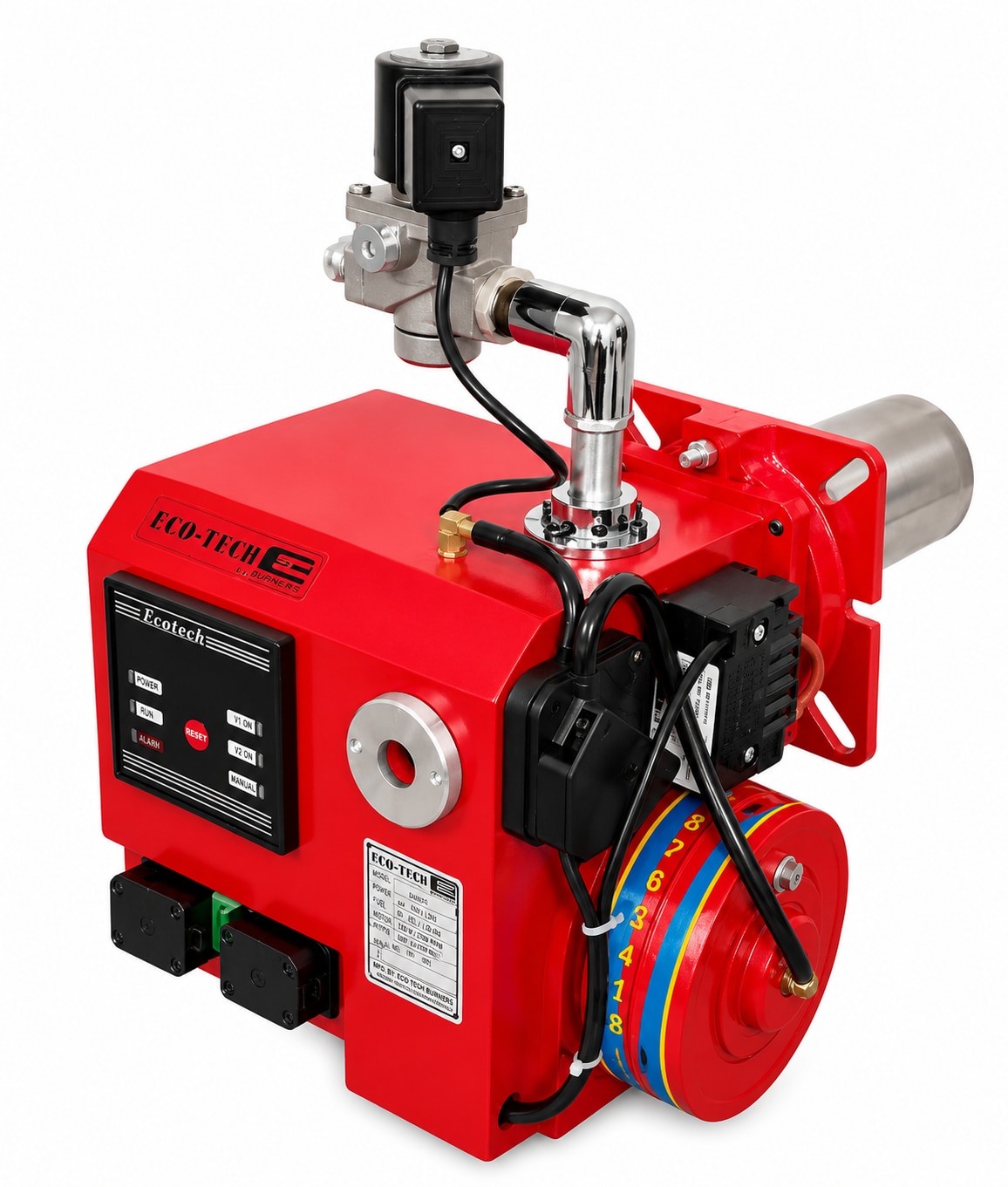 | Gas Burners Gas Burner Gas burner (20 kw to 10500 )Available in versions for different types of gas. A compact burner, easy to install. View product → |
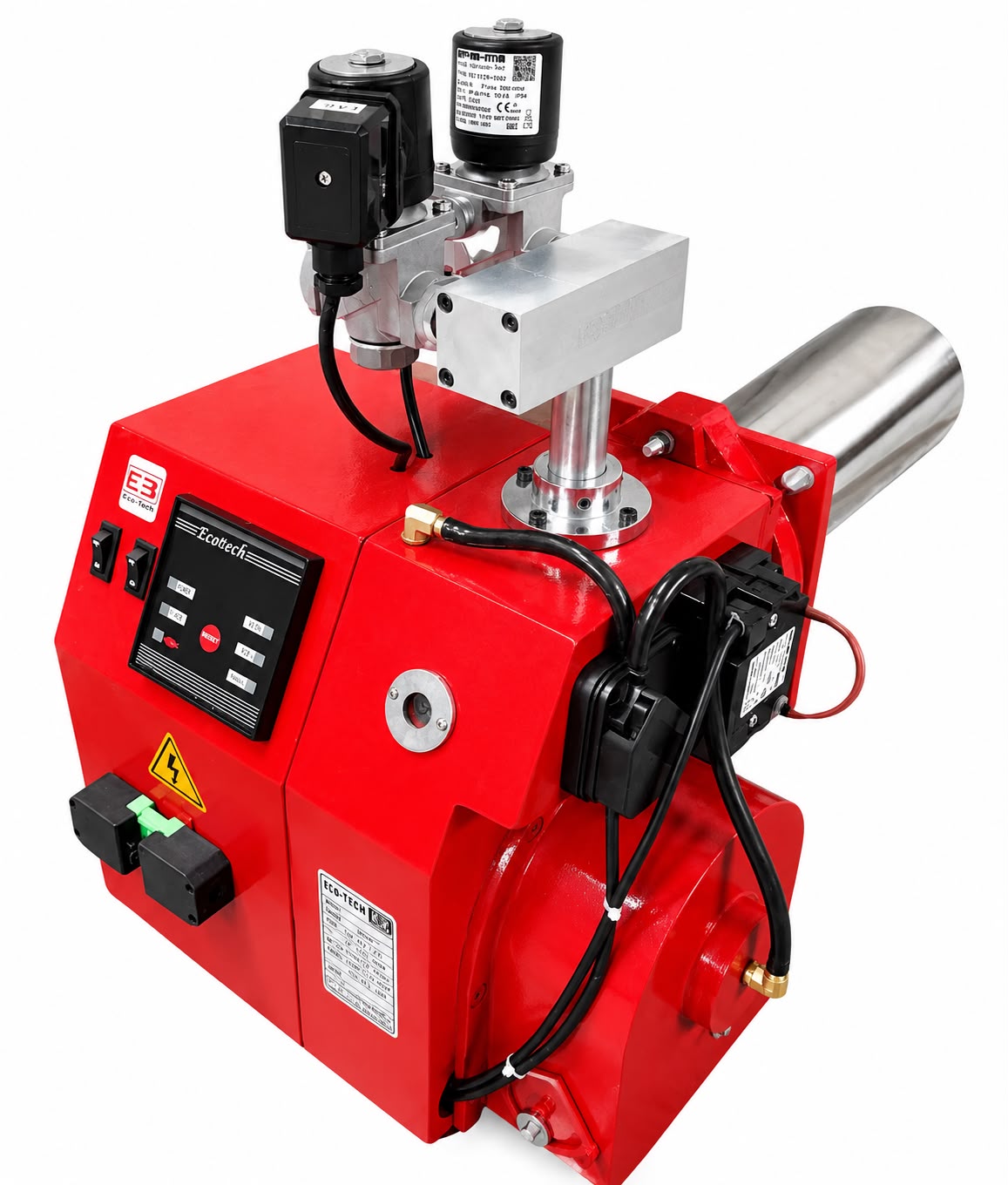 | Gas Burners Industrial Gas Burners High Performance | Energy Efficient | Reliable Combustion Solutions ECOTECH BURNERS specializes in the design, manufacturing,... View product → |
Frequently asked questions
Which natural-gas burner control type suits a powder-coating oven?
Use direct firing when lower equipment cost and strong heat transfer outweigh contamination concerns. Use indirect firing with a heat exchanger when flue-gas separation and colour stability matter. Compare on-off, high-low and modulating control against the oven’s temperature stability, turndown requirement and airflow design.
How do you size a replacement burner from the oven’s real heat load?
Calculate the load from product mass, specific heat, temperature rise, line speed, oven heat loss, exhaust air and burner efficiency. Confirm the required gas pressure, combustion-air volume, chamber airflow and turndown range instead of matching the old burner’s nameplate alone.
How can you tell a burner fault from an oven-system fault in Surat?
Record inlet gas pressure, combustion-air pressure, flame-signal strength, ignition sequence, exhaust flow and actual chamber temperature. A failed flame signal or ignition sequence points toward the burner train; uneven temperature, blocked exhaust or excessive infiltration points toward the oven system.
Which safety and control checks belong in a burner comparison?
Compare the gas train shut-off valves, pressure switches, flame safeguard, ignition transformer, flame detector, purge timing, high-temperature limit and emergency-stop interlocks. Ask for proof of functional testing, wiring diagrams, fault codes and documented commissioning checks.
What should you demand from an industrial gas burner supplier in Surat?
Request a heat-load calculation, burner selection sheet, gas-pressure range, turndown data, emissions information, wiring diagram, operating manual, commissioning report and spare-parts list. Confirm local service coverage and an industrial combustion system maintenance plan before purchase.
Keywords