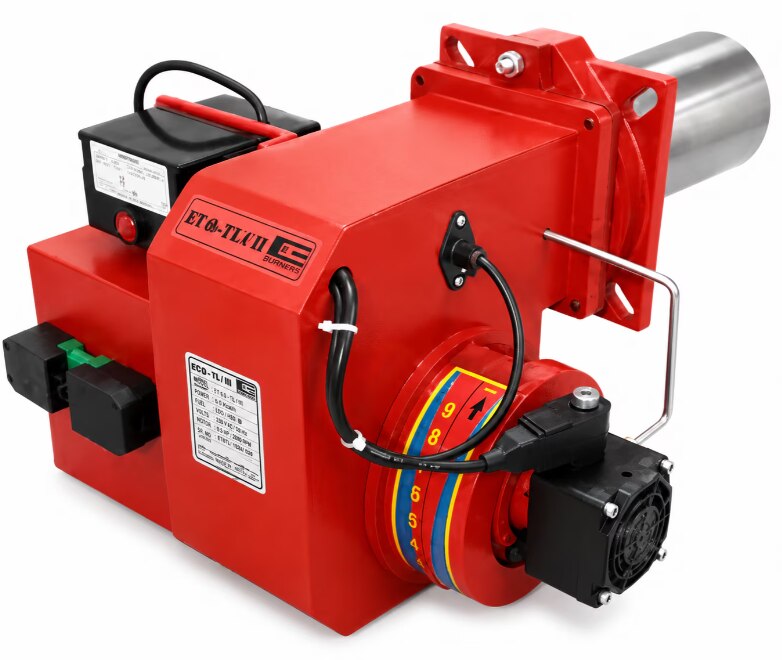
A bakery oven oil burner must match the oven’s heat-transfer layout, oil grade, firing range and local operating environment—not just the chamber size. By the end, you will have a practical specification for sizing, fuel handling, safety controls, Surat site conditions and factory acceptance testing.
Key takeaways
- Match burner output and flame shape to the oven’s heat-transfer design.
- Calculate heat load from production rate, temperature rise, losses and warm-up time.
- Specify oil pressure, nozzle capacity, atomisation air and flame dimensions together.
- Require documented ignition, flame-failure, purge and emergency-shutdown tests.
Match the burner to the oven’s heat-transfer design
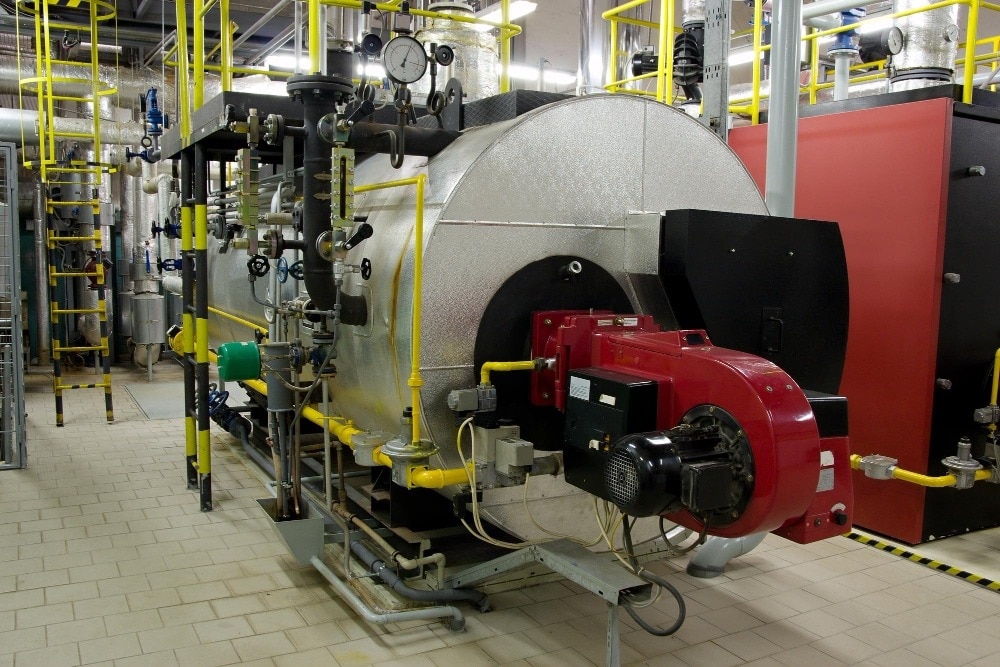
Identify the oven’s heat-transfer design before choosing a bakery oven oil burner. A rotary rack, tunnel, deck, tray and convection oven each distribute heat differently; an indirect-fired oven uses a heat exchanger or sealed hot-air circuit, while a direct-fired oven sends combustion products into the process air.
1. Confirm whether the burner heats the chamber directly or fires an exchanger. Indirect firing keeps combustion gases out of the baking chamber, supporting food-contact hygiene, gas separation and tighter temperature control.
Direct firing changes ventilation, emissions and product-exposure assessments, so do not substitute an oil burner into an existing gas layout without reviewing the complete air and flue arrangement.
2. Put the physical interface in the specification: burner-tile dimensions, mounting position, combustion-chamber geometry, flame length, flue-gas connection and allowable oven back-pressure. Include the furnace temperature, operating pressure, control signal, electrical supply and combustion-air requirement.
3. Explain how heat will remain even across the rack, deck or tunnel. Require evidence for conditions that disturb distribution: door openings, product loading, conveyor movement and fan cycling. A flame that suits an empty chamber can create hot spots after loading.
4. For a bakery oven burner in Surat, check the drawing against local installation conditions, including outdoor panel exposure, access for cleaning and stable draft. A mismatched burner interface creates poor combustion, uneven baking and difficult commissioning regardless of rated capacity.
Calculate heat load and write a complete burner specification
1. Calculate burner input as steady-state heat loss plus warm-up load, not oven volume alone. Use oven length, width and height; insulation condition; production rate; target preheat time; ambient temperature; door-opening frequency; exhaust loss; conveyor or tray loss; and moisture carried away with product.
A burner sized only for warm-up will short-cycle in production; one sized only for steady state will lengthen start-up.
- Fuel type, heating value and viscosity range; for light fuel oil, allow 11.7–12 kW chemical input per kg/h before efficiency losses.
- Minimum and maximum firing rate, turndown ratio, and mass or volumetric fuel flow.
- Pressure-jet, air-atomised or steam-atomised method, combustion-air volume, flame length, furnace temperature and operating pressure.
- Motor power, electrical supply, control signal, flame-detector type, ignition method and purge time.
- Burner-tile or mounting dimensions, flue connection and allowable oven back-pressure.
3. Express the calculation in usable units: 1 kg/h of light oil provides roughly 11.7–12 kW chemical input, so verify delivered heat after burner and oven losses. Do not accept “capacity in kcal/h” as the complete specification.
4. During commissioning of a bakery oven oil burner for manufacturing in surat, test cold start, minimum and maximum firing, repeated ignition, flame failure, low-air and high-temperature trips, power restoration and maximum measured back-pressure.
Record O2, CO, smoke or soot, flue temperature, draft, fuel pressure, atomising pressure and flame stability; confirm performance with the customer’s oil and nozzle.
Specify the oil system, atomisation and flame shape together
Write the fuel choice as a specific operating condition: diesel, kerosene, light fuel oil, furnace oil or heated heavy oil, with viscosity stated at both the pump and nozzle. A bakery oven oil burner cannot use one nozzle and setting across all grades.
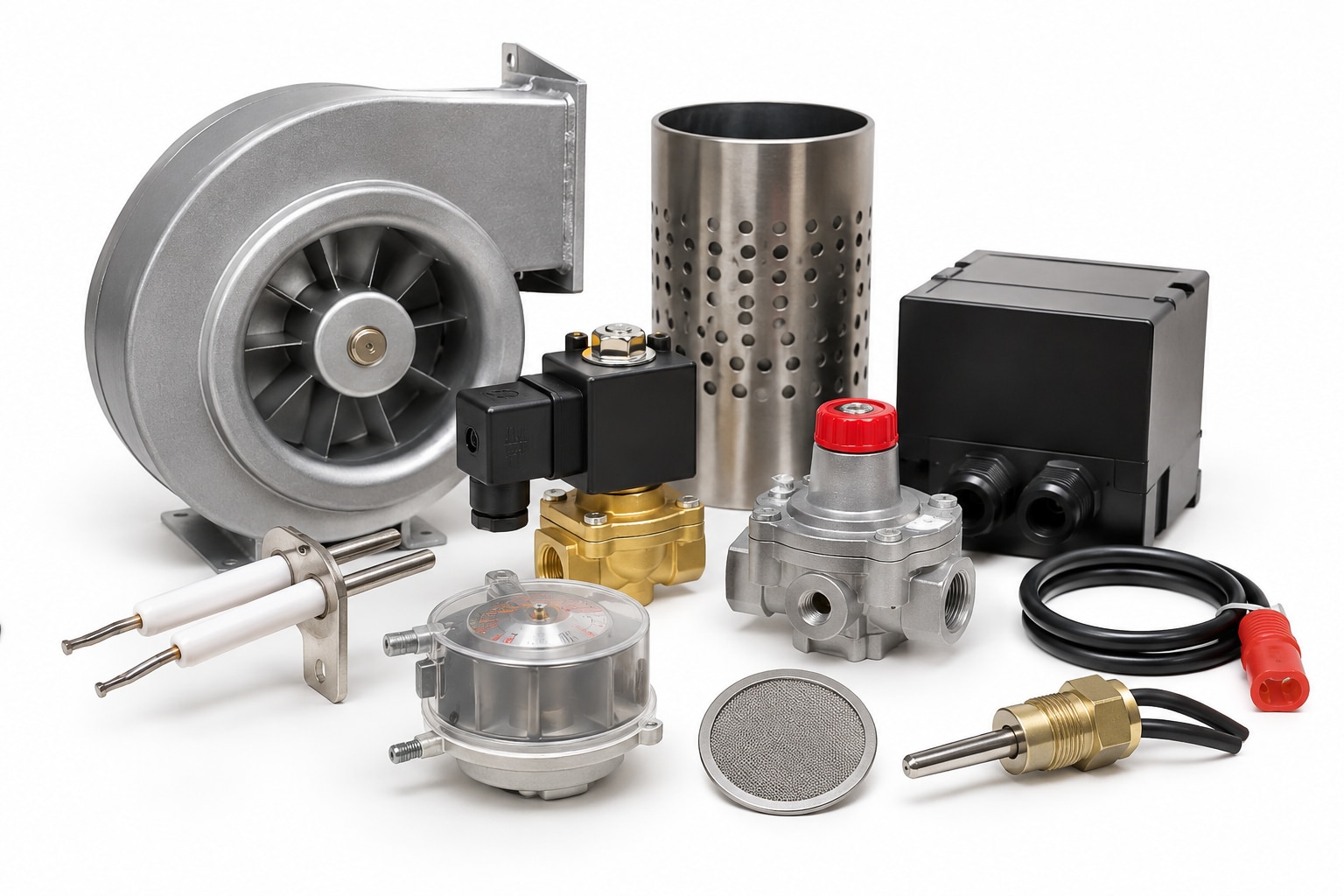
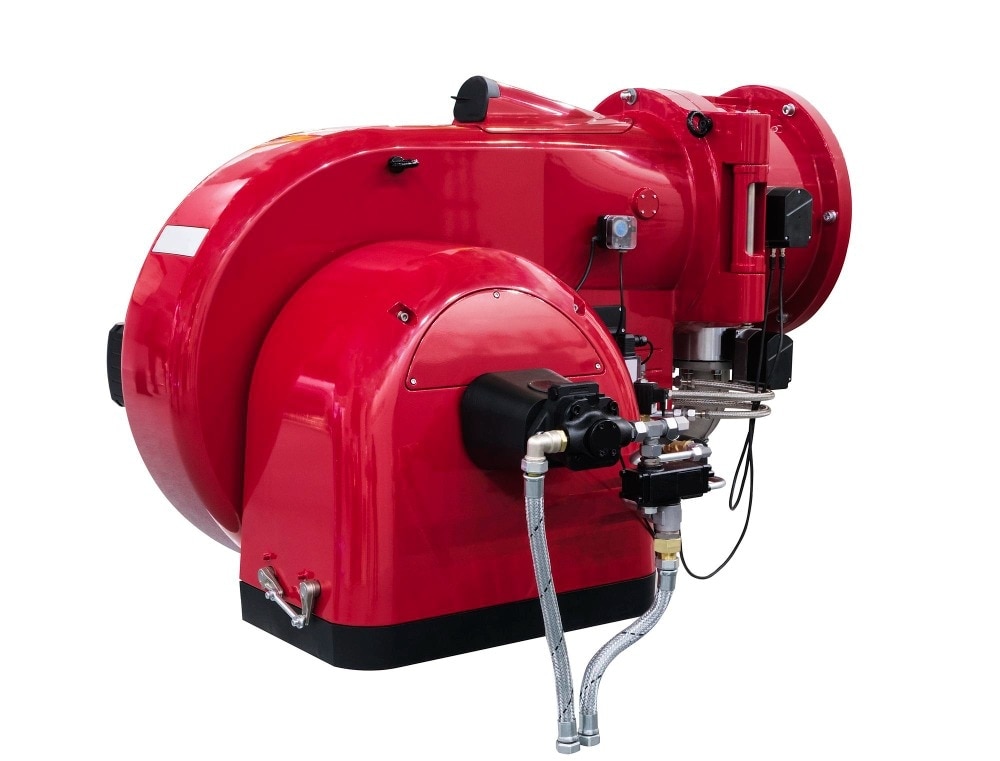
- Specify the fuel train: storage tank, day tank where required, pump, strainer or filter, pressure regulator, pressure gauge, normally closed safety shut-off valves, oil-rated flexible connections, nozzle, return line where required, drain points and leak containment.
- For furnace oil or heated heavy oil, include electric or thermal preheating, larger filtration and temperature control. Evaluate air- or steam-atomisation for heavy oil, low firing rates or wider turndown; diesel and light fuel oil require different pump and nozzle settings.
- For a pressure-jet oil burner for bakery manufacturing, select nozzle flow and spray angle at a declared test pressure. Changing pump pressure changes actual fuel flow and heat input.
- Match the spray pattern and flame length to the furnace geometry. Keep the flame off refractory, heat-exchanger surfaces and product air paths.
- If LPG becomes an alternative, size the vaporizer for maximum simultaneous demand and verify Indian requirements with the responsible engineer and authority.
Record fuel pressure, oil temperature, atomising pressure where used and flame dimensions during commissioning. A flame that looks stable but strikes a surface can damage the oven, distort temperatures and contaminate process air.
Build the safety sequence for Surat operating conditions
A bakery oven burner in Surat needs a burner-management sequence, not ordinary PLC logic alone. Document each permissive and make the sequence fail safe:
1. Prove oven temperature limits, fuel pressure, airflow, draft, access-door status and emergency-stop reset before starting the combustion-air fan.
2. Run the specified pre-purge, then prove airflow with the air-pressure switch or transmitter. Do not permit ignition if the measured flow or draft is below its setpoint.
3. Energise the ignition transformer and prove ignition readiness before opening either fuel valve. Use fuel-valve proving where applicable to detect leakage or failure to close.
4. Open fuel only during the defined ignition trial. Confirm flame with the specified scanner type, then keep monitoring it continuously; flame failure must close the fuel valves and initiate restart lockout.
5. Include high-temperature-limit protection, low-air or low-draft interlock, fuel-pressure trip and emergency stop. Define the purge time, ignition timing, scanner response, restart lockout and manual-reset policy in the industrial bakery burner specifications.
Use NFPA 86 as an industrial oven benchmark, but ask the responsible engineer and local authority to confirm Gujarat and Indian installation requirements. Do not infer certification from a component list.
For hot, humid monsoon service and possible coastal salt exposure, specify corrosion-resistant construction, sealed cable entries, drainage, suitable enclosure ingress protection, and protected flame sensors and ignition transformers. Commission at minimum and maximum firing rates, recording O2, CO, smoke or soot, flue temperature, draft or chamber pressure, fuel pressure and atomising-air pressure.
Turn the manufacturing brief into a verifiable acceptance test
A burner passes only when recorded performance matches the oven’s measured conditions, not when its catalogue capacity looks adequate. Require the manufacturer to document the selected nozzle, pump pressure, oil viscosity and temperature, combustion-air setting, flame dimensions, electrical load, control interface and every interlock.
- Run a cold start, repeated ignition cycles, minimum and maximum firing, simulated flame failure, low-fuel and low-air trips, power loss and restoration, high-temperature-limit operation, and firing at the oven’s maximum measured back-pressure.
- Inspect for contaminated fuel, tank water, blocked strainers or nozzle filters, incorrect pump rotation, suction-side air leakage and unstable draft. Require accessible pressure gauges, drains and filters, plus a written nozzle-cleaning and replacement procedure.
- Record O2, CO, smoke or soot, flue temperature, fuel pressure, chamber pressure and atomising-air pressure where used. Flame colour alone is not acceptance evidence.
| Test condition | Acceptance record | Failure to resolve |
|---|---|---|
| Factory test | Customer’s oil, nozzle, combustion air and back-pressure | Workshop results may not predict site commissioning |
| Production test | Stable flame and required heat at minimum and maximum firing | Short-cycling, soot or temperature drift |
| Safety test | Positive trip and manual-reset response | Unsafe fuel continuation or automatic restart |
A Surat manufacturer such as ECOTECH BURNERS MFG CO adds value by converting the oven drawing, oil data and site conditions into a customized package. For a bakery oven oil burner for manufacturing in Surat, and any oil burner for bakery manufacturing, accept the package on these records—not a catalogue range.
Related products
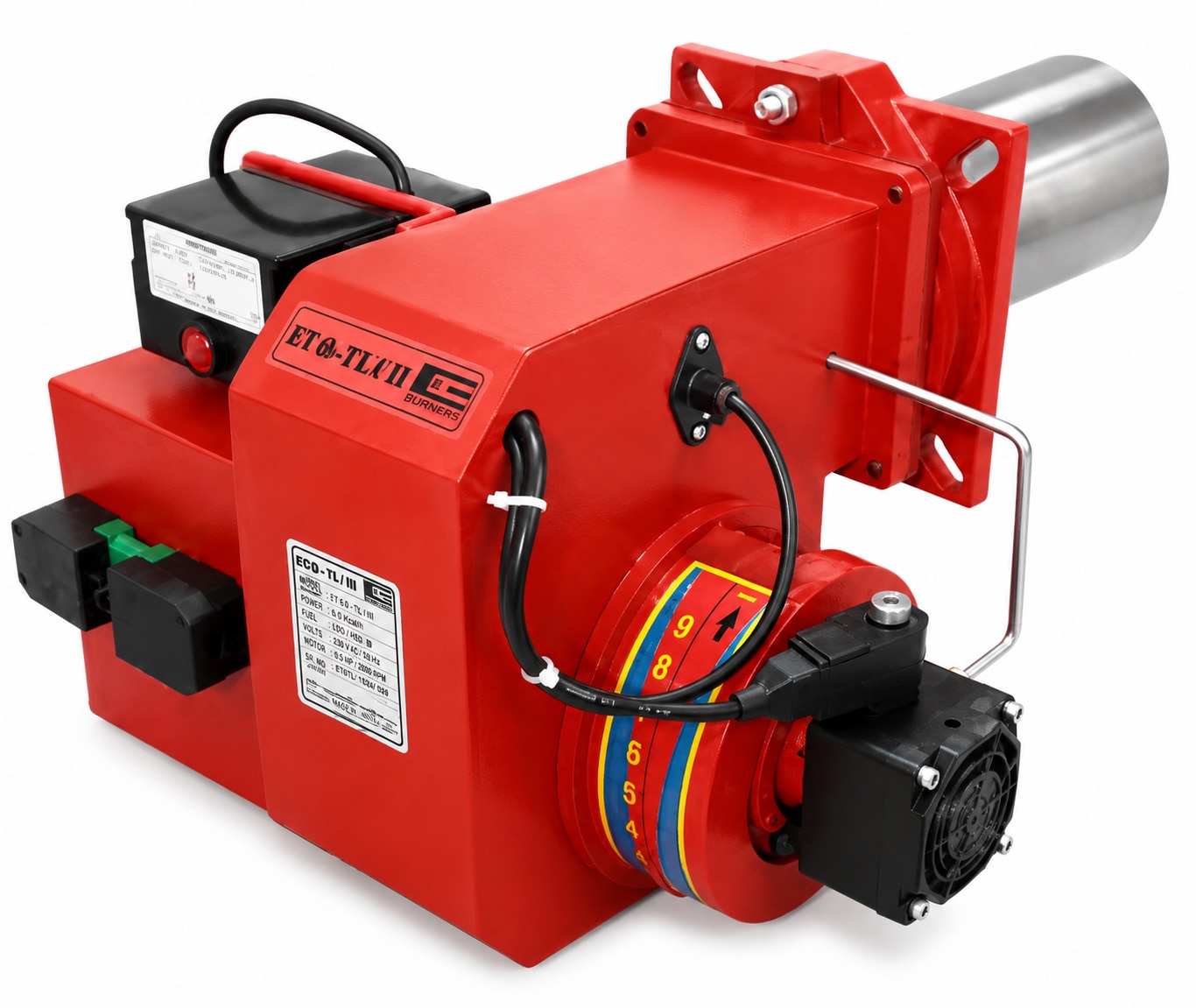 | Oil Burners Oil Burners Oil burners (20kw to 10500 kw )Available in versions for different types of oil burners A compact burner, easy to install. View product → |
 | Oil Burners Oil burners (20kw to 10500 kw )Available in versions for different types of oil burners A compact burner, easy to install. View product → |
Frequently asked questions
How do you match an oil burner to a bakery oven design?
Identify whether the oven is rotary rack, tunnel, deck, tray or convection, then confirm whether firing is direct or indirect. The burner must suit the oven’s heat path, available chamber space, circulation pattern and heat-exchanger arrangement.
What should an industrial bakery burner specification include?
State the required heat input, fuel type and viscosity, turndown range, oil pressure, atomisation method, combustion-air volume, flame dimensions, electrical supply, control sequence, emissions limits and mounting details.
Which burner safety functions need testing before production?
Test pre-purge, ignition timing, flame detection, fuel-valve closure after flame failure, high-temperature shutdown, low-air or low-fuel interlocks, emergency stop response and restart prevention after a lockout.
Related product
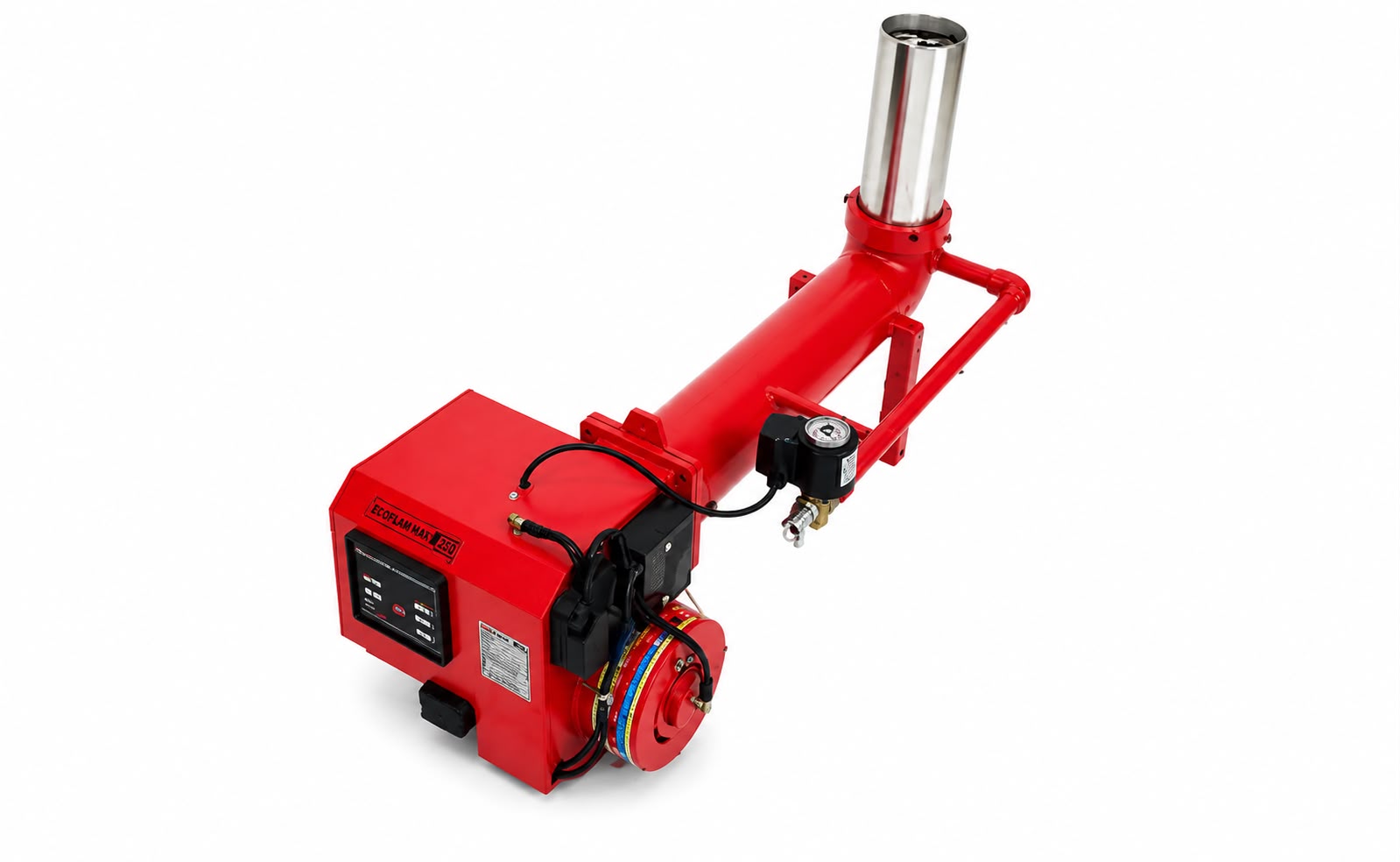 | Customized Burners Suitable for edible oil heating and namkeen frying systems Available in Diesel, LPG and Natural Gas configurations High-efficiency combustion Stable... View product → |
Keywords