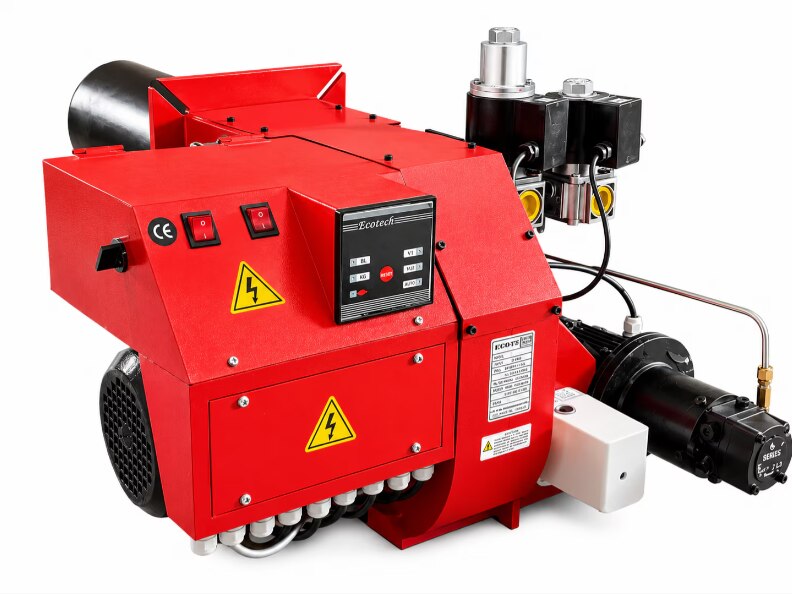
Choosing a dual fuel burner requires more than matching a burner’s maximum kilowatt rating to a furnace nameplate. You will learn how fuel changeover works, which gas-and-oil combinations fit different Surat processes, how to compare specifications, and how to verify safe performance before accepting the installation.
Key takeaways
- Confirm gas and liquid-fuel capacity separately before comparing burners.
- Match burner turndown, flame shape and heat output to the furnace.
- Verify fuel trains, flame safeguards and changeover controls before acceptance.
- Request test records, drawings, manuals and spare-parts lists from the supplier.
What a Dual Fuel Burner Does—and How Fuel Changeover Works
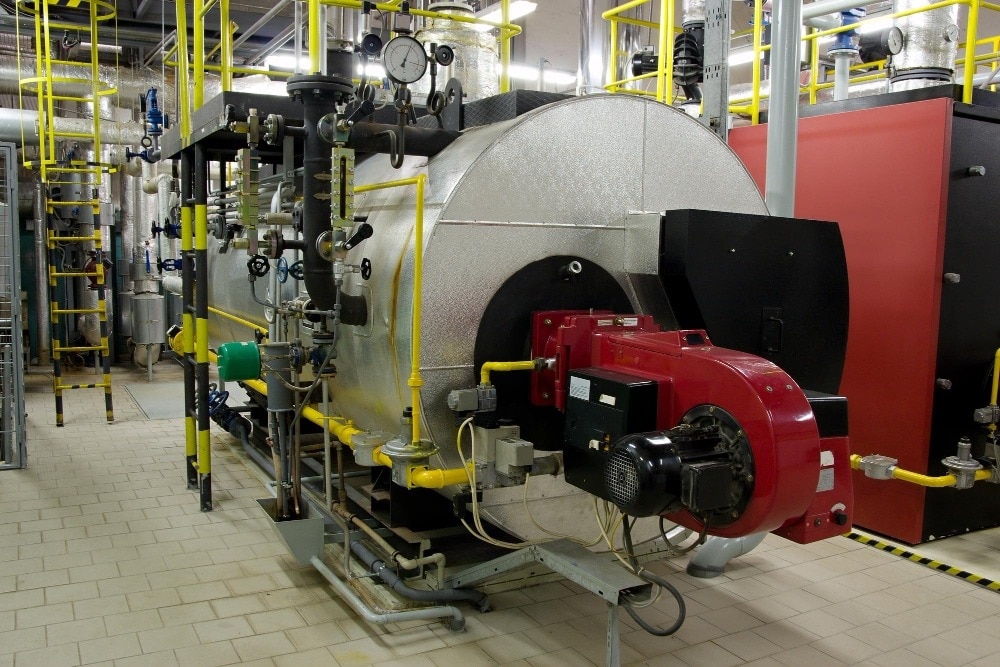
A dual fuel burner fires two different fuels through one burner package, commonly natural gas or LPG with diesel, light fuel oil, or furnace oil. The practical answer to what is a dual fuel burner is not “two flames at once”; dual fuel describes the burner’s fuel capability.
Most installations use one fuel at a time, with gas as the normal fuel and oil held for backup.
A dual fuel burner for education in Surat should be understood through its operating mode:
- Changeover operation: the burner stops one fuel, completes the required purge and shutoff sequence, then ignites and proves the second fuel.
- Simultaneous operation: the controls and fuel trains are designed to meter both fuels together. Do not assume this feature exists because a nameplate says “dual fuel.”
- Common pairings: natural gas and diesel, LPG and diesel, or another specified gas-and-oil combination.
During a changeover, the control system closes the active fuel valve, confirms valve closure, purges unburned fuel from the combustion chamber, starts the selected fuel train, performs ignition, and verifies flame before releasing full firing capacity. The exact sequence depends on the burner controls and the furnace safeguards.
Gas and oil do not behave identically. Oil needs reliable atomization, while gas depends on air-fuel mixing, so each fuel can have a different ignition setting, minimum stable firing rate, flame shape, and excess-air requirement. A Surat plant using ovens, boilers, dryers, textile equipment, or metal-treatment furnaces must confirm those settings for both fuels.
Where Dual Fuel Burners Make Sense in Surat Plants
A plant that cannot afford a cold shutdown during a gas interruption has a practical reason to choose a dual fuel burner. Common dual fuel burner uses include:
- Industrial ovens, dryers and hot-air generators
- Heat-treatment furnaces and metal-processing systems
- Boilers and thermic-fluid heaters
- Spray dryers, textile-processing equipment and food-processing lines
- Chemical plants and other continuous processes where lost heat can spoil a batch
| Choice | Main advantage | Main limitation |
|---|---|---|
| Single-gas burner | Clean operation and simpler fuel handling | Production stops when gas supply fails |
| Single-oil burner | Independent of a gas pipeline | Requires tanks, pumps, filtration and oil maintenance |
| Dual fuel burner | Gas can run normally while diesel, light fuel oil or furnace oil provides backup | Costs more to install and maintain, with a more involved fuel train |
The backup fuel only adds value when it is stored, conditioned and available at the required flow. A tank with contaminated diesel, an undersized pump or oil too viscous for the nozzle will not protect production.
Choose dual fuel for a furnace, oven or boiler with high interruption costs, unreliable fuel supply or a planned gas-and-oil operating strategy. A single-fuel burner is usually the better fit for a small, stable process with dependable fuel and no need for emergency operation.
In Surat, specify protection against heat, humidity, dust and monsoon exposure. Weatherproof panels, drainage and regular cleaning protect the changeover equipment; otherwise the backup system can fail when you need it.
How to Compare Dual Fuel Burner Specifications
A burner’s rated heat input tells you how much fuel enters, not how much heat reaches the product. Compare the maximum and minimum input with the furnace heat balance, chamber temperature and operating hours; otherwise, a correctly rated burner can cycle badly or leave cold zones.
| Specification | What to compare | Why it matters |
|---|---|---|
| Heat range | Maximum and minimum input, required turndown, and performance at actual furnace back-pressure | Prevents unstable low-fire operation and oversized capacity |
| Combustion performance | Useful efficiency, flue-gas temperature, excess-air range and available draft | Shows delivered heat and identifies avoidable stack losses |
| Pressure requirements | Gas inlet pressure, oil pressure or viscosity, atomizing medium, and furnace back-pressure | A pressure mismatch can cause poor atomization, flame failure or insufficient heat |
| Fuel arrangement | Natural gas, LPG, diesel or another pairing; normal fuel, backup fuel, changeover time and fuel availability | Confirms that both fuels support the required process duty |
| LPG supply | Vaporizer capacity at maximum simultaneous demand, outlet pressure and temperature, LPG composition, and gas-train sizing | Insufficient vaporization causes pressure sag, liquid carryover, regulator freezing and burner dropout |
| Controls and environment | Flame scanner, purge sequence, interlocks, enclosure rating, drainage and corrosion protection for Surat’s heat, dust and monsoon exposure | Protects safe operation and reduces electrical, actuator and gas-train failures |
Ask for emissions data for gas and oil separately. Compare nitrogen oxides, particulate matter and sulfur oxides at stated excess-air levels, because fuel, flame temperature and furnace temperature change the result. These dual fuel burner specifications reveal far more than a single capacity number.
Match Burner Capacity to the Furnace, Fuel System and Safeguards
Size the burner from the furnace heat duty at design conditions, not from the furnace nameplate alone. A burner that is too large will cycle, overshoot temperature and lose stable low-fire control; one that is too small will never recover the process temperature.
1. Calculate the required heat input from production load, heat losses, chamber temperature, furnace back-pressure, available draft, operating hours and required turndown. State the gas and liquid capacities separately in the dual fuel burner specifications, including minimum and maximum firing rates.
2. Check the gas side at the burner inlet. Record gas type, calorific value or Wobbe-index range, minimum and maximum pressure, required flow, valve-train size and allowable pressure drop. For LPG, size the vaporizer for maximum simultaneous vapor demand, outlet pressure and temperature, LPG composition and site conditions—not the storage vessel’s nominal water capacity.
Inadequate vaporization causes pressure sag, liquid carryover, regulator freezing and flame dropout.
3. Check the oil side at the nozzle. Confirm fuel grade, viscosity at firing temperature, pump pressure, filtration, preheating, atomizing-air or steam pressure and oil-flow range. Gas and oil will not share identical minimum stable rates, flame shapes or excess-air settings, so verify each fuel through its full operating range.
4. Match the package to the safeguards. Confirm purge, ignition sequence, flame supervision, automatic fuel shutoff, low-pressure trips and changeover interlocks against NFPA 86 for industrial furnaces and ovens; boiler systems may fall under NFPA 85. Complete combustion, trip and restart tests on both fuels before production.
What to Check Before Buying and Accepting Dual Fuel Burners in Surat
Buy dual fuel burners in Surat only after matching the supplier’s design to your actual furnace duty, not the burner’s headline input. Ask for a fuel-train schematic, control philosophy, heat-balance assumptions and commissioning test format.
For a dual fuel burner for education in Surat, the specification must state chamber temperature, back-pressure, draft, operating hours, turndown, fuel availability and whether gas is normal while oil is backup.
1. Confirm LPG vaporizer sizing from maximum simultaneous vapor demand, outlet pressure and temperature, LPG composition and site conditions. Nominal storage-vessel water capacity is not enough; undersizing causes pressure sag, liquid carryover, regulator freezing and burner dropout.
2. Inspect the proposed installation for Surat’s heat, humidity, dust and monsoon exposure. Check enclosure ratings, drainage, weather covers, instrument-air quality, panel corrosion protection and access for cleaning gas trains, actuators and oil components.
3. Require separate gas and oil trials at minimum, intermediate and maximum input. Record fuel pressure, flame stability, excess air, flue-gas temperature, furnace back-pressure, turndown and useful efficiency—not input rating alone.
4. Test automatic and manual changeover, flame-failure shutdown, low-fuel trips, purge sequence, emergency stop and restart logic. Verify the burner returns safely after a failed changeover.
5. Review emissions by fuel. Gas normally produces less particulate and sulfur oxides than oil, while nitrogen oxides depend on flame temperature, excess air, furnace temperature, fuel composition and burner design.
ECOTECH BURNERS MFG CO can be included in your supplier comparison when its drawings and measured commissioning results answer these checks rather than relying on catalogue claims.
Related product
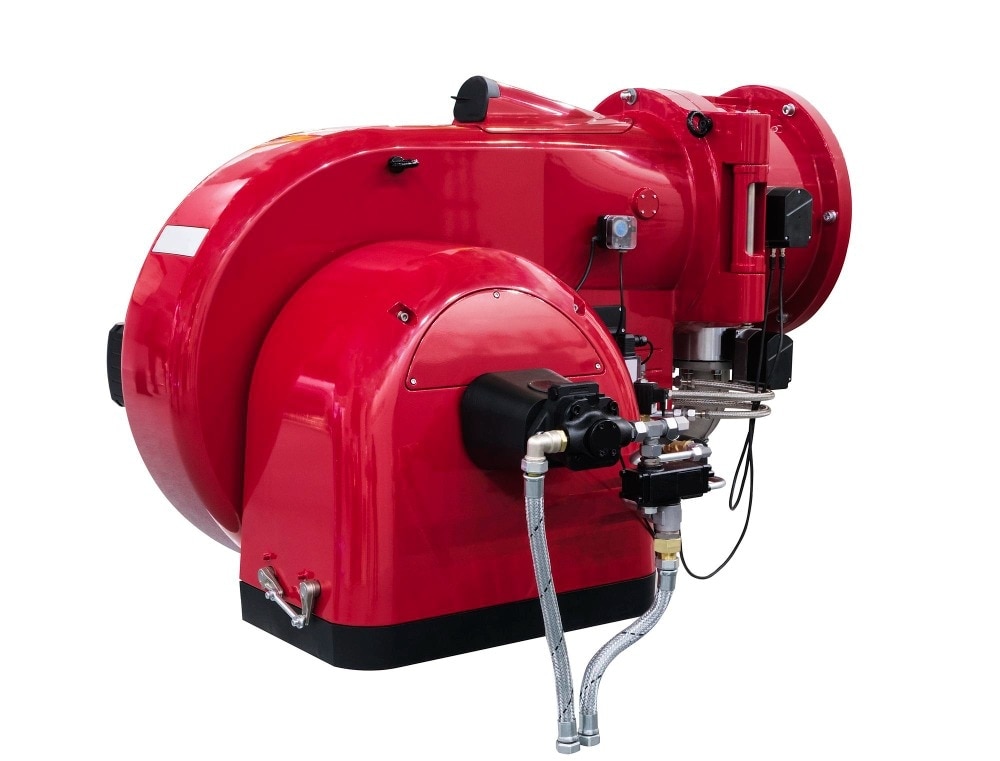
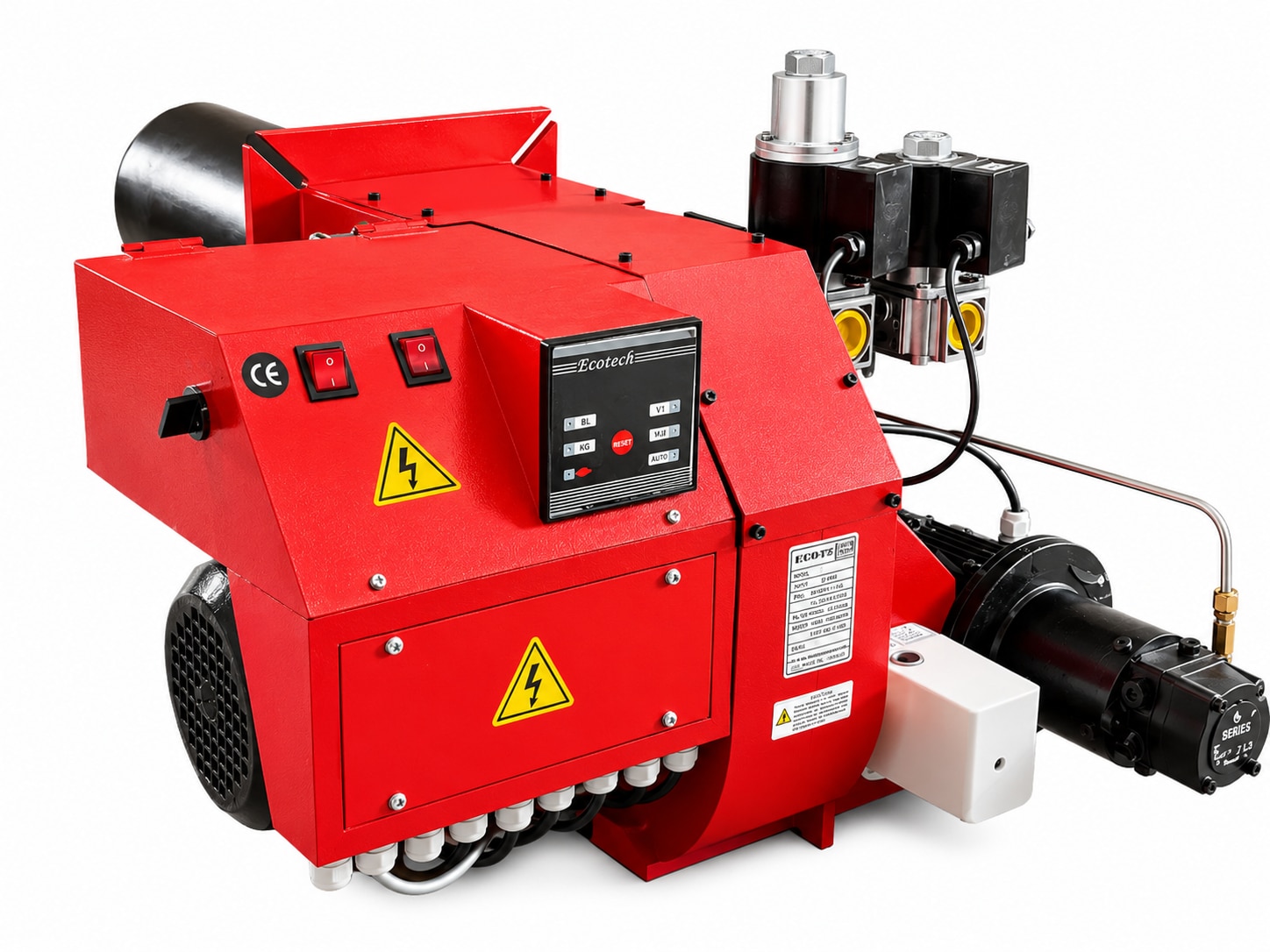 | Dual Fuel Burners Dual Fual Burner (120kw to 10500kw )Available in versions for different types of gas. A compact burner, easy to install. View product → |
Frequently asked questions
What is a dual fuel burner?
A dual fuel burner is one burner package designed to fire two different fuels, such as natural gas or LPG and diesel, light fuel oil or furnace oil. It does not mean both fuels burn simultaneously.
How does fuel changeover work in a dual fuel burner?
Changeover uses separate fuel trains, valves, regulators, pumps or vaporizers, and control settings for each fuel. The sequence must shut down or isolate one fuel, confirm safe conditions, and establish the second flame under the burner’s approved operating procedure.
Where do dual fuel burners make sense in Surat plants?
They suit plants that need fuel flexibility because of LPG or natural-gas availability, liquid-fuel backup, supply interruptions, process continuity requirements or changing fuel costs. Check storage, pressure, emissions, maintenance and local operating constraints before choosing one.
How should you compare dual fuel burner specifications?
Compare maximum and minimum capacity for each fuel, turndown ratio, fuel pressure, consumption, flame dimensions, motor power, control method, emissions data, changeover sequence and required safety devices. Compare figures at the same reference conditions.
What should you check before accepting a dual fuel burner?
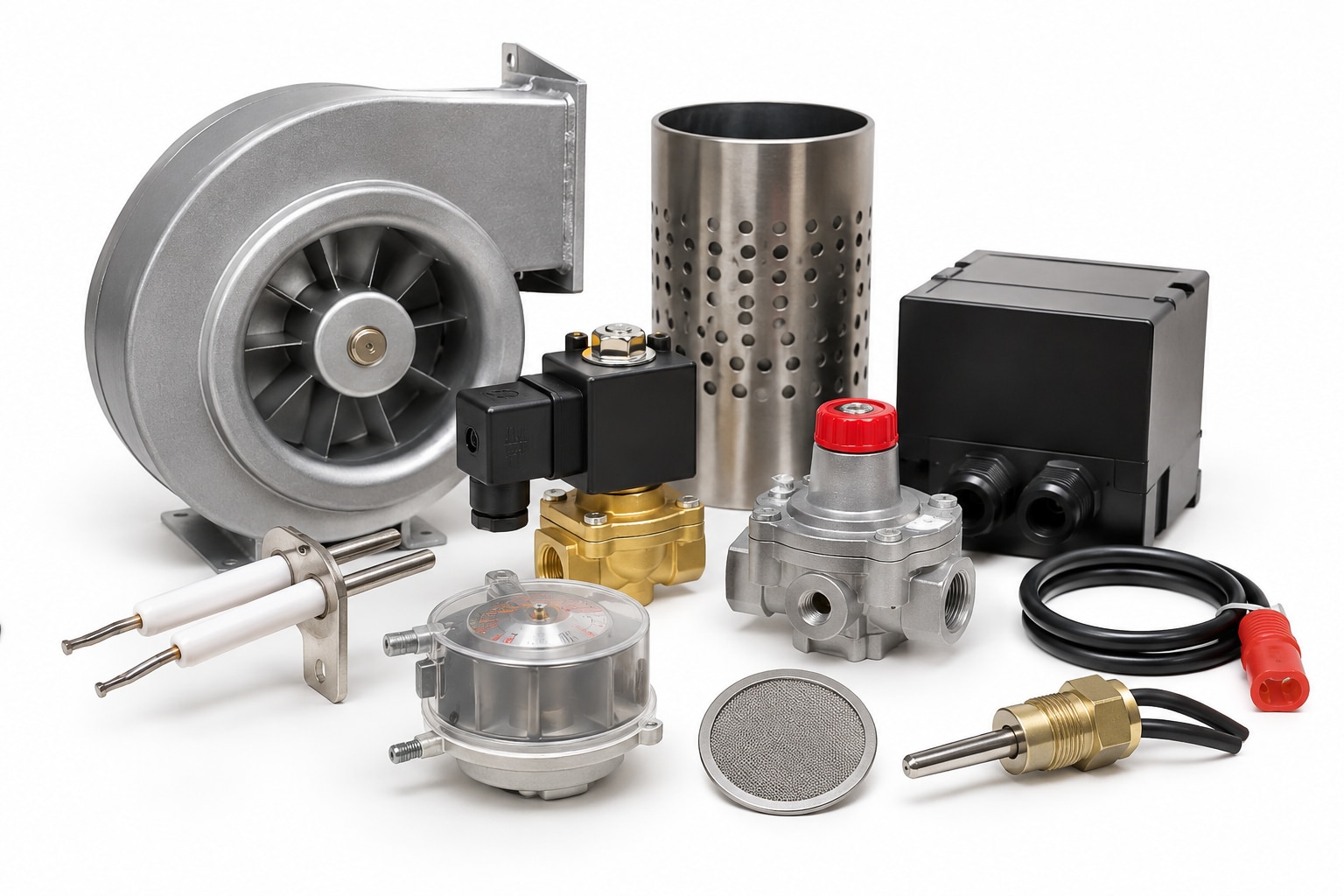
Inspect the nameplate, fuel-train components, wiring, manuals, drawings, certificates and test records. Run each fuel through startup, shutdown, modulation and changeover tests, then record flame stability, pressure readings, interlocks and emergency-stop performance.
Keywords