A burner’s headline capacity does not prove that it will start reliably, atomise your fuel or hold process temperature during Surat’s changing seasonal conditions. Use the comparison points below to test fuel compatibility, sizing, controls, service support and quotation scope before selecting a manufacturer or supplier.
Key takeaways
- Demand viscosity, ash, water and sediment limits for your actual fuel.
- Match burner turndown and controls to seasonal load, not maximum kW alone.
- Compare steam, air and mechanical atomisation with a defined backup-fuel plan.
- Require commissioning, shutdown preservation and repair response terms in writing.
What fuel and conditioning system must the manufacturer prove?
A burner’s kW rating does not prove heavy-oil capability. A quotation must confirm that the complete system handles the oil you will receive, because furnace oil, LDO, HFO and waste oil differ in viscosity, ash, water, sediment and ignition behaviour.
1. Require the quotation to name the fuel grade, viscosity in cSt and reference temperature, ash limit, water and sediment limits, and guaranteed viscosity at the nozzle. State what changes when the fuel grade changes.
2. Demand a fuel-conditioning diagram with capacities for the heated storage tank, traced fuel lines, suction strainer, pump, filters, viscosity controller and preheater.
The supplier must state minimum fuel temperature at the pump and nozzle, preheater warm-up time, pump inlet pressure and the cold-start procedure for an oil burner for seasonal heating after a long shutdown.
3. Check that the design includes tank-bottom water removal, fuel recirculation, filter differential-pressure monitoring and access for nozzle cleaning. Without these provisions, water, sludge or a blocked filter can stop ignition during a seasonal restart.
4. Obtain confirmation for the complete fuel skid: seals, heater elements, nozzles and control permissives matched to the specified oil. Ask for the safe-start cause-and-effect sequence, including heater readiness, fan proving, ignition, flame supervision and flame-failure lockout.
Use these documents to compare a heavy oil burner manufacturer in Surat on delivered-fuel performance, not catalogue output. A system that cannot prove pump conditions, warm-up logic and nozzle viscosity is not a defensible heavy-oil offer.
How should you size and control a burner for seasonal heat demand?
Size the burner from the building or process heat-loss calculation, required outlet temperature, operating hours, minimum load, chimney draft, combustion-chamber dimensions and boiler or oven heat-transfer duty. Do not select from a catalogue range or match an existing nameplate. An oversized burner cycles at low demand, increasing purge losses, ignition events, soot and temperature swings.
Compare usable turndown, not the advertised ratio. Request stable operation at the stated minimum firing rate, with measured excess oxygen, CO, smoke or opacity, flame stability and furnace-temperature stability. An oil burner for seasonal heating that claims 10:1 turndown is unsuitable if it must cycle above your actual minimum demand.
| Comparison point | Require in the offer | Why it matters |
|---|---|---|
| Modulation | Mechanical linkage or electronic modulation; high/low or fully modulating | Defines load control |
| Start sequence | Low-fire start, flame supervision, automatic air-fuel ratio control and oxygen trim if specified | Prevents unsafe or dirty ignition |
| Safe start | Cause-and-effect matrix for pre-purge, fan and draft proving, proven ignition, fuel-temperature permissive, flame-failure lockout, fuel-valve proving where required and reset logic | Exposes interlock gaps |
| Emissions | Fuel grade, firing rate, chamber geometry, draft, excess-air range and test method | Makes guarantees comparable |
For a Heavy Oil Burner Manufacturer for Seasonal Heating Comparison in Surat, demand results at the viscosity delivered to the nozzle, not only nominal kW. Verify cold-start behaviour after shutdown, because heated fuel can cool, filters can load and atomisation can fail.
Which atomisation and backup-fuel arrangement fits the plant?
Pressure-jet burners suit cleaner, lower-viscosity oil when the pump can maintain the specified nozzle pressure. They simplify utilities, but viscosity, filtration and nozzle condition directly affect flame stability. Rotary-cup and twin-fluid burners accept a wider viscosity range and more contaminated fuel, at the cost of rotating parts or compressed air.
| Option | Fuel and pressure comparison | Utilities and operating trade-offs |
|---|---|---|
| Pressure-jet | Narrowest viscosity tolerance; confirm guaranteed cSt at nozzle and measured pump pressure | Low utility demand; sensitive nozzle wear, blocked filters and poor atomisation; moderate maintenance skill |
| Rotary-cup | Wider heavy-oil tolerance; confirm cup speed and fuel-feed pressure | No atomising air; mechanical noise and rotating-part maintenance; stable flame needs correct cup condition |
| Twin-fluid | Broad tolerance because air assists breakup; confirm fuel pressure and air pressure | Compressed-air demand, noise and air-quality dependence; good contaminated-fuel flexibility |
| Steam- or air-assisted | Broad tolerance when viscosity control is maintained; request steam or air pressure and consumption | Strong flame stability, but utility failure stops combustion; nozzle wear and skilled tuning increase |
Ask for nozzle replacement interval, contaminated-fuel response, atomising consumption and start-up tests. Compare heavy oil with gas, diesel and light oil for preheating, cleaning, emissions, maintenance, supply continuity and changeover; gas and diesel usually shorten starts, while heavy oil needs heated storage, filtration and shutdown cleaning.
A dual-fuel oil burner for seasonal heating needs proven automatic changeover. For LPG backup, verify vaporizer capacity at peak simultaneous demand, inlet pressure, ambient temperature, liquid-withdrawal rate and automatic changeover. Burner input alone cannot prevent pressure collapse or liquid carryover. An industrial oil burner supplier in Surat must provide these measured figures, not catalogue claims.
How will the system survive Surat’s seasonal shutdowns and service demands?
A system survives Surat’s seasonal duty only with a documented plan for cool winter mornings, monsoon humidity, condensation, water ingress, corrosion and extended idle periods. Without it, contaminated fuel, seized pumps and weak ignition can turn the first start into an emergency repair.
Require the written lay-up and recommissioning procedure to specify:
- Drain or condition fuel lines; remove tank-bottom water and record filter differential pressure.
- Protect the pump and burner from moisture; inspect flexible hoses, seals and corrosion before storage.
- Clean the flame scanner, verify heater operation and confirm fuel warm-up and cold-start logic.
- Repeat pre-purge, ignition, flame-failure, fuel-temperature and other interlock tests before firing.
- Record combustion readings after startup, not just a statement that commissioning was completed.
| Service comparison | Minimum evidence | Consequence of failure |
|---|---|---|
| Local response | Named Surat-area technician, response time and after-hours contact | Longer heating outage |
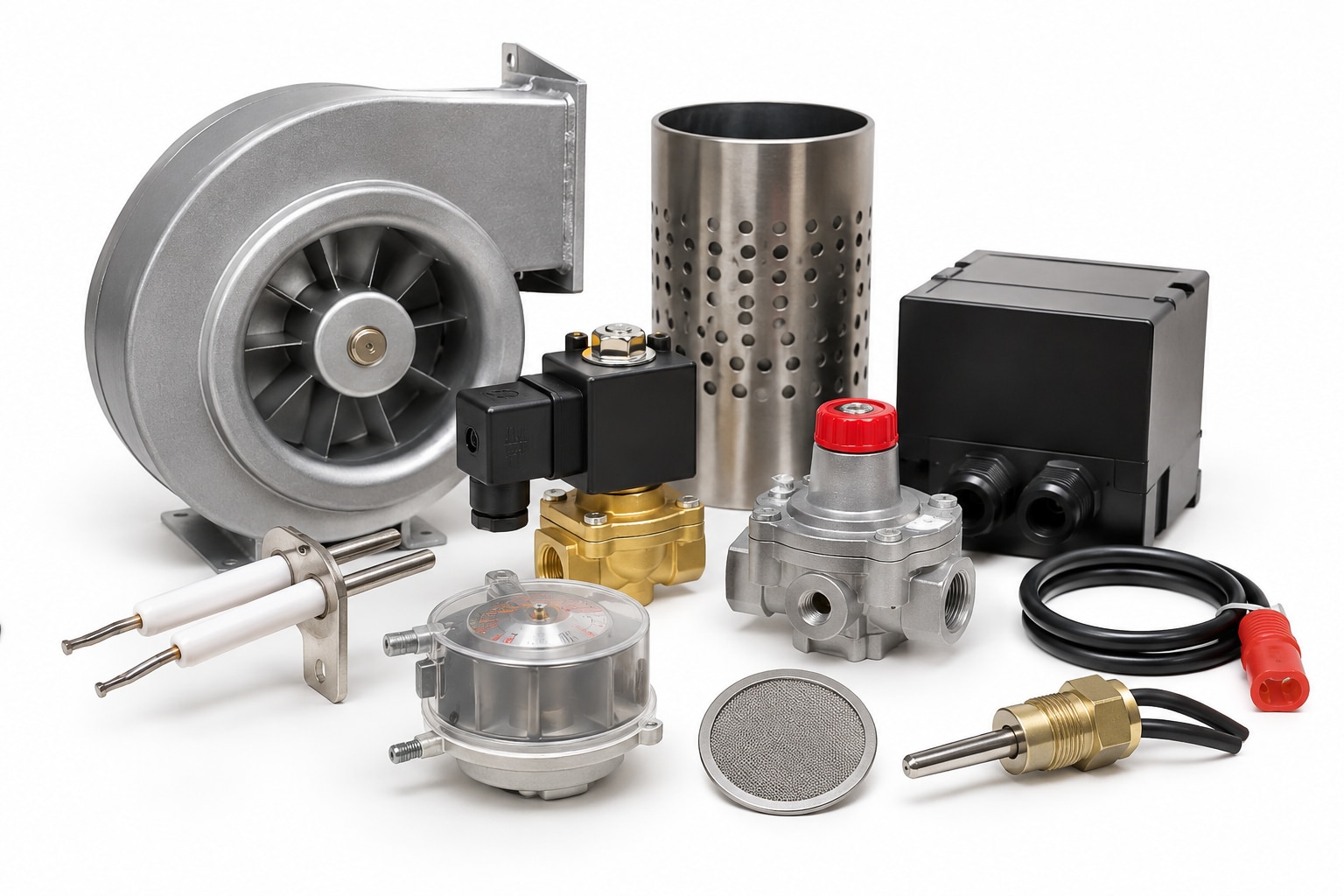
| Stocked parts | Nozzles, strainers, filter elements, fuel pumps, heater elements, flame scanners, ignition transformers, solenoid valves and controller modules | Small-part delays stop production |
| Maintenance records | Before-and-after readings from calibrated instruments | No proof that tuning corrected the fault |
Industrial burner repair and maintenance must check draft, excess oxygen, CO, smoke, atomising pressure, flame-signal strength, safety-shutoff-valve tightness, purge timing and interlocks. Ask who attends site and whether operators receive cold-start and shutdown checklists. An industrial oil burner supplier in Surat earns its place through these deliverables, not proximity or price.
Consider ECOTECH BURNERS only against the same evidence.
Related product
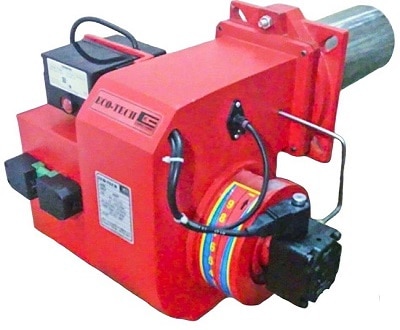 | Oil Burners Oil burners (20kw to 10500 kw )Available in versions for different types of oil burners A compact burner, easy to install. View product → |
What must a comparable manufacturer quotation include?
A comparable quotation starts with a line-by-line scope that shows whether you are buying a burner replacement or a complete combustion system. Without that boundary, a low-priced offer can simply omit equipment another supplier has included.
- List the burner, combustion-air fan, fuel pump set, storage-tank heater, preheater, filtration, fuel-control valves, atomising-air or steam equipment, flame scanner, burner-management controls, refractory interface, stack connection, commissioning and operator training.
- Require guaranteed heat input, usable turndown, fuel viscosity at the nozzle, start-up time, excess oxygen, CO, smoke or opacity, draft range and test conditions. State firing rate, chamber geometry and fuel grade in the performance guarantee; thermal efficiency alone is incomplete.
- Record exclusions for electrical cabling, fuel piping, chimney work, refractory modification, instruments and seasonal recommissioning. Price these items separately before comparing totals.
- Score lifecycle cost, including fuel-conditioning energy, compressed air or steam, nozzle and filter consumption, cleaning labour, planned downtime, critical-spares lead time and repair response. Industrial burner repair and maintenance must include calibrated draft, oxygen, CO, smoke, atomising-pressure, flame-signal, valve-tightness, purge and interlock readings before and after service.
For a heavy oil burner manufacturer for seasonal heating comparison in Surat, request references with similar minimum load, nozzle viscosity and seasonal duty. A heavy oil burner manufacturer in Surat should also disclose local parts availability and response time, not just catalogue capacity.
Compare every offer against the same documented readings, training scope and recommissioning requirement.
Frequently asked questions
What must a heavy-oil burner manufacturer prove about the fuel system?
The quotation must identify acceptable viscosity, ash, water and sediment limits, then show the heating, filtration, pumping and control equipment needed to condition your fuel.
How should you size a burner for seasonal heating demand?
Size the burner from the plant’s actual heat-load range, including minimum load and required turndown, rather than selecting only a maximum kW rating.
Which atomisation and backup-fuel arrangement should a plant compare?
Compare the available atomisation method, fuel quality, utility requirements and changeover sequence, then specify a backup fuel such as gas or LDO when uninterrupted operation matters.
What should a comparable manufacturer quotation include?
Require fuel specifications, burner capacity and turndown, conditioning equipment, controls, commissioning scope, shutdown procedures, spare parts, response times and maintenance terms.
Keywords