Seasonal hot-water systems in Surat face uneven demand, monsoon shutdowns, hot ambient air and difficult restarts after idle periods. By the end, you will be able to calculate the required burner duty, compare oil firing with other heat sources and specify the controls, fuel conditions and service support needed for dependable operation.
Key takeaways
- Size burner duty from water flow, specific heat and temperature rise.
- Use burner turndown and controls to prevent cycling during low seasonal demand.
- Compare oil, gas, dual-fuel and electric heating using site utility constraints.
- Require restart testing, combustion records and local spare-parts support.
Why a Hot-Water Generator Burner Suits Seasonal Loads
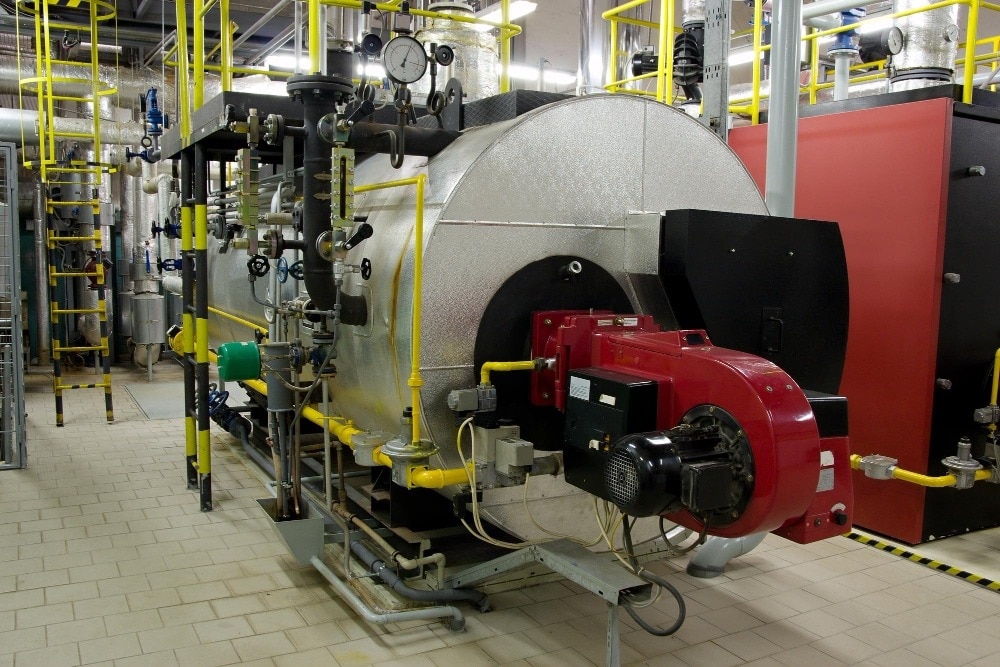
A hot-water generator burner heats circulating water to a controlled supply temperature; it does not create steam or expose products directly to a furnace flame.
A steam-boiler burner must support evaporation and drum pressure, while a furnace or process-heater burner is matched to radiant heat, hot gases or a particular product—not a water flow and temperature rise. That distinction matters because hot-water demand in Surat can fall sharply outside production hours and vary with ambient conditions.
1. Specify the actual minimum and maximum heat load, not the generator’s water volume. Select input from Q = m·Cp·ΔT, then allow for heat-transfer losses and efficiency. A high maximum kW with a poor low-fire rate causes short cycling, repeated purge losses and faster ignition-component wear.
2. Check modulation against seasonal demand. A burner that turns down to the building’s minimum load runs longer and purges less; a burner whose stable low fire remains too high will cycle, even if its maximum rating looks suitable.
3. Protect an oil-fired, non-condensing unit during monsoon restarts and cool mornings. Use warm-up and minimum-return-temperature logic where specified, because cold surfaces invite corrosive flue-gas condensate. Oil storage also demands checks for tank water, sediment, filters and nozzle coking.
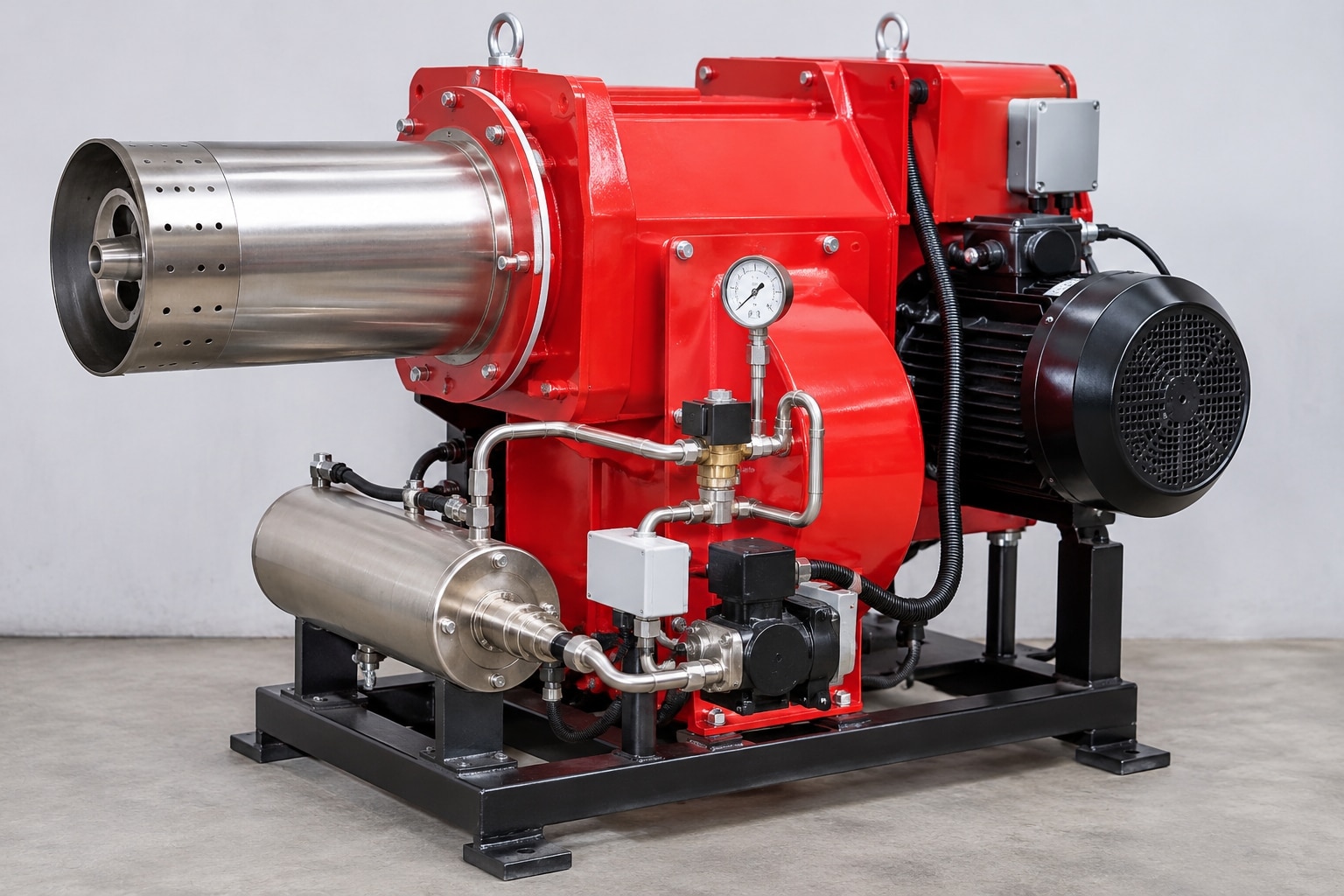
These are the key hot water generator burner benefits for seasonal boiler operations in Surat: controllable heat, fuel flexibility and stored-oil backup when gas supply is unreliable. The trade-off is greater oil maintenance and emissions responsibility, so compare the full seasonal operating plan—not the burner label alone.
Calculate Burner Duty from Water Flow and Temperature Rise
Start with the water flow and required temperature rise, not the generator’s stored water volume. Calculate useful heat duty as:
Q useful = 1.163 × flow (m³/h) × temperature rise (°C)
For example, heating 20 m³/h from 70°C to 95°C requires 1.163 × 20 × 25 = 582 kW of useful heat. At a measured or guaranteed thermal efficiency of 88%, burner input must be about 661 kW. Include documented distribution and casing losses; do not add an arbitrary oversized margin.
| Basis | What it tells you | Sizing consequence |
|---|---|---|
| Nominal water volume | Stored inventory and warm-up time | Does not show the continuous heat demand |
| Maximum burner rating | The highest firing input | Does not prove efficient operation at your load |
| Flow × temperature rise | Required useful heat transfer | Use this duty, adjusted for efficiency, to select input |
Confirm the design flow at the required operating pressure, inlet temperature and outlet temperature. Then check the burner’s turndown against the lowest seasonal demand.
- If low fire remains above the actual minimum load, the burner will cycle repeatedly.
- Each pre-purge and post-purge sends cool air through hot surfaces without producing useful heat.
- Excess cycling increases fuel loss and wears ignition and flame-safeguard components.
A modulating burner with suitable turndown reduces those losses. Specify an allowable cycle frequency and verify that the selected burner can hold stable combustion at low fire.
Match Boiler Oil, Atomisation and Controls to the Burner
Verify the fuel viscosity at the nozzle, required preheat temperature, atomisation method and safety interlocks before choosing a hot water generator burner for boiler oil. The fuel name alone does not prove compatibility.
1. Confirm the oil specification, viscosity range at the nozzle, required pump pressure and filtration. Diesel or light fuel oil normally needs no extensive heating system; furnace oil can require a heated tank, traced lines, heated strainer, oil heater and viscosity controller. Check tank water and sediment before seasonal restart.
2. Match atomisation to the fuel and burner. Ask whether the burner uses pressure-jet, rotary-cup or steam- or air-assisted atomisation, then verify the available atomising pressure or medium. Incorrect viscosity causes poor spray, ignition failure, smoke and burner-tip coking.
3. Check the guaranteed input range, turndown, combustion-air requirement, oil temperature and emissions at low and high fire. An industrial boiler oil burner that only performs at maximum input will short-cycle on a seasonal load and waste fuel through repeated purge cycles.
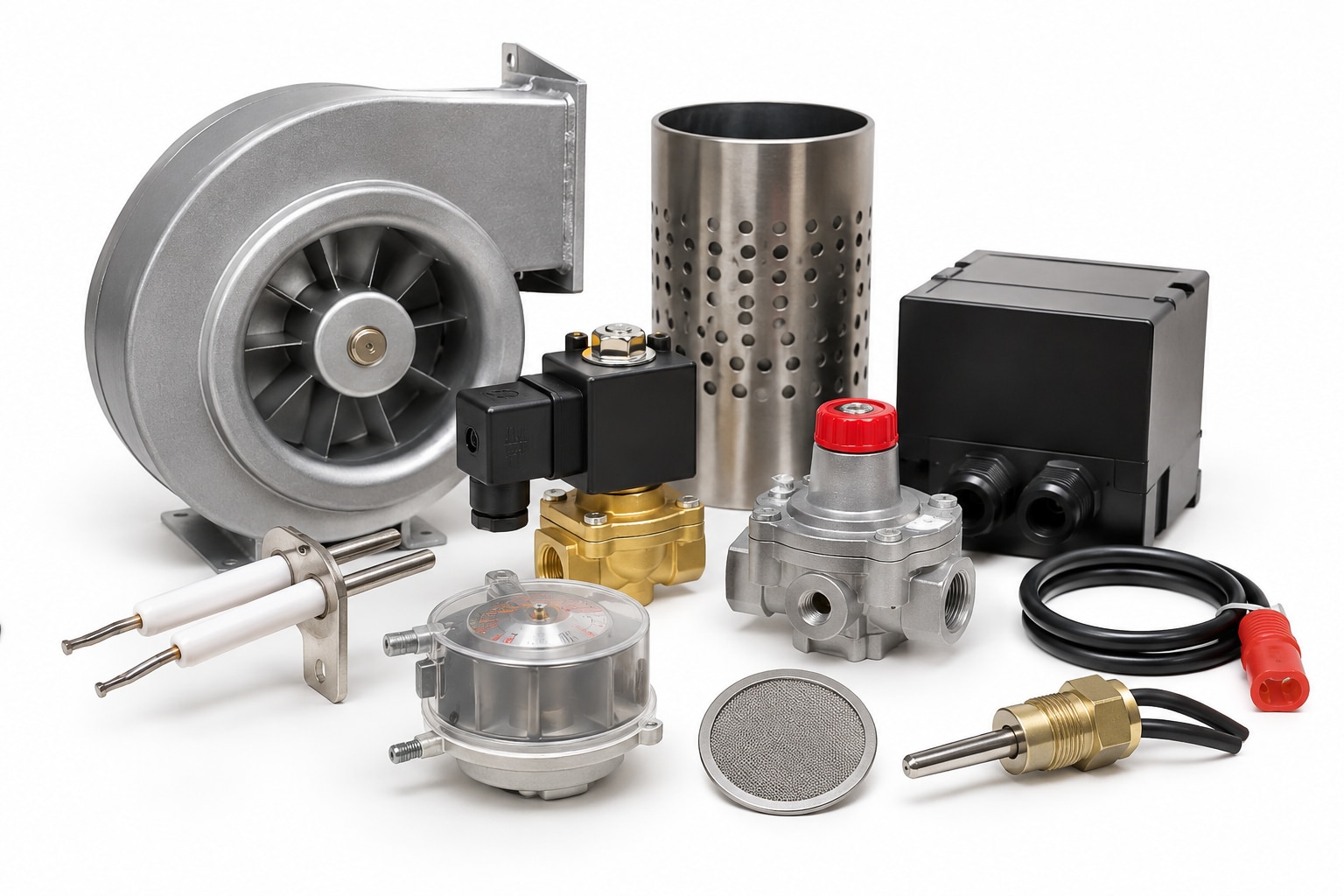
4. Separate safety functions from efficiency features. Require flame supervision, low-oil-pressure trip, combustion-air proving, high-temperature shutdown, purge timing and fuel-valve tightness testing. Oxygen trim, outdoor reset and remote monitoring improve operation but cannot replace hardwired trips.
For a non-condensing unit, verify the manufacturer’s minimum return-water temperature and warm-up logic. Cold surfaces can create corrosive flue-gas condensate, particularly with sulfur-bearing oil; lowering return temperature is not automatically an efficiency gain.
Compare Oil-Firing Benefits with Gas, Dual-Fuel and Electric Heating
If gas pressure or pipeline availability is unreliable, an oil burner gives seasonal operations a stored-fuel reserve. That advantage matters after monsoon shutdowns or during short production runs, when connecting new gas infrastructure is impractical. The practical boiler oil burner benefits in surat end where storage, handling and emissions work begin.
| Option | Seasonal advantage | Trade-off |
|---|---|---|
| Oil | Stored backup; suitable for intermittent demand | Tank space, spill protection, water and sediment removal, higher particulate and NOx-control responsibility |
| Gas | Clean combustion, simpler fuel handling and lower routine fouling | Dependent on pipeline pressure, supply continuity and connection capacity |
| Dual-fuel | Switches between stored oil and available gas | Two complete fuel trains; separate ignition, air curves, pressure proving and commissioning |
| Electric | No combustion emissions or fuel tank | High electrical demand; capacity charges, connection limits and slow recovery can restrict large loads |
Oil needs more than a full tank. Check filter differential pressure, pump seals, nozzle wear, atomizing medium, oil temperature and burner-tip coking; heavy furnace oil also needs heated tanks, traced lines, a heated strainer and viscosity control. Emissions testing and soot cleaning add labour and outage time.
Choose modulation that reaches the actual minimum load. Otherwise the burner cycles, and every purge pushes cool air through hot surfaces without useful heat. A dual-fuel system adds resilience, but transfer must prevent simultaneous fuel admission and define whether the burner stops before changeover.
Specify Seasonal Restart, Commissioning and Supplier Support
A useful quotation and seasonal service plan must define the burner’s safe operating envelope, commissioning method and support response—not just its maximum kW rating. Ask a hot water burner supplier in Surat to state these items in writing:
- Guaranteed input range, minimum stable firing rate, turndown ratio and minimum recommended on-time
- Fuel grade, nozzle viscosity, required oil pressure, filtration and spare-nozzle availability
- Motor and control-panel ratings, combustion-air pressure and required electrical supply
- Emissions guarantees, including the measured O₂ and CO limits and test conditions
- Commissioning instruments: calibrated flue-gas analyser, pressure gauges, smoke tester and combustion-air measurements
- Seasonal restart labour, travel charges, response time and technician availability after idle periods
- Inspection of filters, electrodes, flame safeguard, dampers, wiring, fuel lines and safety interlocks
- Protection against rainwater ingress, wet air filters and contaminated fuel during monsoon storage
ECOTECH BURNERS can be assessed on the same evidence: request a signed commissioning sheet rather than accepting “tested” as proof of site performance.
At 35°C, combustion air has about 6.5% lower density than at 15°C, so verify fan-damper position, flame stability, air pressure, O₂ and CO during Surat’s hottest operation. The restart plan must include controlled purge, ignition-failure trip testing, warm-up logic and minimum return-temperature protection on a non-condensing oil unit.
Confirm low-fire operation against the actual minimum load; excessive cycling wastes heat and wears ignition components.
Related products
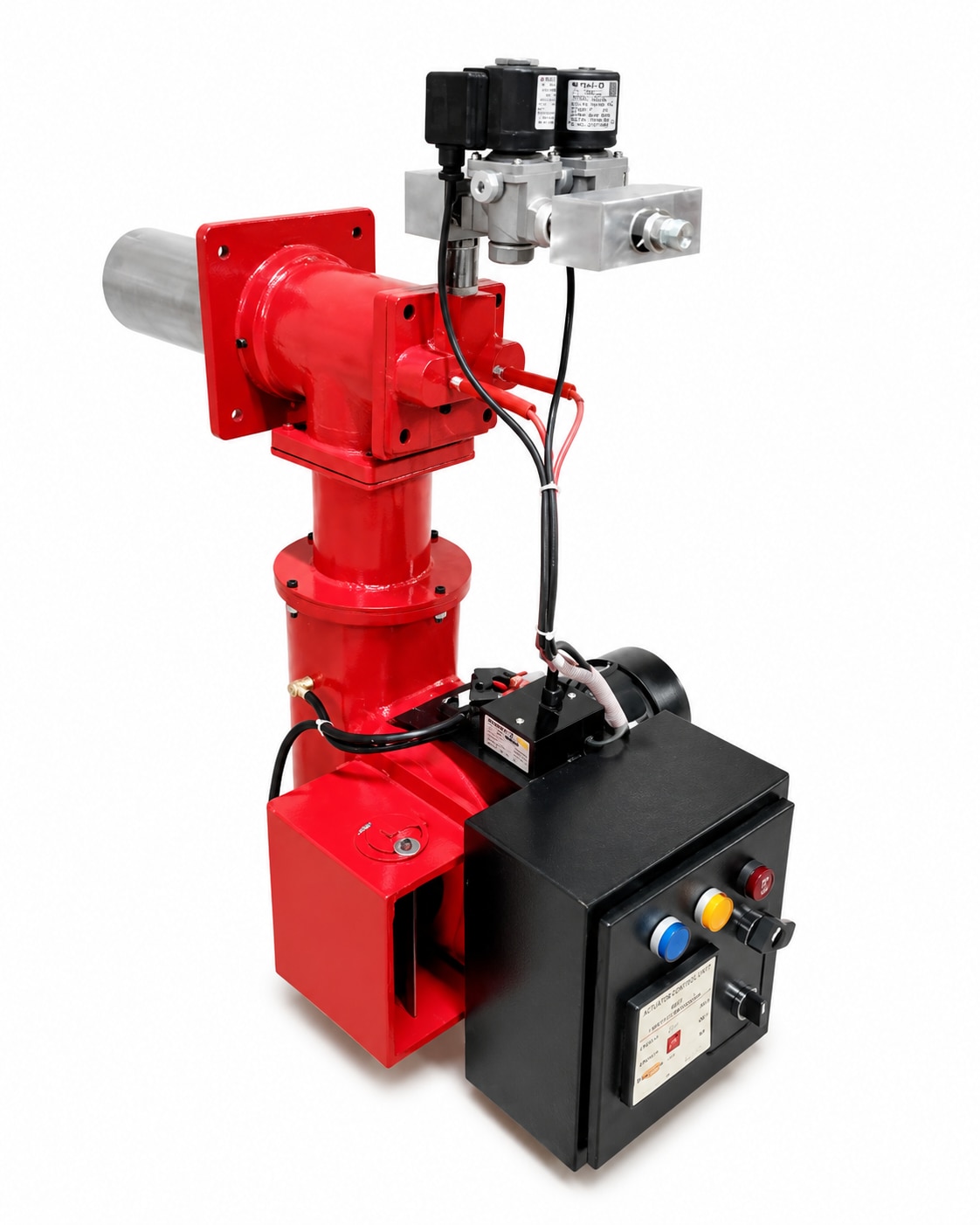 | Customized Burners Costumized Burner (120kw to 10500kw )Available in versions for different types of gas. A compact burner, easy to install. View product → |
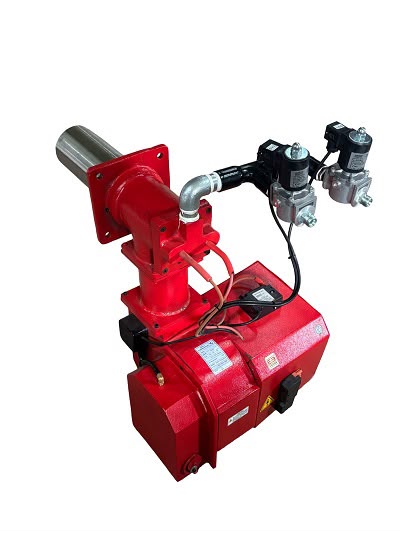 | High Temperature Burners High Temperature Burner (120kw to 10500kw )Available in versions for different types of gas. A compact burner, easy to install. View product → |
Frequently asked questions
Why does a hot-water generator burner suit seasonal boiler loads?
It heats circulating water to a controlled supply temperature without producing steam. Proper burner turndown and control sequencing help reduce cycling when seasonal demand falls.
How do you calculate hot-water generator burner duty?
Use water flow, water density, specific heat and the required temperature rise. For water, a practical calculation is Q in kW = flow in kg/s × 4.186 × temperature rise in °C.
What should you check when selecting a boiler oil burner?
Match the burner to the generator’s rated heat input, combustion-chamber geometry, boiler oil viscosity and atomisation method. Check that the control panel supports safe purge, ignition, flame supervision and shutdown.
How should you compare oil, gas, dual-fuel and electric heating?
Compare fuel availability, storage, emissions controls, electrical capacity, operating labour, restart time and backup requirements. Dual-fuel equipment adds resilience but requires correct changeover controls and commissioning.
What supplier support matters when restarting a seasonal boiler?
Request a documented commissioning test covering flame stability, combustion readings, safety trips, pump interlocks and operating temperatures. Confirm local access to nozzles, filters, electrodes, flame sensors and control components.
Related product
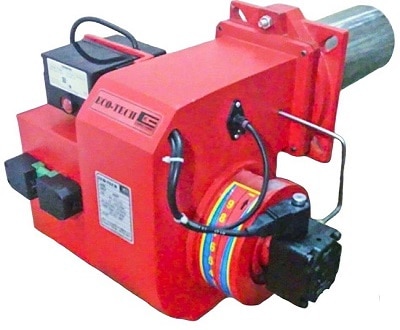 | Oil Burners Oil burners (20kw to 10500 kw )Available in versions for different types of oil burners A compact burner, easy to install. View product → |
Keywords