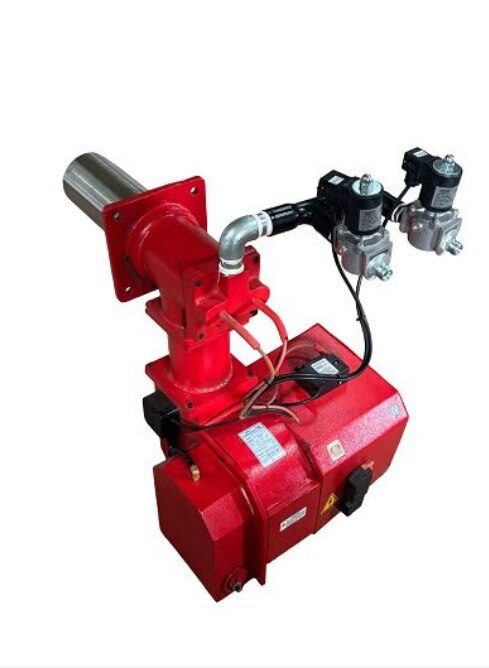
A burner cannot be selected safely from a kilowatt rating alone: the boiler, oven, furnace, heat exchanger, fuel supply and control sequence all determine the correct design. By the end, you will know how a project brief becomes a tested burner package, which drawings and operating figures to request, and how to compare a proposal before installation.
Key takeaways
- Start with heat duty, temperature range and operating limits—not a catalogue rating.
- Match the burner to the boiler, oven or chamber before selecting fuel and controls.
- Specify fuel train, combustion air, utilities and safety interlocks as one package.
- Commission under real operating loads and record temperature, emissions and trip limits.
Start With the Building’s Heat Duty, Not a Burner Catalogue
A burner specification begins with a combustion-duty and operating-envelope datasheet, not a nominal kW selection. It converts the building’s heating requirement into measurable limits and gives the designer enough information to prevent a burner that trips, smokes or cannot reach temperature.
That is the starting point for customized industrial burners for real estate projects in Surat.
- Required heat input and useful heat output
- Fuel type, composition, minimum pressure and maximum pressure
- Boiler, chamber or furnace back-pressure
- Required turndown ratio and operating hours
- Operating temperature, altitude and ambient-temperature range
- Flue-gas limits for oxygen, carbon monoxide and nitrogen oxides
- Flame length, diameter, swirl, momentum and burner-throat dimensions
- Refractory size, heat-transfer-surface location and available combustion-air conditions
- For oil or dual-fuel service: oil viscosity at the burner, atomizing-medium pressure, filtration, pump capacity, return-line arrangement and preheating requirement
The appliance decides whether the burner works. Two burners with the same heat-input rating are not interchangeable if one produces a flame that is too long, meets excessive back-pressure or leaves cold areas in the chamber.
The project drawing must also reserve space for air ducting or openings, flue connections, ventilation, drainage, scanner and nozzle access, electrical interfaces and safe clearance around hot surfaces.
Choose one large burner or multiple smaller units only after comparing turndown, redundancy, maintenance access, footprint, controls and lifecycle energy use. Put these decisions into the burner datasheet and general-arrangement drawing before fabrication; changing the throat, fuel train or control panel later costs far more effort.
Match the Burner to the Boiler, Oven or Heating Chamber
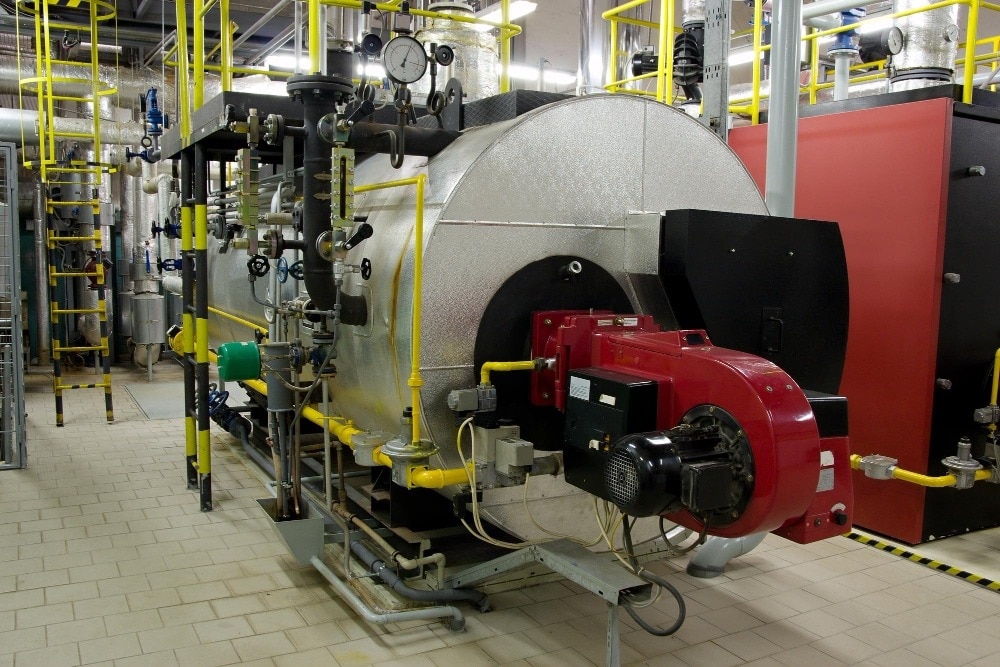
An 800 kW burner is not automatically suitable for an 800 kW boiler. The appliance’s throat size, chamber pressure and heat-transfer layout determine whether the flame remains stable, reaches the intended zone and transfers heat instead of striking refractory or a tube surface.
Industrial burner design for projects should therefore begin with an appliance-interface drawing, not a catalogue rating. Record these dimensions and operating limits before choosing the head, nozzle or diffuser:
- Flame length and diameter required by the chamber
- Burner throat and refractory opening
- Swirl direction and flame momentum
- Furnace or boiler back-pressure
- Position of tubes, coils, heat exchangers or product surfaces
A long, narrow flame can suit one heating chamber but overheat another. A high-swirl flame can improve mixing while creating excessive wall heat in a shallow chamber. The burner also needs enough pressure reserve to overcome the appliance back-pressure at maximum firing, while its minimum firing rate must remain stable during light-load operation.
Ask the designer to state the tested flame dimensions, allowable chamber pressure, minimum stable input and turndown method. Confirm the values against the actual appliance drawing; two burners with the same heat-input rating are not interchangeable.
At commissioning, measure oxygen and carbon monoxide after the appliance reaches temperature at low, mid and high fire. A setting made only at high fire can leave excess air too low during turndown, causing CO, or too high at full load, wasting heat through the chimney.
Choose Fuel, Air Supply and Utility Interfaces Together
Compare fuel cost and availability against the complete operating envelope before selecting the burner. A fuel that is cheap at full load can become a poor choice if pressure falls, storage occupies valuable plant-room space, or the burner cannot hold a stable flame at the building’s minimum demand.
| Fuel option | Check before design | Main design consequence |
|---|---|---|
| Natural gas | Metered pressure, flow capacity, gas quality and outage plan | Gas train, regulator, venting and burner head must suit available pressure |
| LPG | Bulk-tank capacity, vaporizer output, storage clearance and peak withdrawal | Vaporizer and pressure-control capacity must cover cold starts and maximum firing |
| Diesel | Viscosity at the burner, filtration, pump capacity and return line | Atomizer, preheating and oil-safety equipment must prevent smoke and nozzle fouling |
| Dual fuel | Separate gas and oil supplies, changeover sequence and fuel priority | Requires independent safety trains, permissives and flame supervision |
A dual-fuel package is not automatically safer. Define whether fuel loss causes a trip, a purge and restart, or a controlled transfer; also prove combustion air, atomizing air or steam, oil temperature and flame signal before enabling ignition.
Show these interfaces on the general-arrangement drawing:
- Combustion-air openings or duct dimensions, fan duty and inlet temperature
- Flue, chimney and draft connections
- Electrical classification, ventilation, drainage and hot-surface clearances
- Scanner, nozzle and filter access for routine maintenance
Ask a custom burner supplier in Surat for minimum stable firing rate, turndown method, fuel-pressure range, flame dimensions, chamber-pressure limit, emissions conditions and start-up time. Compare those figures with the project load profile, not only maximum kW.
Convert the Approved Design Into a Safe, Testable Package
The approved design becomes a controlled equipment package, not just a burner drawing. The custom industrial burner process must lock performance, safety, building interfaces and test evidence before fabrication starts.
1. Freeze the burner datasheet with heat input, fuel pressure, turndown, operating temperature, duty cycle, flame dimensions and appliance back-pressure. Record the burner throat, refractory opening, combustion-air conditions and heat-transfer-surface locations.
2. Issue the fuel-train schematic, combustion-air arrangement, control philosophy, nozzle or diffuser drawing, general-arrangement drawing and inspection-and-test plan. Show chimney connections, air openings or ducts, drainage, scanner and nozzle access, electrical classification, ventilation and hot-surface clearances. Late enclosure changes can starve the flame or block maintenance.
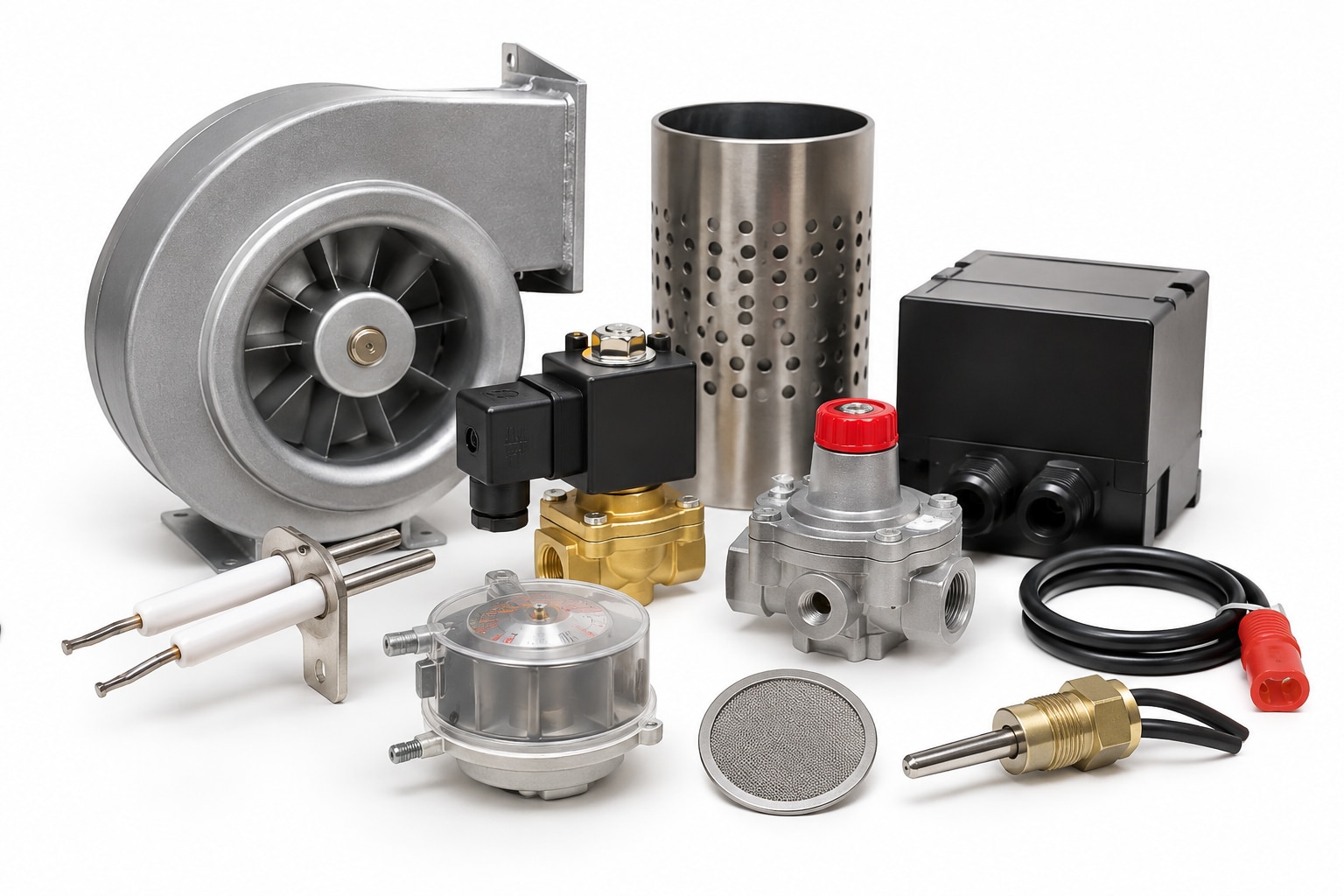
3. Build the burner body, throat, diffuser, nozzle assembly, fuel trains, actuators and control panel to the released drawings. For dual fuel, provide separate gas and oil safety trains, fuel-selection permissives, atomizing-air or steam checks, oil-temperature checks and defined loss-of-fuel actions.
4. Apply the specified inspections and pressure or leak tests before closing the package. Confirm LPG storage, vaporizer, piping and safety-distance responsibilities, including applicable Petroleum and Explosives Safety Organisation approvals, before fabrication.
5. Factory-test the package by checking fuel-train leaks, valve and actuator travel, panel I/O, ignition, flame-detector response and simulated trips. Where practical, map stable operation across the planned firing range.
6. Issue test records, calibration details, wiring drawings, set points and outstanding limitations. A workshop flame proves package operation; it does not prove combustion in the project’s boiler, oven, chimney or air system.
Commission the Burner on the Real Estate Project and Verify Its Limits
A burner that reaches maximum output can still fail the project if it cannot hold a stable flame at low load or overcome the appliance’s back-pressure. Before installation, the manufacturer and project team must compare the approved datasheet with site conditions: fuel pressure, combustion-air temperature, chamber pressure, flame dimensions, turndown, flue limits and electrical supply.
- Confirm the general-arrangement drawing shows air openings or ducting, flue and chimney connections, drainage, hot-surface clearances, ventilation, electrical classification, and access to the flame scanner, valves and nozzle.
- Check alignment, gasketed connections, fuel-train components, isolation valves, earthing, pressure switches and leak-test results before admitting fuel.
- Run the burner-management sequence: air proving, pre-purge, ignition-trial timing, flame detection, main-valve opening and lockout after flame failure or lost permissive. Never bypass an air switch, scanner or valve-proving device to force a start.
- Measure oxygen and carbon monoxide at minimum, intermediate and maximum firing rates after the boiler, oven or heater reaches operating temperature. High-fire-only adjustment can create CO at low fire or waste heat through excess air.
- Record actual start-up time, stable minimum rate, fuel pressures, chamber pressure and emissions against the supplier’s stated test conditions.
- Handover should include as-built drawings, wiring diagrams, setpoints, alarm codes, maintenance clearances, test readings and operator training.
When comparing a customized burner manufacturer in surat, request the complete operating envelope, not only maximum kW. ECOTECH BURNERS MFG CO can be assessed on the same evidence: compare one large burner with multiple smaller units for turndown, redundancy, controls, maintenance access, chimney complexity and lifecycle energy use.
Related product
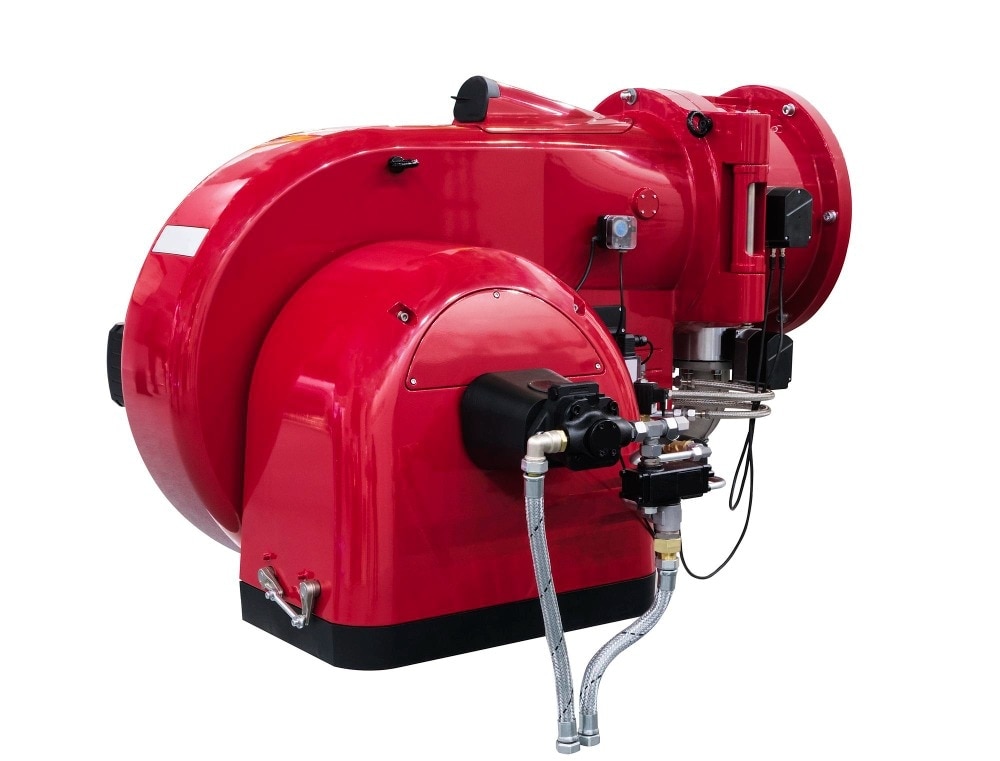
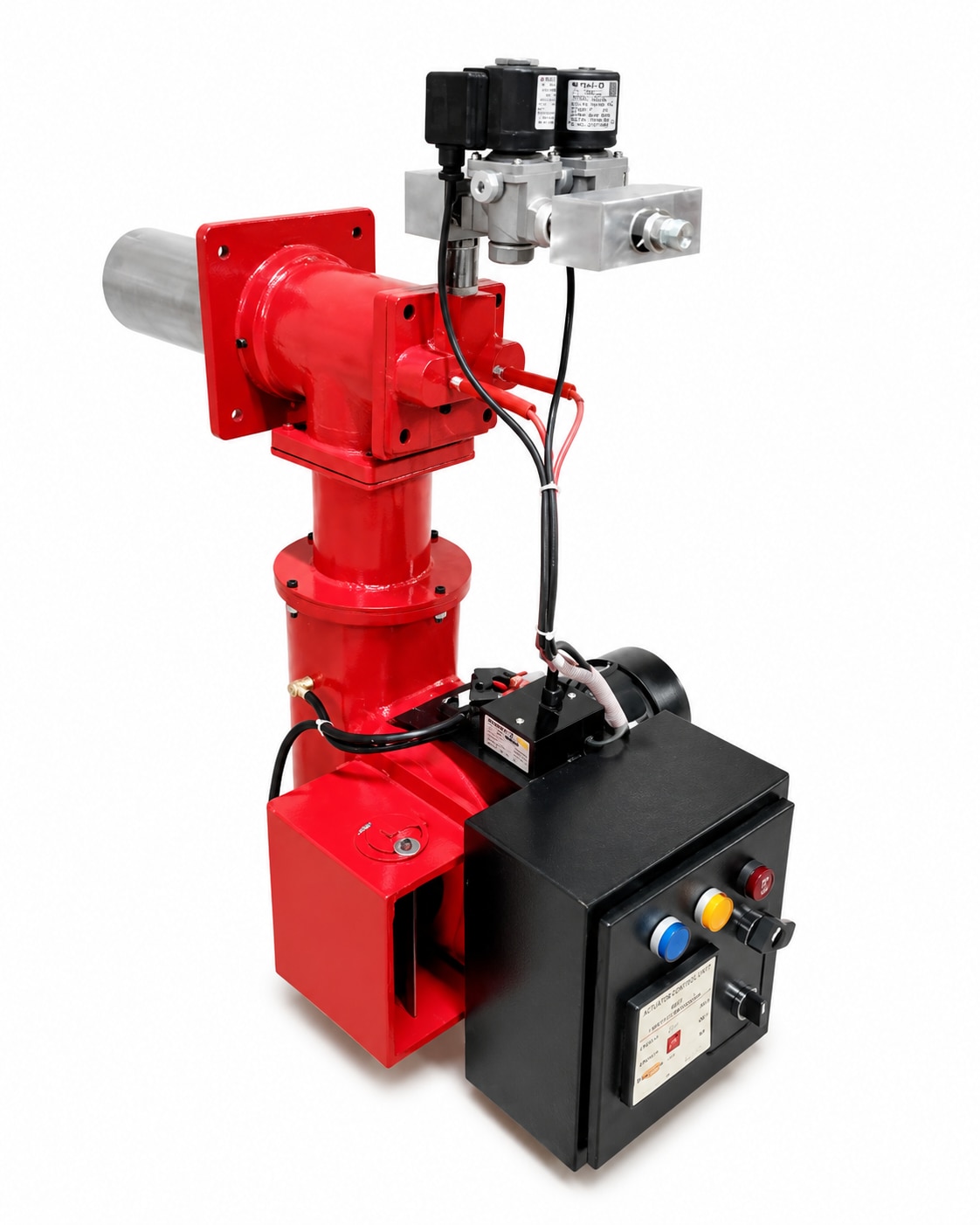 | Customized Burners Costumized Burner (120kw to 10500kw )Available in versions for different types of gas. A compact burner, easy to install. View product → |
Frequently asked questions
What information is needed before designing a customized burner for a real estate project?
Start with the building’s heat duty, target temperature, turndown range, heating equipment, fuel, operating schedule and available utilities.
How do you match a custom burner to a boiler, oven or heating chamber?
Check the equipment’s combustion-chamber dimensions, heat-release limit, allowable pressure, exhaust path and required temperature uniformity before selecting the burner.
Which fuel and utility details belong in the burner specification?
Define the fuel type and pressure, combustion-air supply, electrical power, control signals, ventilation, gas train and safety interlocks together.
How is a customized industrial burner tested before handover?
Convert the approved design into a documented package, then commission it across its operating range and verify temperature control, combustion performance and safety trips.
Keywords